Africa’s digital revolution is at a crossroads, demanding not just rapid scaling of tech-talent but urgent action on digital safety and which is fast emerging as the most dangerous digital gap for young women in Africa.
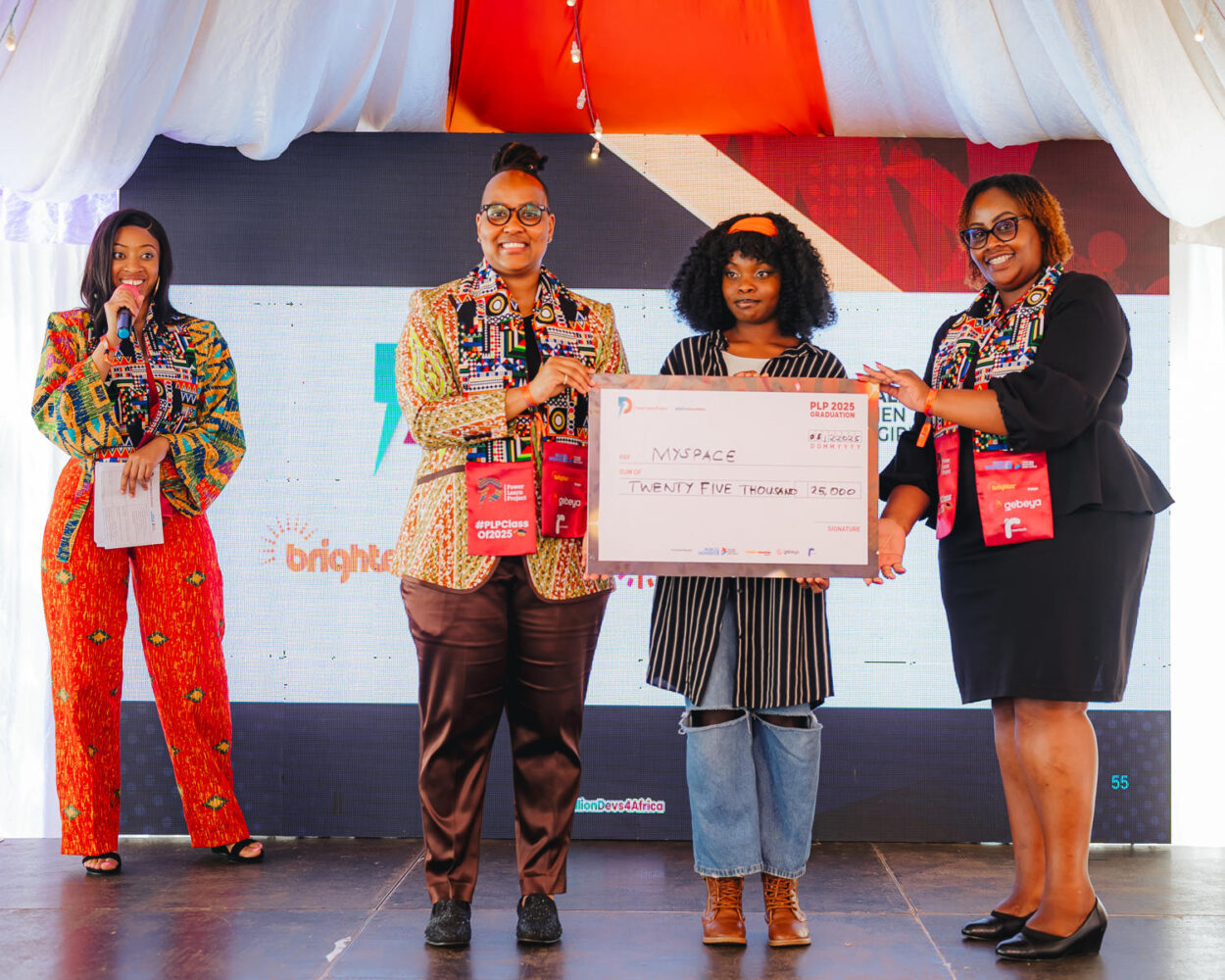
At a landmark graduation event in Nairobi, Kenya, on Friday, December 5, 2025, the Power Learn Project Africa (PLP) announced that 9,000 young software developers from across the continent have graduated, bringing the total number of young people trained by PLP to over 20,000.
The graduation coincided with the conclusion of a regional hackathon, including Kenya, Nigeria, Rwanda, South Africa and Mozambique.
Hosted in partnership with UN Women East & Southern African Regional Office (ESARO), and the African Girls Can Code Initiative (AGCCI), as part of the global 16 Days of Activism Against Gender-Based Violence, the young innovators showcased solutions to the escalating crisis of Technology-Facilitated Violence Against Women and Girls (TFVAWG).
“With one in every three women facing online violence, from cyberbullying and deepfakes to revenge porn, women are effectively being kicked out of digital spaces.
This partnership with PLP is therefore a wake-up call to the private sector and governments because we must invest in youth-led innovation to build a safe, inclusive tech pipeline, and transform the 5-10% prevalence of women in AI development to a true force for African growth,” said Anna Mutavati, Regional Director for UN Women ESARO.
According to UN Women, TFVAWG is underreported and lacks comprehensive statistics across Africa with studies showing alarming prevalence in specific groups such as journalists, politicians and activists.
Common form of cybercrimes targeting women include online harassment, stalking, cyberbullying, fraud alongside impersonation and misinformation.
Mutavati emphasized that Digital inclusion must go hand-in-hand with digital safety, especially around women and Girls. She called on African governments to update legislation to keep pace with digital crimes and for the private sector to invest in bringing youth-led innovations to scale.
While highlighting the strategic necessity of PLP’s work in lowering the cost of talent for African businesses, Mumbi Ndung’u, the Executive Director of PLP, reinforced the commitment to closing the technology talent gap and ensuring graduates move from just learning to earning.
“Africa is losing its top engineering talent to international firms offering three times the local pay. While these job opportunities are welcome, we have to also empower young people working and building in the local eco-systems without crippling our ability to create globally competitive and essential local products and solutions,” she said.
With online abuse currently underreported and hard to measure, five hackathon finalists presented their innovative, homegrown solutions designed to help combat TFVAWG. including Secure reporting and evidence-gathering tools against TFVAWG.
Among the solutions is the ‘ImaraZero – User Interface Digital Bodyguard’ that uses multi-modal AI to analyze voice notes, screenshots, and text for threats.
The solution that provides advice or escalates to authorities across seven African countries in case of realized risk or threat, is seeking USD 50,000 to fund Application Programming Interface (API) licenses acquisition and expansion.
Another solution, ‘Safeguard’, uses Blockchain and AI to create a tamper-proof digital evidence vault for online harassment, an intelligence engine for repeat offender profiling, and secure geolocation pinning.
Safeguard aims to protect women in Africa, who face online abuse every year, and is also seeking USD 50,000 for mobile app development and legal compliance.
‘EveShield’, a panic button app that uses geolocation to notify emergency contacts, bystanders, and authorities with a single press, providing access to mental health and legal aid resources, also shared their USD 3,000 funding request for viability scaling and city pilot rollouts.
Moving away from its previous ‘Skills-First’ strategy to ‘Talent-First’ strategy, PLP in its continental shift toward employability, innovation, and youth economic empowerment, has dedicated 40% of its 16-week software development scholarships to women as a direct response to the massive gender imbalance in the Science Technology, Engineering and Mathematics (STEM) fields.
This commitment was exemplified by PLP 2025 graduate Wendy Otieno, who was among the top five learners selected for the physical graduation.
Wendy, who also helped developed a digital safety platform for the hackathon, ‘DigiSafety’, was flanked by her father, Nicodemus Onyango.
“I’m deeply honored to be among the top graduates and to have helped develop the DigiSafety platform, which gives women a ‘digital safety score’ based on their online habits. As a developer and also a value creator, my message to every young girl is to join this space because the opportunities are limitless,” said Otieno.
In its fourth year, PLP has since inception been able to train over 38,000 young people across Africa, 3,900 of them being women.
PLP’s Talent Hub is currently negotiating the acquisition of a credit-scoring application built by a previous cohort of graduates.
The ceremony concluded with a Career Fair connecting graduates with leading employers, including Brighter Monday, Gebeya, and Roamtech, with many conducting on-site interviews.
ALSO READ: ‘Research must be done on the increase of sudden deaths in Kenya’ – says Gem MP