
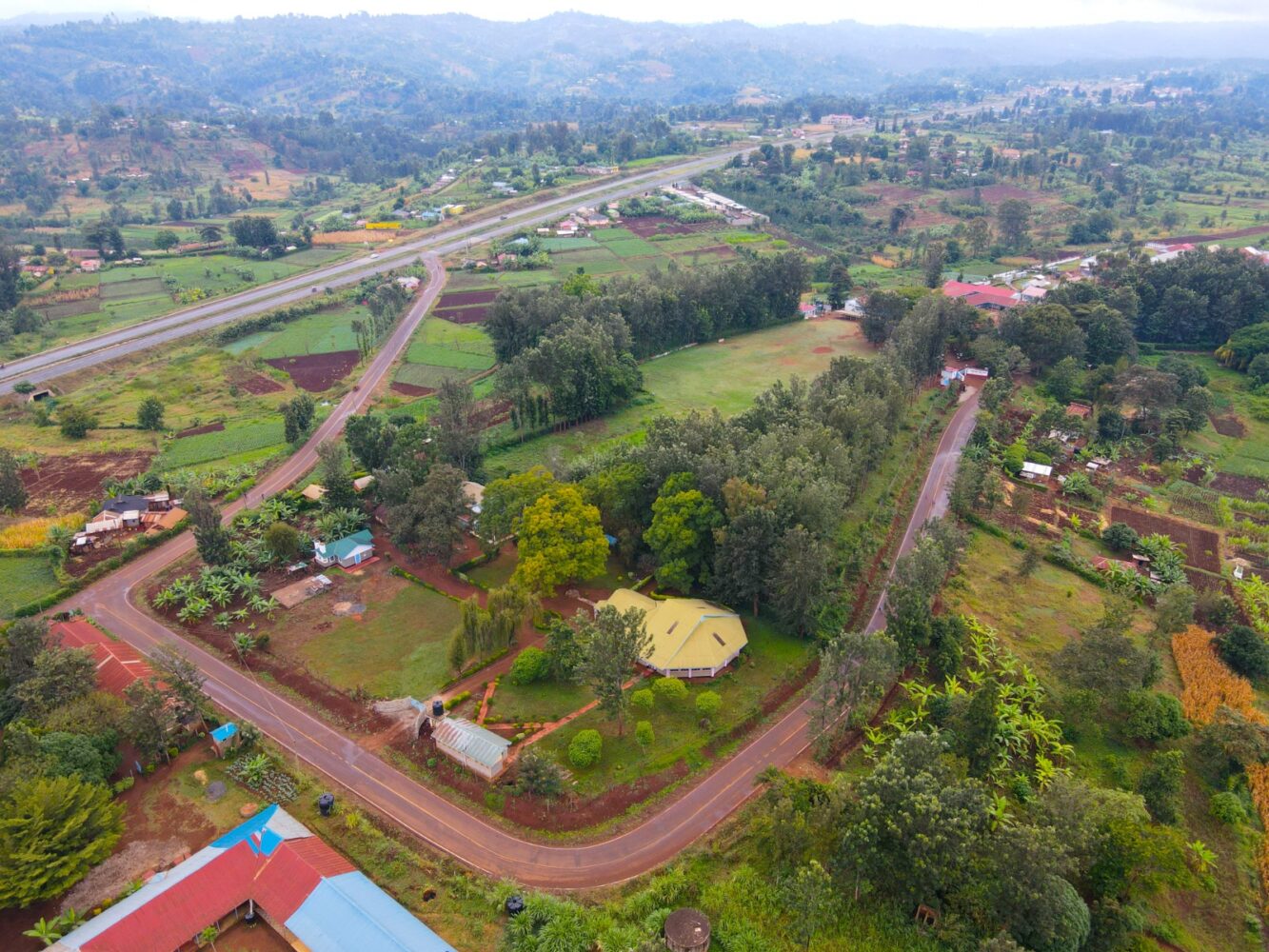
Kiine Girls High School in Kirinyaga County has for decades lived with a cruel irony: the school sat barely a kilometre and a half from the main road, yet during the rainy season, it might as well have been miles away.
Chief Principal Jane Nyawira Waweru remembers it all too well.
“We used to say the school was very near yet very far,” she says. “A walk from the main road could take up to an hour, and if it rained, it was worse. The mud was unforgiving, and the river near the culvert would flood, cutting us off completely.”
The school, in Kiine Location, serves about 500 girls, though in earlier years, with full Form One classes, enrolment reached nearly 700.
For students, teachers, and parents alike, simply getting to school was often an ordeal. Teachers arrived looking as though they had waded through a swamp. Parents hesitated to attend meetings. Suppliers refused to deliver food and materials. Emergency vehicles, ambulances or fire engines could not reach the compound. Even national examinations were affected.
“During exam time, I always wondered why the rain started exactly when the papers arrived,” Nyawira says. “The vehicle bringing the papers would get stuck, and the supervisor or police officer would be told, ‘tafadhali tembea (please walk).’ You would arrive late, tired and muddy, unsure whether to clean your shoes or start the exam.”
Some moments, she recalls, were almost comical in hindsight. One evening, a teacher leaving after 9 p.m. got stuck in the mud and had to be pulled out by colleagues.
Another time, a teacher walking home slid back and forth in place for so long that she later described herself as “a bulldozer, just moving mud in and out, going nowhere.”
The road was also the only access for Kiine Mixed and Kiine Primary School, making its condition a community-wide concern.
Reuben Mwangi from Gatithi Village, right opposite the school, recalls the frustration.
“Since I was born, I knew there was no proper road here. When it rained, even a wheelbarrow could not pass. We carried everything on our shoulders to the tarmac. The idea of a paved road felt like a dream,” he says. “Then the Deputy President, Kithure Kindiki, came and opened it. This time, it was not a promise; it was something we could see with our own eyes.”
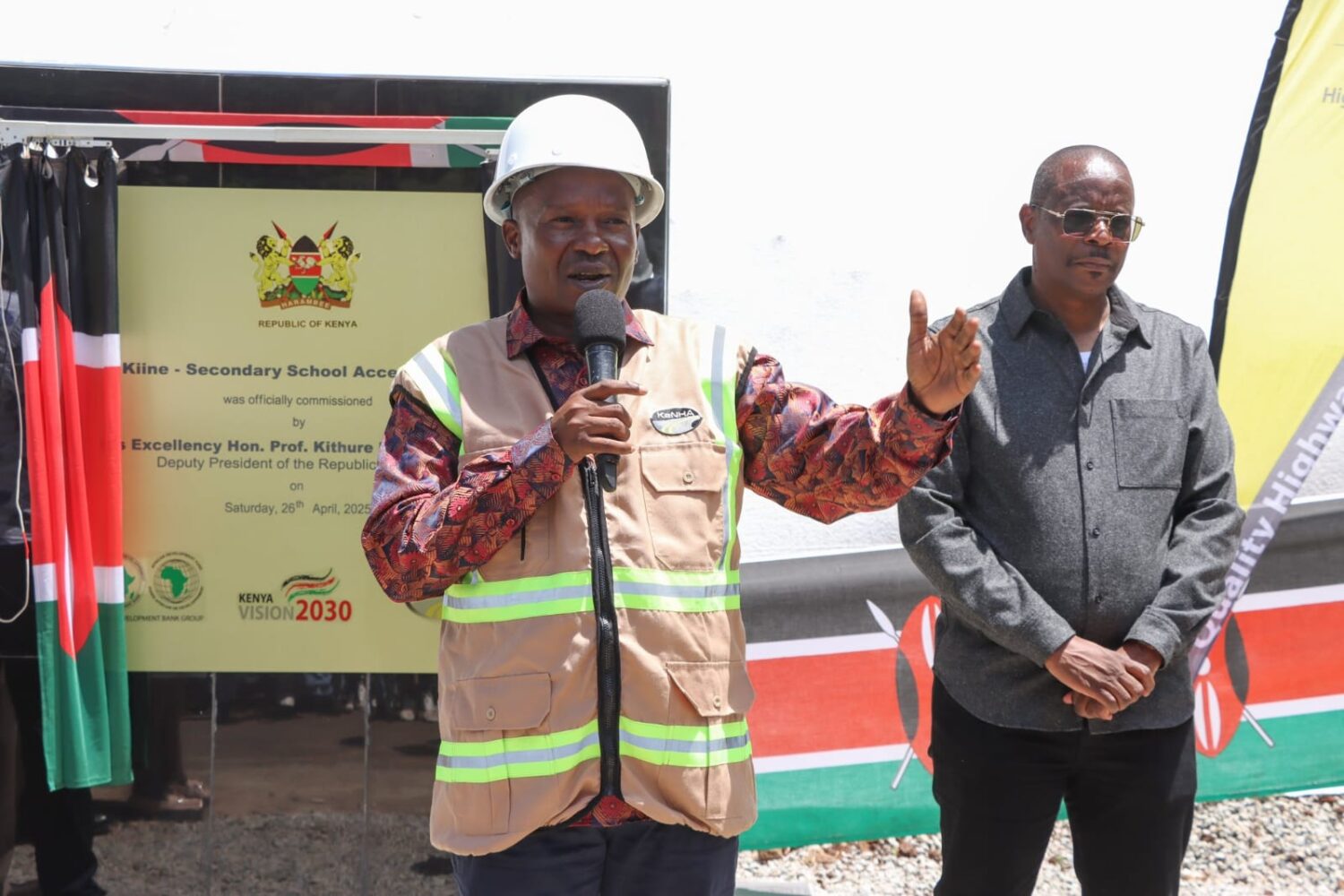
That turning point came on April 26, when Deputy President Prof. Kithure Kindiki commissioned the Kiini Secondary School Access Road, an 820-metre stretch of bitumen-standard tarmac delivered as a Corporate Social Responsibility initiative under the Kenol–Marua Dual Carriageway Project.
Built by the Kenya National Highways Authority (KeNHA), the road includes proper drainage and safety features, finally taming the seasonal floods.
The impact was immediate. “It now takes just 20 minutes to walk from the main road, or five minutes by car,” says Nyawira. “Teachers come early and leave late without worrying about the weather. Parents no longer dread school visits. Supplies arrive on time, and in emergencies, help can reach us quickly.”
Beyond convenience, the road has restored the school’s dignity. Visitors no longer leave with mud-caked shoes and unflattering nicknames for the institution. Students arrive clean, confident, and ready to learn, and the school has reclaimed precious classroom time once lost to impassable paths.
Founded in 1973, Kiine Girls endured this hardship for over five decades.
As the Chief Principal puts it: “We have been saved from 50 years of struggle. This road didn’t just connect us to the highway; it connected us to time.”