
Youth unemployment remains one of Kenya’s most persistent socio-economic challenges, with thousands of trained young people struggling to transition from education into formal employment. In response, the government is increasingly turning to public infrastructure as a tool for job creation, skills development, and long-term livelihoods.
Last week, President William Ruto launched the Affordable Housing Internship Program at State House, positioning it as a key pillar of the broader Affordable Housing agenda. The initiative seeks to deliberately link large-scale public housing projects with youth employment, offering young Kenyans a chance to earn, learn, and gain practical experience.
A week later, that vision is steadily taking shape on the ground.
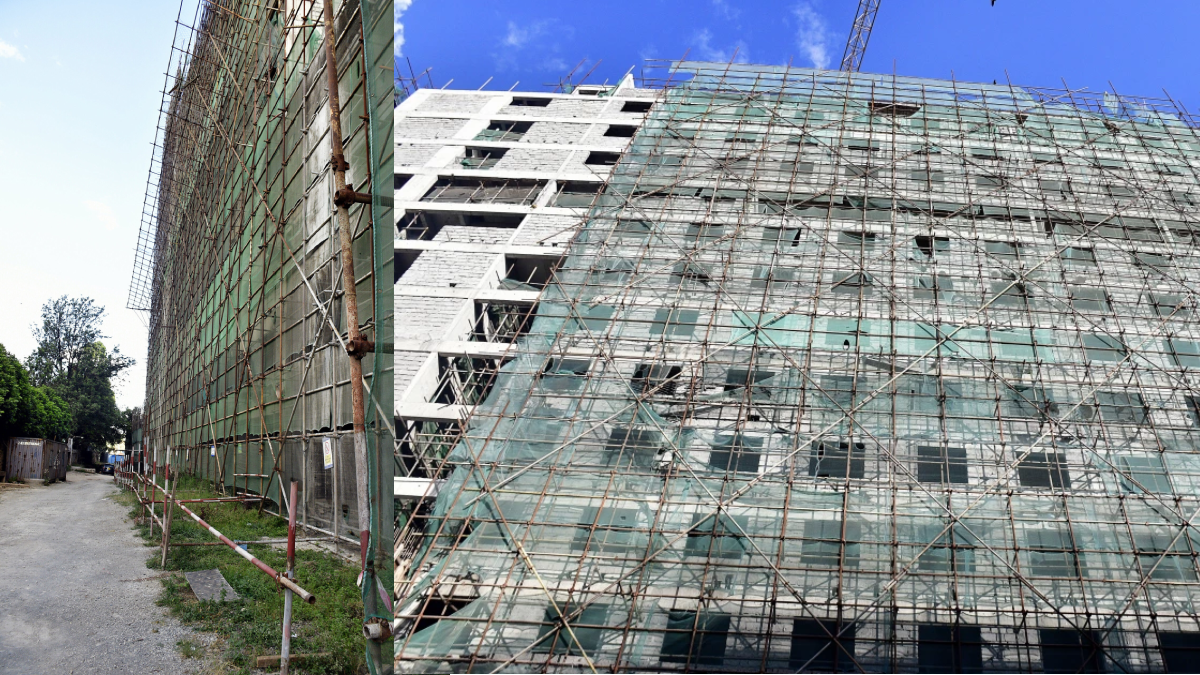
At the Kikuyu and Limuru affordable housing construction sites in Kiambu County, young interns are actively involved in ongoing works. More than sixty interns have been attached to the projects, gaining hands-on experience in trades ranging from masonry and electrical installation to plumbing, engineering, and site supervision.
Grace Wambui, an urban design and development intern at the Kikuyu site, says the program has provided exposure that would otherwise be difficult to access.
“This internship has allowed me to apply what I studied in class to real projects. Being on site has sharpened my understanding of urban planning and how design decisions affect actual communities,” she said.
For engineering interns, the experience goes beyond observation to active participation in construction processes.
Eddie Kung’u, a civil engineer intern at the Kikuyu affordable housing site, described the internship as a critical bridge between training and employment.
“Most employers want experience, yet many graduates don’t get the opportunity to gain it. Here, we are involved in real construction work, learning quality control, supervision, and problem-solving on site,” he noted.
Similar sentiments were echoed at the Limuru site by Yoram Masaba, a civil engineer intern, who said the program has helped build confidence among young professionals.
“This internship has exposed us to practical engineering challenges. We are learning directly from ongoing works, which prepares us better for the job market once the program ends,” Masaba said.
Beyond skills development, the program is also structured to ensure quality delivery of housing units. Elvis Ndua, an inspector of works at the Kikuyu site, emphasized the value interns bring to the project.
“The interns are eager to learn and contribute. They assist in inspections, site monitoring, and documentation, which improves efficiency while giving them practical experience in construction standards,” he explained.
President Ruto has framed the internship program as part of a long-term ambition to turn the affordable housing agenda into a national training ground for artisans, technicians, and future contractors. By embedding structured skills transfer into public works, the government aims to reduce reliance on short-term labour while building a skilled workforce for the construction sector.
As affordable housing projects continue to roll out across the country, the experiences of interns in Kiambu County point to a broader policy question on whether well-structured public works can provide a sustainable solution to Kenya’s youth unemployment challenge
For the young people already working on these sites, the answer is gradually emerging through skills gained, confidence built, and a renewed sense of purpose in shaping Kenya’s future.