
African countries have been urged to strengthen their institutions, invest in reliable biodiversity data and mobilise sustainable financing to accelerate the implementation of global biodiversity targets.
Experts say achieving the targets will require more than ambitious commitments, calling for stronger technical capacity, effective institutions and long-term investments to translate policies into practical action.
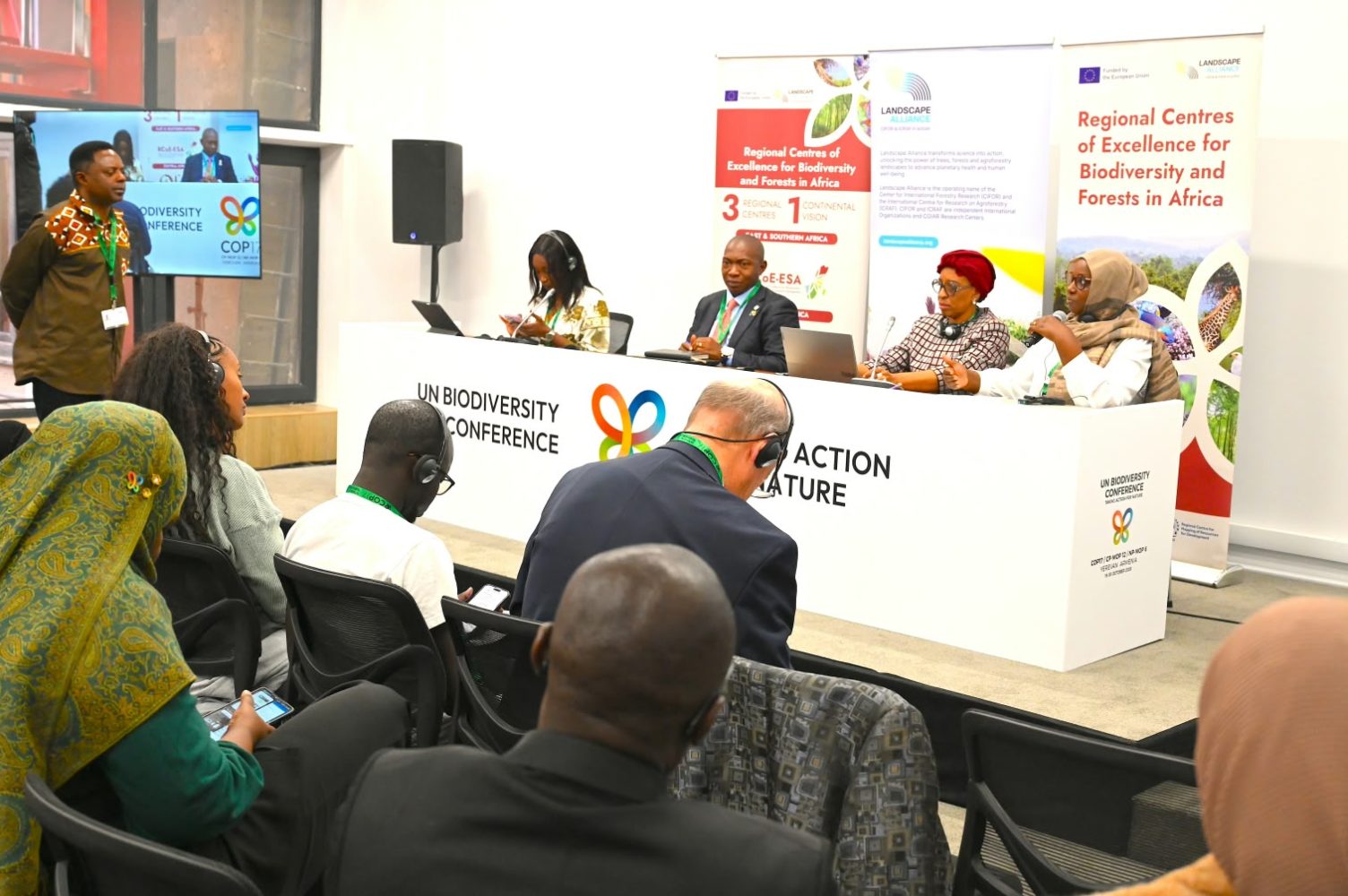
The call was made during the 2026 United Nations Biodiversity Conference (COP17) in Yerevan, Armenia, where African regional institutions highlighted the challenges facing countries in implementing the Global Biodiversity Framework.
The engagements were convened by Landscape Alliance (CIFOR-ICRAF) through the European Union-funded Regional Centres of Excellence for Biodiversity and Forests in Africa initiative.
Discussions focused on the role of regional institutions in providing technical and scientific support to African countries, particularly in biodiversity monitoring, data management, research and policy implementation.
Three Regional Centres of Excellence serving as Technical and Scientific Cooperation centres under the Convention on Biological Diversity were highlighted.
They include the Regional Centre for Mapping of Resources for Development (RCMRD), which serves Eastern and Southern Africa; the Centre de Suivi Écologique (CSE), serving West Africa; and the Central African Forest Commission (COMIFAC), serving Central Africa.
Africa Director at Landscape Alliance Dr Peter Minang said the continent must prioritise strengthening institutions and technical systems if it is to translate its biodiversity commitments into meaningful results.
“The question is no longer whether Africa has biodiversity commitments. The question is whether we have the systems, institutions, expertise and resources to implement them at scale,” said Dr Minang.
He noted that regional institutions play a critical role in bridging the gap between international commitments and the practical challenges facing individual countries.
Meanwhile, experts identified unreliable and fragmented biodiversity data as one of the major obstacles to effective decision-making and reporting.
Policy Engagement Specialist at RCMRD Jackline Karimi said geospatial technologies could help countries improve the accuracy of biodiversity information by identifying errors, validating datasets and supporting national reporting.
“Better data leads to better decisions. We need to ensure that the information countries collect is accurate, validated and accessible, so that it can actually be used to guide biodiversity action and reporting,” said Karimi.
She emphasised the need for governments to invest in accessible and reliable information to guide conservation efforts.
However, participants noted that technological solutions must be accompanied by investment in human resources and institutional capacity to ensure that available tools are effectively utilised.
Technical Director at CSE Marième Diallo called for improved data sharing, harmonisation and validation among institutions and countries, saying reliable information was essential in translating biodiversity plans into action.
“We need to look beyond the targets themselves and ask what it will take for countries to implement them. This means having the right information, the technical capacity to use it, and the financial resources to move from plans and commitments to action,” said Diallo.
On her part, COMIFAC Monitoring and Evaluation Specialist Valérie Tchuante stressed the importance of strengthening regional technical institutions through partnerships with universities and research organisations.
“We need to strengthen regional institutions and Technical Support Centres so that they can respond to the technical needs of countries. This requires stronger links with universities and research institutions, as well as sustainable institutional and financial arrangements,” said Tchuante.
The discussions further highlighted the need for long-term financing to maintain biodiversity data platforms, update information and retain technical expertise.
Dr Minang called for greater collaboration among governments, civil society organisations, the private sector and other stakeholders to address financing gaps and strengthen the institutions responsible for biodiversity conservation.
“We need to bring all actors together, including governments, civil society, the private sector and others, to look at the financing challenge and find ways of ensuring sustainable financing for the institutions and capacities needed to deliver biodiversity action,” he said.
The discussions at COP17 underscored the need for African countries to move beyond setting biodiversity targets and focus on building the institutional capacity, technical expertise, reliable data systems and sustainable financing required to achieve them.