Greenpeace Africa has submitted a case before Africa’s highest court seeking the court to rule that the climate crisis should be considered a crime and not a natural disaster.
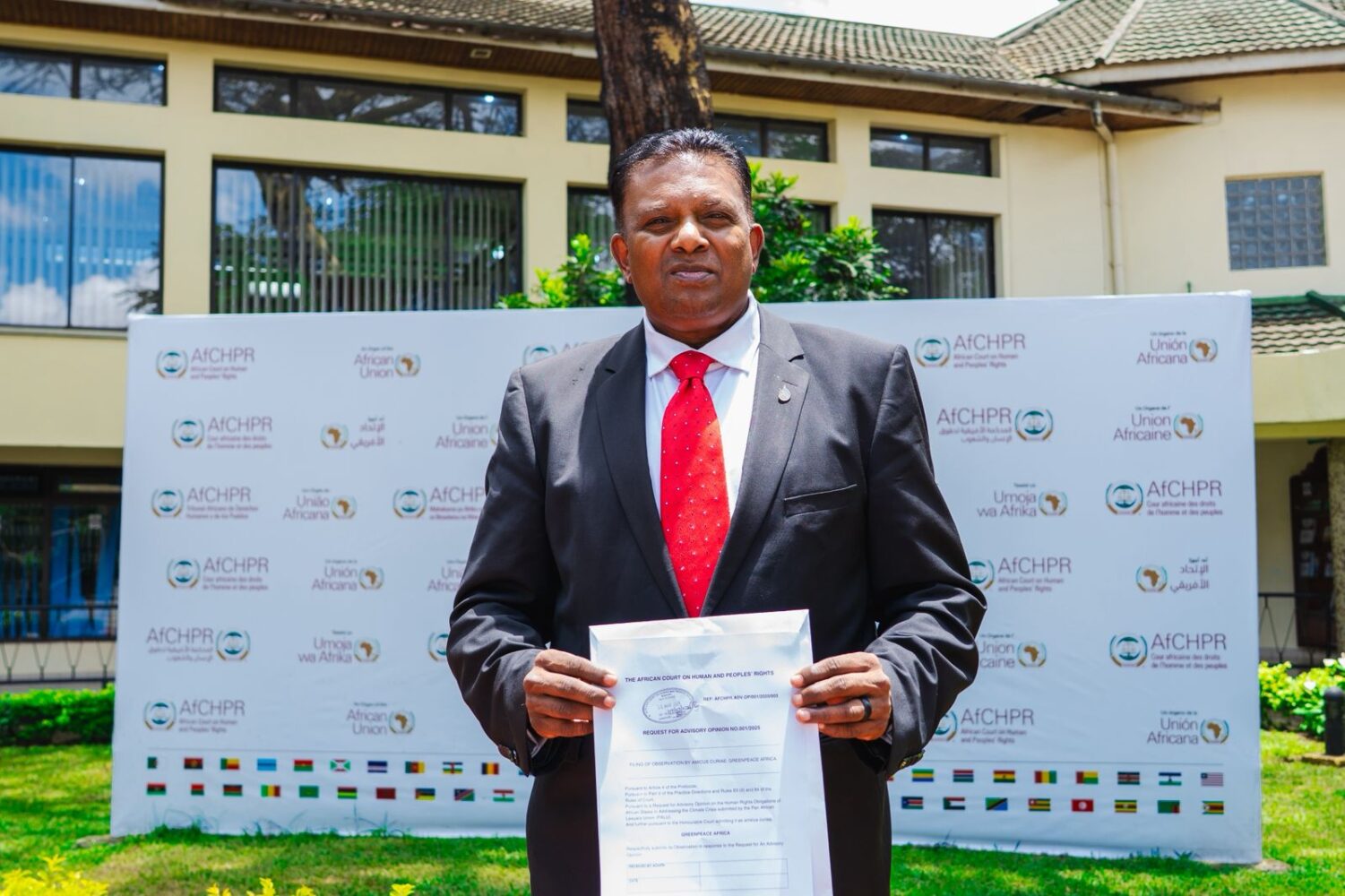
The group presented an amicus curiae brief before the African Court on Human and Peoples’ Rights (AfCHPR) Monday evening in Arusha, Tanzania.
An amicus curiae brief is a legal document submitted to a court by a non-party with strong interest or expertise in a case.
For years, multinational corporations and governments have been blamed for being on the forefront of the adverse effects of the triple-planetary crisis, including climate change, pollution and biodiversity loss.
The group says that corporations should be held to account for fossil fuel extraction, deforestation, mining as well as industrialized agriculture.
According to Eugene Perumal, Governance and Legal Advisor at Greenpeace Africa, the case aims to call for justice for frontline communities bearing the costs of a climate crisis they are least responsible for.
“Across the continent, communities are already living with the consequences of decisions made without their consent. We are asking the Court to affirm that governments must protect people and to draw a hard line against this ongoing corporate impunity.” he added.
The group’s argument rests on the African Charter on Human and Peoples’ Rights, which guarantees every person a satisfactory environment.
Due to the lack of a legal mechanism to enforce this charter, Greenpeace says, it is often broken by governments that look away while deep-pocketed corporations poison the environment for profit.
Elizabeth Atieno, Food campaigner at Greenpeace Africa says, “We look to the Court for a powerful advisory opinion that cements the rights of African communities to say no to extractive agriculture, and sends a definitive message to corporate exploiters that their time for operating with impunity on this continent is over.”
The submission calls on the Court to affirm three categories of binding State obligation under the African Charter:
- Substantive obligations – To cut emissions, protect carbon sinks, build resilience, and remedy harm already done
- Procedural obligations – To guarantee public participation, access to information, and access to justice, including when multinational corporations operate within a State’s borders
- Remedial obligations – To ensure reparations for climate-related human rights violations, including from corporations whose operations lock in further damage
If court rules in favor of the group, every citizen in Africa will have a legal tool to hold their governments and polluters accountable.