
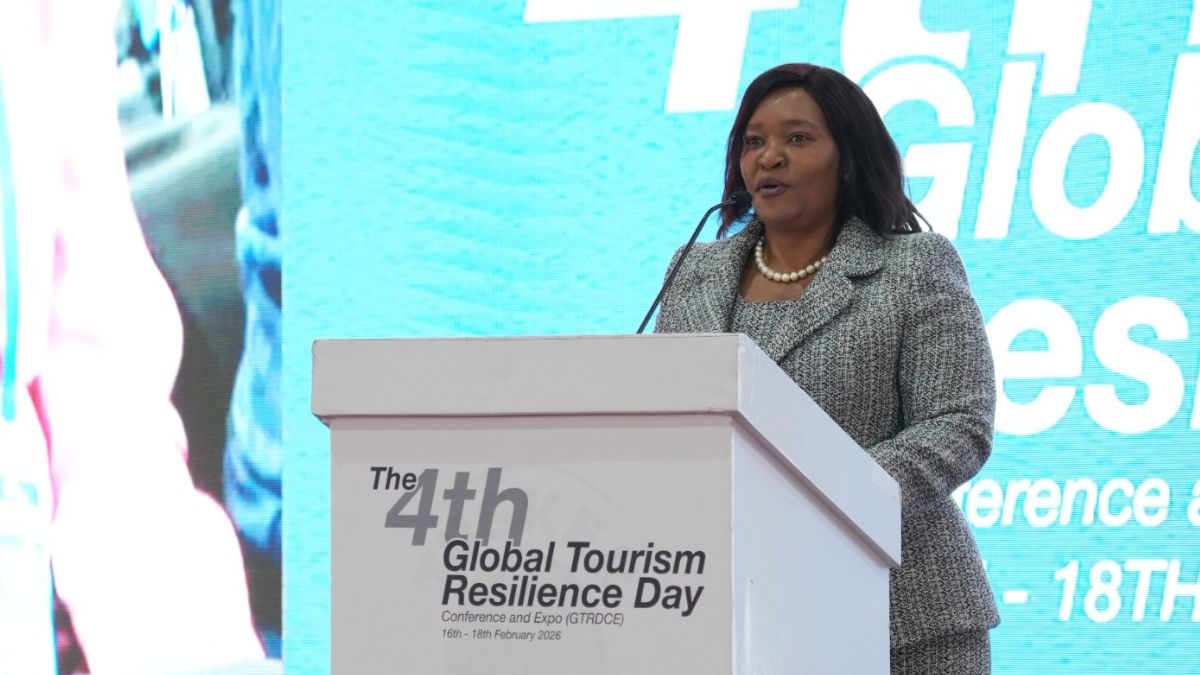
The 4th Global Tourism Resilience Day Conference and Expo started on February 16, 2026 at the KICC grounds in Nairobi, bringing together tourism leaders, policymakers, conservation champions and industry innovators from around the world to address the pressing challenges facing the global tourism sector.
This historic gathering, running from February 16 to 18, 2026, marks the first time the event, anchored by the United Nations, has been hosted on African soil, underscoring Kenya’s growing role in shaping international tourism resilience discussions.
From the opening session, the atmosphere has been one of urgency and optimism, as delegates engage in high-level dialogues under the theme “Tourism Resilience in Action: From Crisis Response to Impactful Transformation.”
Tourism Ministers, Heads of Government agencies, private sector leaders, academics, and development partners are exchanging insights on strengthening crisis preparedness, deepening digital innovation and embedding sustainability into tourism systems worldwide.
In her keynote address, Cabinet Secretary for Tourism and Wildlife, Rebecca Miano, articulated clear goals that reflect Kenya’s vision for a resilient and transformative tourism future.
She emphasised that the conference isn’t just about reacting to crises but about laying down robust systems that enable tourism to anticipate, adapt, and recover effectively in the face of global shocks.
According to her, preparedness should become a mandatory core of tourism planning and policy, not an afterthought.
During her speech, CS Miano highlighted several ambitions as foundational to Kenya’s leadership at the summit:
- Building institutional frameworks for resilience that can withstand disruptions such as pandemics, climate change impacts, and security threats, shifting beyond short-term crisis management to long-term sustainability.
- Strengthening global cooperation and partnerships to ensure knowledge sharing and coordinated action, positioning tourism as a strategic driver of economic recovery and development.
- Embedding innovation and technology into tourism systems to enable data-driven decision-making and more agile responses to emerging risks, a point she and other experts have underscored repeatedly in recent sector dialogues.
- Advocating for inclusive growth, where host communities and youth are empowered through skills development and opportunities that allow them to benefit directly from tourism, aligning with broader human capital initiatives championed by her Ministry.
Aside from formal speeches, the conference has featured expert panels on resilience governance, risk management, artificial intelligence, and communications strategies to protect destination reputations in an increasingly digital world.
Delegates also participated in networking sessions, exhibitions showcasing resilience models, and a cultural exchange that celebrated global tourism champions.
A special Resilience in Action Report is expected to be launched, alongside new indicators designed to measure and benchmark resilience across destinations.
The observance of Global Tourism Resilience Day on February 17, brings together ministers and industry leaders for deeper engagement on sector priorities, while planned field excursions on the final day will highlight Kenya’s successful resilient tourism models, including heritage conservation and sustainable urban tourism.