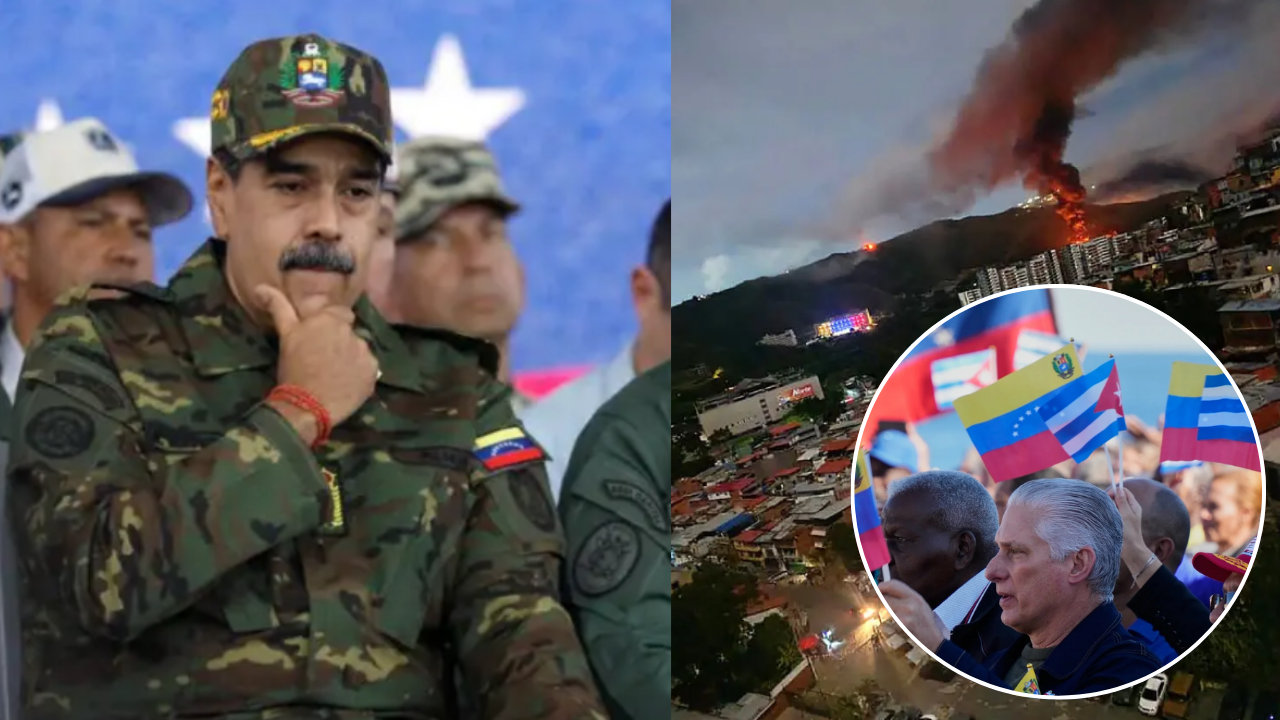
Cuba has confirmed that 32 of its nationals were killed during a United States military operation in Venezuela that led to the arrest and removal of President Nicolás Maduro and his wife, Cilia Flores.
In a statement issued on Sunday, Havana announced two days of official mourning on January 5 and 6, saying the fallen citizens were serving on authorised assignments in Venezuela. Details of funeral arrangements will be communicated later.
Cuban authorities said the victims were members of military and security units deployed in Venezuela under bilateral cooperation agreements with the Maduro government.
State media reported that they were killed during clashes with US forces and as a result of aerial bombardments on facilities where they were stationed.
The Cuban government described the deaths as the result of “direct combat and targeted strikes,” insisting that the personnel resisted what it termed an unlawful foreign intervention.
Cuba has maintained a longstanding security presence in Venezuela, providing military, intelligence and policing support for years. The deaths mark one of the heaviest losses suffered by Cuban forces abroad in recent history.
Maduro and his wife were flown to New York following the operation and are expected to appear before a US court to answer drug trafficking and terrorism-related charges that date back to 2020. Maduro has repeatedly rejected the accusations.
Images of the Venezuelan leader restrained and blindfolded during his arrest have circulated widely online, triggering outrage among supporters and renewed protests in parts of Venezuela.
Venezuela’s Defence Minister, General Vladimir Padrino, accused US forces of killing members of the armed forces, civilians and a large section of the presidential security detail.
“The attackers acted with extreme brutality,” Padrino said, adding that the Venezuelan military had been placed on heightened alert to defend national sovereignty.
US President Donald Trump confirmed the fatalities during the raids, telling reporters that there were “heavy losses” on the opposing side, including Cuban personnel. He said no US troops were killed.
Trump also suggested that Venezuela’s economic assets, particularly its oil resources, would now be subject to American control, remarks that further inflamed international criticism.
The operation has triggered widespread debate over its legality, with legal experts questioning Washington’s justification for deploying military force to seize a foreign head of state.
Several Latin American governments, including Brazil, Colombia, Chile and Mexico, condemned the action, warning that it undermines international law and regional stability. In contrast, governments in Argentina and Ecuador expressed support for the move.
Global powers Russia and China issued sharp rebukes. Beijing called for the immediate protection of Maduro and his wife and demanded respect for Venezuela’s sovereignty, while Moscow described the operation as an act of military aggression.
The United Nations Security Council is scheduled to meet to discuss the crisis as diplomatic tensions continue to escalate across the region.