

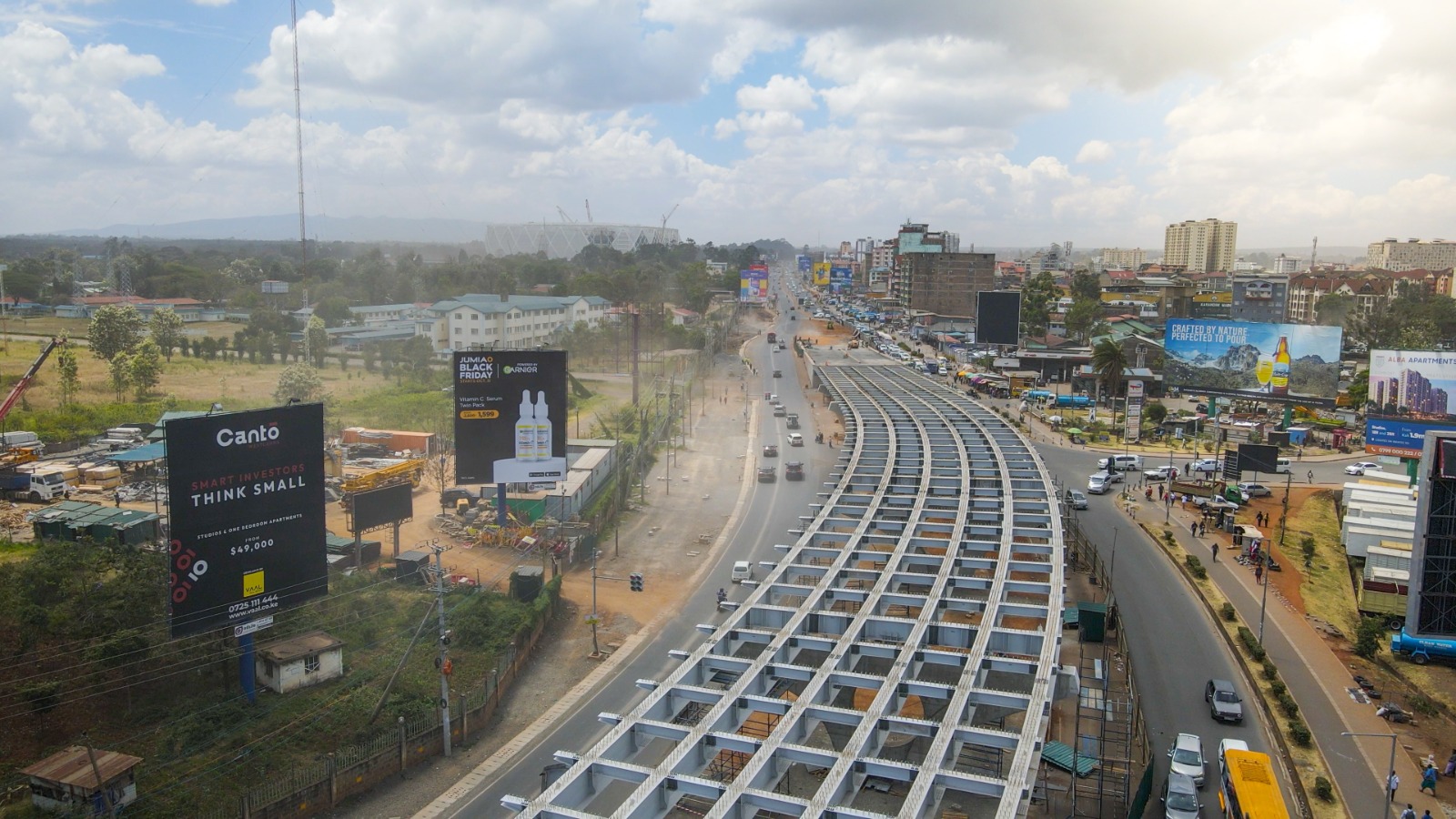
With the expansion of Ngong Road now at 90 per cent, the perennial traffic gridlock in the South-Western part of Nairobi will soon be a thing of the past.
Delivering the status report, Mr Pablo Acosta, the Project Director, announced that the project will be ready for handover by June 2026, noting that major construction works have been completed.
The centrepiece of the project is a 450-metre viaduct, a dual carriageway with two lanes in each direction, including the inbound and outbound approaches, while the bridge is approximately 820 meters long.
Acosta said major construction works are now being done at night in order to avoid traffic interruptions during the day. However, construction continues on a small scale during the day to ensure that the project is completed on time.
“We have around 90 per cent of progress right now, the only remaining part to be finished is the deck of the bridge, the concrete deck, as well as the ramp to embankment and roadworks,” said Acosta.
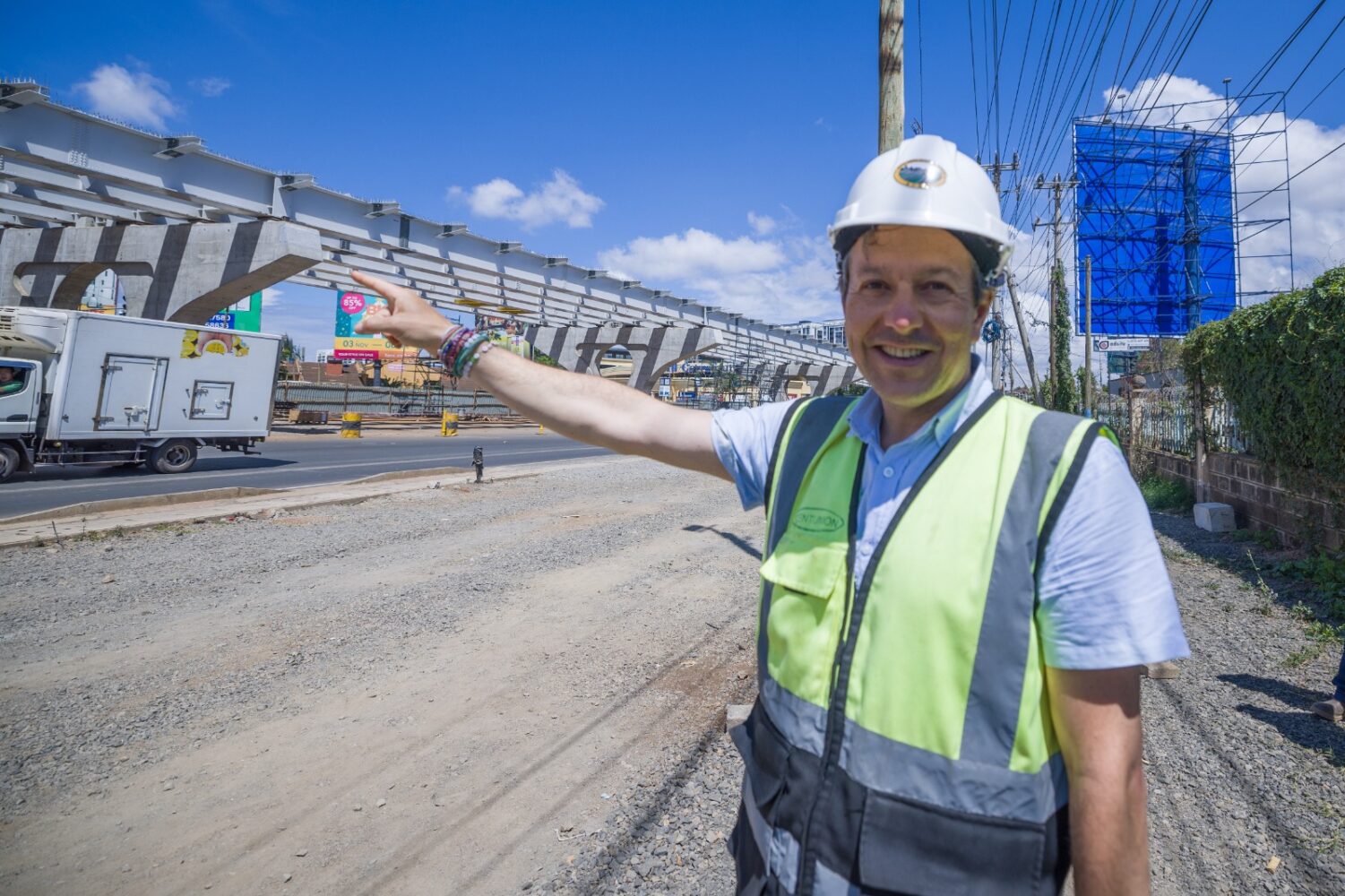
At the same time, the official said they are also going to build pedestrian lanes, bicycle tracks, beautification and nonmotorized tracks as well as traffic and street lights, at the tail end of the project.“
So we expect to finish this project by mid next year, hopefully by June or July of 2026,” he affirmed.
For many years, Ngong Road has been notorious for heavy traffic that has seen motorists and other road users spending hours on the road, leading to loss of man-hours.
“We work during the night to try to minimise the traffic impact. We are lifting with two cranes, so basically we need to close one side in order to move and operate with the cranes, picking up the modules and lifting up to a final position,” he said, adding: “In order for doing that we need to close one side, we are closing this south side and we are opening the north side.”
Caption: Pablo Acosta, Ngong Road project director, says they will hand over the project in June 2025.
Owing to the fact that Ngong Road is a key artery for Nairobi, traffic gridlock has become a common phenomenon especially during peak hours- morning and evening hours, as Nairobians rush to work and leave for home after close of business.
“If you do it during the day there would be too much traffic disruption, that is the reason that we do it at night,” he pointed out.
According to him, heavy traffic is also witnessed in the area during the festive season, exerting pressure on the road that links Ngong Town, Karen, Langata, Kilimani, Adams Arcade, Jamhuri, and Kibiko, among others.
Usually, motorists take about 2 hours from Ngong Town to Nairobi’s Central Business District, a distance of about 26 kilometres, said Engineer Wilfred Oginga, Director of Urban Roads Planning and Design at Kenya Urban Roads Authority (KURA).
However, the construction of the viaduct and dual carriage is expected to reduce the commute time to about 25 minutes. The construction of the viaduct is located at Junction Mall in Dagoreti. It is also expected to ease traffic along Naivasha Road.
Eng. Oginga said the expansion will go a long way towards significantly improving connectivity through the redevelopment of Naivasha and Magadi Roads, linking Bomas of Kenya to Ongata Rongai and extending through Lang’ata Road from Bomas to Karen Shopping Centre and onward to Ngong. “I’ve seen the struggles people face every day on this road. But finally, there’s real hope,” he said.
“The road is wide, construction is moving fast and we’ll soon have an overpass and underpass connecting Kingara and Karen. Once it’s done, it might take just ten minutes to get from Ngong to town,” he stated.