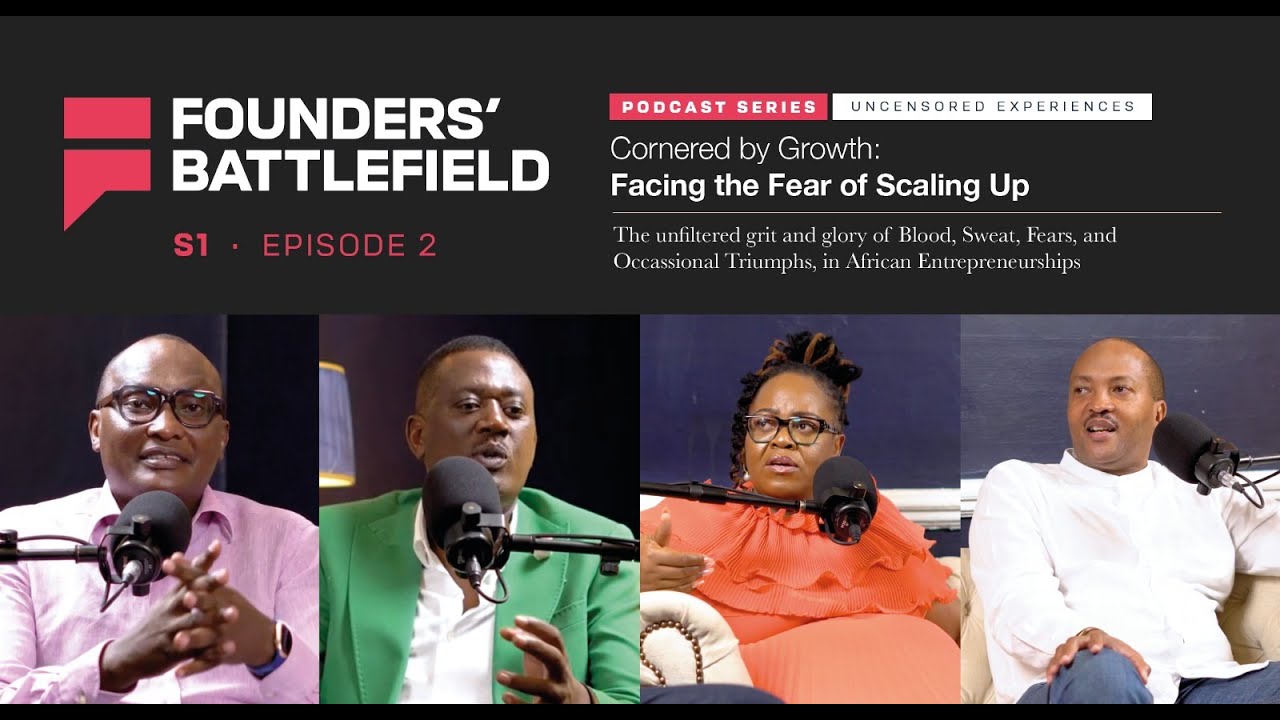
Every entrepreneur has that moment. You leave your job, start your own company, and suddenly your former employer becomes the benchmark for everything. You check their moves, compare your growth to theirs, and celebrate every small victory that puts you ahead.
Peter Nduati, Founder of Resolution Group and Chairman of True Blaq Group, lived this obsession for years, and it nearly cost him everything.
When Nduati started Resolution Group 23 years ago, he had a clear target; beat his former employer.
He was young, experienced, and angry enough to bootstrap a health insurance business in an unregulated market. The odds were stacked against him.
White CEOs dominated the industry with easier access to clients and capital. Nduati had something they didn’t, intimate knowledge of the industry’s gaps and the hunger to prove his former boss wrong.
Within four years, his business broke even. By year six, he had raised capital and was expanding across Kenya. Then something remarkable happened. He surpassed his former employer completely. Resolution Group was bigger, more profitable, and better positioned.
“One of the errors that I made was that I was so focused on beating my former employer. Even when we became bigger, I surpassed it. It was a very narrow vision at that particular time,” Nduati reflected.
His vision had been so fixated on one competitor that he hadn’t thought about what came after victory. While he was busy beating one company in Kenya, regional players were building empires across East Africa.
Global health insurers were eyeing African markets. Technology was beginning to disrupt traditional insurance models.
This competitive tunnel vision is one of the most common and dangerous traps in entrepreneurship. It feels productive because you’re constantly moving, growing, and winning battles.
The real competition isn’t your former employer or that rival company across town.
It is the market opportunity you’re missing while you’re looking backward. It’s the innovation happening in adjacent industries that will disrupt yours. It’s the customer needs evolving faster than your product roadmap.
The 2008 post-election violence forced his hand. With Kenya’s economy tanking, he had no choice but to expand into Tanzania. But even that move was reactive rather than strategic.
He went to Tanzania because he’d worked there before, because it felt safe and familiar. Not because he had done rigorous market analysis or identified the highest-value expansion opportunity. He was still making decisions based on his history rather than the market’s future.
Mike Macharia, Founder of Founders’ Battlefield, CEO of Ponea Health and Seven Seas Technologies, touches on something critical here.
There was a period in Kenya, roughly 2000 to 2012, when excellence alone could build a business.
“We came from that evolution where it was be the best at what you are. I would get projects from NSSF. I never knew anybody at the board. KPLC, I never knew anybody at the board. People just gave me business because I was good at what I did,” Macharia recalled.
Today’s Kenyan business environment demands different strategies.
Pauline Warui, CEO and Founder of East Africa Customer Care Center, identifies another dimension of this problem. When you define yourself in opposition to someone else, particularly a former employer, you’re building your identity on external validation.
“I think one of the things that we fail in as entrepreneurs is we believe in ourselves too much, particularly when we have succeeded. When you’ve not succeeded, you’re actually quiet. You’re actually pushing the name of your company. But when you walk in, you walk in now and you’re like, I am the Michael. I am the Pauline. I think it is really also an ego thing,” Warui reflected.
That ego becomes especially dangerous after you’ve had some success. You start believing your own hype, walking into rooms announcing yourself rather than letting your company’s reputation speak.
You’re not asking what unique value you bring to the market. You’re asking whether you’re winning a comparison contest.
This is where Lenny Nganga, CEO of Omnicom Media Group East Africa, offers a crucial perspective on breaking free from founder-centric thinking.
“We have to start consciously building the reputations of our companies for excellence in our fields so that the reputation outlives you as a founder. For too long, we as founders, we end up being the public face of the company. But we have to start building that image of the company consciously and building that brand so that it stands on its own,” Lenny explained.
The trick isn’t to ignore competition entirely, market intelligence matters.
Understanding what rivals are doing helps you spot trends and identify gaps. But there’s a massive difference between market awareness and competitive obsession. The former informs strategy. The latter becomes the strategy, and that’s when you lose.
CEO Nduati eventually broke free from his narrow focus and built Resolution Group into a significant regional player before exiting. But he’s candid about the years he wasted and the opportunities he missed because he was too busy keeping score against the wrong opponent. His billion-shilling goal, ambitious for its time, was still thinking too small because it was framed around beating one company rather than capturing a market.
If you’re an entrepreneur who checks your competitor’s LinkedIn more than your own customer feedback, who measures success by whether you’re bigger than your former employer, or who makes strategic decisions based on what your rival is doing, you’re running Nduati’s race.
And you’ll likely get his result: eventual success, but years later than it should have been, and smaller than it could have been.
“It is good to associate a brand with its own resources, whatever it is that is selling. You need to quietly start stepping back. That is why we’re here. If we were in our 20s, we would not be giving stories. We will be like, I don’t want my story to be shared. But today you can be able to say, that is my company. But personally, these are the challenges and the mistakes that I made,” Warui narrated.