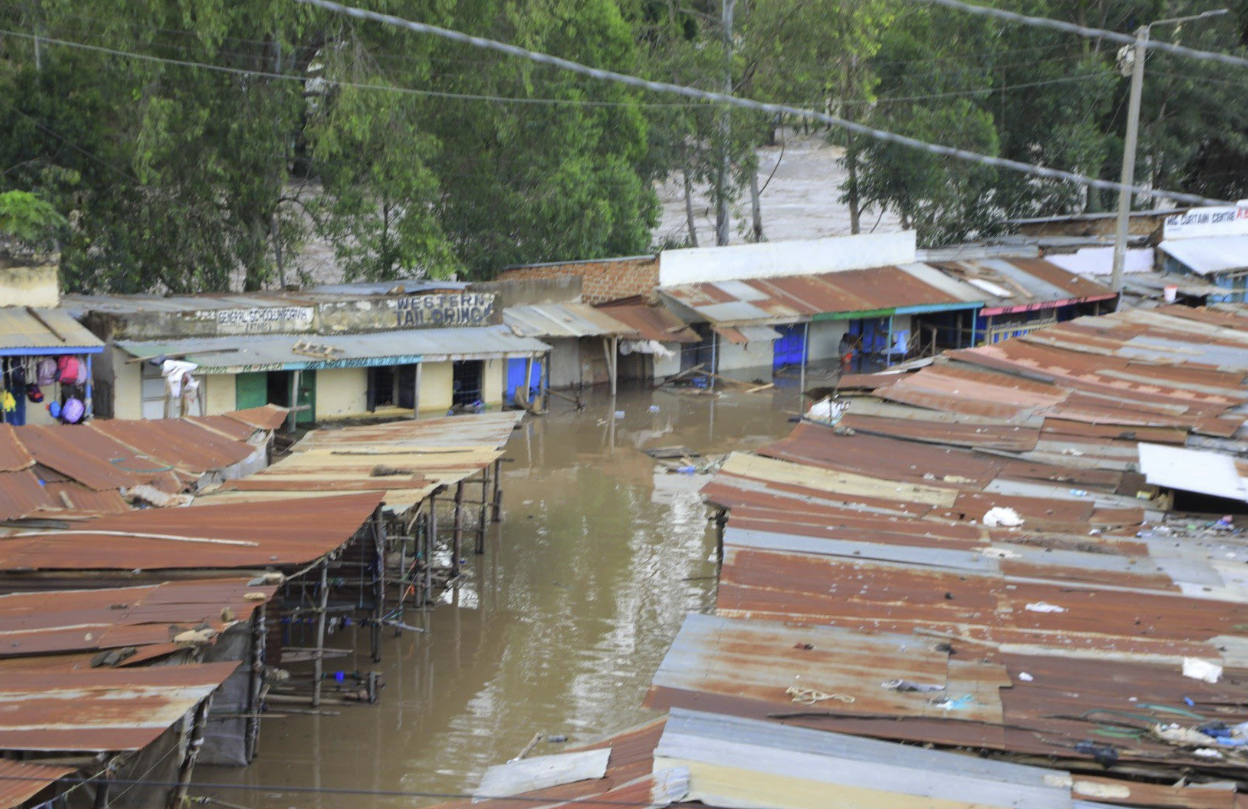
Twenty five people have been killed and property of unknown value destroyed after flash floods swept parts of the country on Friday March 6, 2026.
Nairobi had the most fatalities with twenty three bodies retrieved from Nairobi rivers in Starehe and Kamukunji sub-counties, while other persons were swept by the raging floods in Kibra Sub-county.
The Government has activated multi-agency emergency response mechanisms following widespread flooding and rain-related incidents reported across several counties after intense rainfall that began on 4 March 2026 and intensified between 6 and 7 March 2026.
Preliminary reports indicate that Kiambu, Kajiado, Makueni, Nakuru, Murang’a, Bungoma, Kwale, Kirinyaga, Migori and Tharaka Nithi counties have also experienced varying levels of flooding, resulting in damage to homes, businesses, farms and public infrastructure.
Search and rescue operations are currently underway in Nairobi, where seven bodies have been retrieved from rivers following overnight flooding, while two persons remain missing in Kibra.
Across the affected areas, more than 800 households are estimated to have been displaced, with over 700 homes and structures affected, particularly in informal settlements and low-lying urban areas.
Security and response teams comprising the Kenya Defence Forces (KDF),National Police Service (NPS), the National Government Administration (NGAO), County Governments, engineers, Kenya Red Cross, Kenya Power and other emergency partners have been deployed to coordinate rescue operations, support evacuations, and restore essential services.
The heavy overnight rains caused significant flooding in several parts of Nairobi, with major roads including Mombasa Road, Uhuru Highway, Lang’ata Road, Mpaka Road in Parklands, and sections of Kangundo Road experiencing flooding and traffic disruptions.
Residential flooding has been reported in Viwandani, Mukuru kwa Reuben, Kibra, Kawangware, South B, Eastleigh, Dandora, Kariobangi, Umoja, Kware, Parklands and Westlands, with emergency teams assisting affected families to move to safer locations.
The Government notes that many of the affected settlements in Nairobi are located along riparian corridors of the Nairobi, Ngong and Mathare rivers, which remain highly vulnerable during heavy rainfall.
The ongoing Nairobi Rivers Regeneration Programme, currently at approximately 30 percent implementation, is aimed at restoring river channels, improving drainage systems, and reclaiming riparian reserves to reduce flooding risks and protect lives.
Residents currently living along riverbanks are strongly advised to voluntarily evacuate to safer ground, particularly during this period of sustained rainfall.
Elsewhere, flooding has rendered several roads and bridges impassable. In Makueni County, the Wote–Emali Road was cut off near Isambani while Kyamelu Bridge overflowed following heavy downpours. Authorities have advised motorists to avoid flooded drifts and seek alternative routes.
Additional incidents reported include flooding of Barazani Market and surrounding homes in Mutiswa and Mbitini areas, while strong winds accompanying the storms damaged structures including Masalani Catholic Church and nearby residential houses in Kibwezi.
In Kajiado County, flooding affected 21 households in the Zambia and Elpaso areas of Ngong, causing significant property damage after water submerged vehicles and household goods. No casualties were reported.
In Nakuru County, flash floods swept through Fibers and Shamer Estates in Kiratina, Lanet, forcing the evacuation of women and children to safe neighbourhood homes.
The public is advised to remain vigilant and cooperate with authorities by avoiding flooded roads, rivers and drifts, and moving to higher ground where necessary.
The Government continues to monitor the evolving weather conditions closely and will provide further updates as additional assessments from affected counties are received.