Every morning at 7:30 a.m., Rachael Awuor watches her two sons disappear down the narrow alleys of Nairobi Ndogo in Kisumu East. When they are gone, she washes the breakfast dishes, tucks a pen and notebook into her handbag and begins a determined five-kilometre walk to Kaloleni Adult Learning Centre in Kisumu Central.
At 34, Rachael is a mother and a student.
“My boys are in Grade Four and Six,” she says softly. “They often bring homework I can’t understand. I joined adult classes so I can read their instructions and guide them better.”
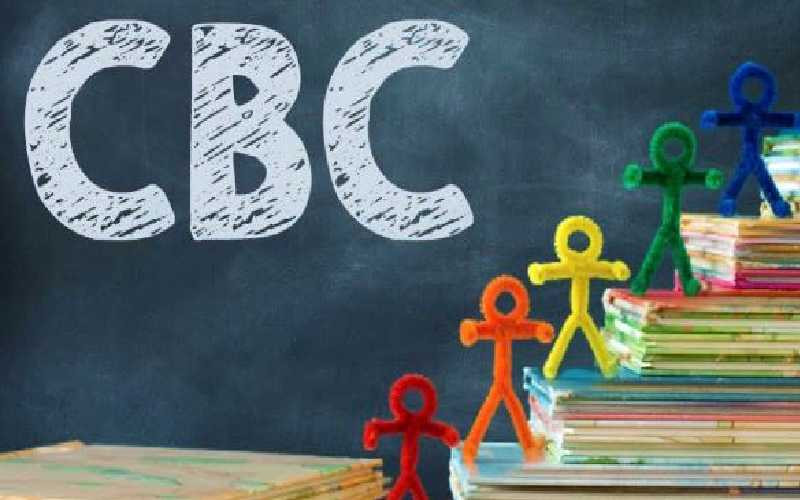
Her story mirrors a national crisis quietly unfolding under the Competency-Based Curriculum (CBC) whereby parents are expected to be co-educators but held back by low literacy.
CBC: A Curriculum That Assumes Literacy
Introduced to promote skills and creativity, CBC emphasizes projects and home-based assignments that rely on parental involvement. But for millions of Kenyan parents, that expectation is unrealistic.
The curriculum assumes every parent can read, research and guide. This is a luxury far from reach for many families struggling with limited education, time, or resources.
Urban Struggles: Literacy Meets Time Poverty
At Arya Primary School, Grade One teacher Merryle Osaho has seen the gap widen.
“CBC expects parents to help with projects and creative work,” she says. “But many can’t interpret instructions or are too busy surviving.”
Even literate urban parents are overwhelmed by long work hours and rising living costs.
“They leave home before sunrise and return late. By then, there’s no time or energy left to assist,” she adds.
Rural Challenges: Illiteracy and Isolation
A few kilometres away, at Alango Primary School, teacher Samwel Onyango faces a deeper issue.
“Most parents here didn’t finish primary school,” he explains. “When tasks involve writing or making models, children get no help. Some parents even tell them to skip those activities.”
Without literate support at home, CBC’s goal of linking classroom and real-life learning collapses.
Parents Speak: Love Meets Limitations
In Manyatta, Mary Achieng admits she struggles to keep up.
“The instructions are in English and hard to follow,” she says. “My daughter keeps asking questions I can’t answer. I feel embarrassed.”
Jared Ouma, a guardian to a Grade Six pupil, echoes his frustration.
“I stopped school at Standard Two. These CBC tasks including research and presentations are new to me. I just tell my child to ask the teacher.”
Their love is unquestionable, but their literacy limits their ability to help.
The Numbers Behind the Crisis
Kenya has over 32,000 public primary schools but fewer than 3,300 adult education centres, most of them underfunded and understaffed. Enrollment in adult classes has risen slightly from about 152,000 in 2025 to 154,000 in 2026, a 1.3 percent increase, according to the Ministry of Education.
In Kisumu, only a handful of centres remain active, forcing learners like Rachael to walk long distances.
“Sometimes I arrive late or tired, but I can’t stop,” she says. “I’m learning for my sons. I want them to see education never ends.”
Expert’s View: A System Built on a Weak Pillar
Michael Willice Oriedi, Head of Institution (HoI) of MM Shah Primary and Junior Secondary School in Kisumu Central, warns that CBC’s success depends on an informed home environment.
“We are asking parents to guide a curriculum they don’t understand,” he notes. “The home-school bridge collapses when parents can’t participate.”
He calls for urgent government investment in adult literacy and parental sensitization.
“Adult education must be integrated into CBC policy, not as charity but as empowerment.”
This view is strongly echoed by Joseph Wasikhongo, the National Coordinator of the Elimu Yetu Coalition, who argues that the literacy mismatch is not a failure of design but an implementation gap.
“The government doesn’t design itself to fail. It faces the complex challenge of aligning a new curriculum with a society where not all parents possess the required literacy,” he explains.
“When the curriculum relies on home-based learning without equipping parents, it inadvertently creates a two-tier system, one for the literate and one for those left behind.”
He insists that addressing parental literacy “is not just a social service but a prerequisite for CBC’s success,” urging the state to treat adult education as a strategic pillar for basic education rather than a peripheral activity.
“By resourcing and retooling adult education centres,” he adds, “the government can bridge the divide between school and home and turn exclusion into inclusion, ensuring that a parent’s educational background does not dictate a child’s academic future.”
The Policy Gap and the Way Forward
CBC’s framework lists parental empowerment as a key pillar, yet implementation overlooks adult literacy. Bridging that gap requires bold interventions:
●Establish community-based and mobile adult literacy classes near primary schools.
●Integrate CBC awareness sessions in adult programs to help parents support lower grades.
●Forge county-government and NGO partnerships to fund flexible adult learning schedules.
●Organize school-led workshops using visuals and storytelling to reach illiterate guardians.
●Partner with National Government Administration Officers to accommodate adult learning sessions within weekly public barazas.
Without such reforms, the curriculum risks deepening educational inequality, particularly in rural counties.
The Clarion Call
Back at Kaloleni, Rachael sits among other adult learners, their voices steady as they read aloud from tattered books.
“Every new word I learn helps my sons,” she smiles. “Now they ask me to study with them and that makes me proud.”
Her journey captures what CBC was meant to inspire: learning that transcends generations.
But until Kenya empowers parents like Rachael, CBC will remain an unfinished promise — a curriculum designed for every child, but accessible only to those whose parents already know how to help.