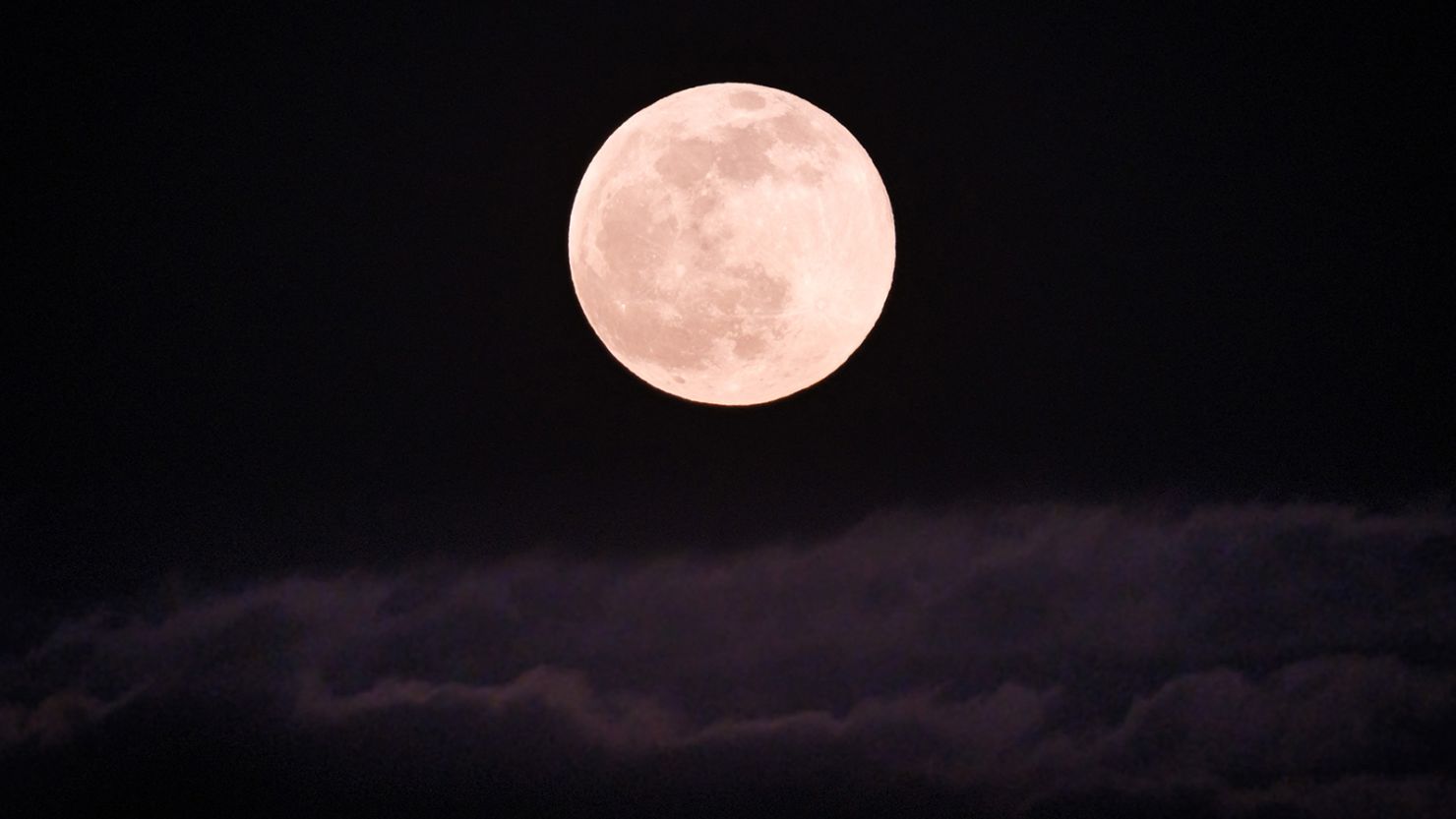
Before wrapping up your Wednesday evening on April 1, look up, the Pink Moon will be gracing the night sky.
The Pink Moon is the traditional name for April’s full moon, a custom rooted in Native American, Colonial American, and European traditions.
The name is inspired by Phlox subulata, commonly known as moss pink, a vibrant spring flower that blooms around the same time.
Despite its name, the moon does not actually turn pink.
Beyond its name, the Pink Moon carries significant meaning. Also referred to as the Paschal Moon, it marks the first full moon after the spring equinox, signalling the onset of spring.
It also determines the date of Easter, which falls on the first Sunday following the event.
More broadly, it symbolises renewal, rebirth, and transition.
The Pink Moon will reach peak illumination on April 1, 2026, at 10:12 p.m. Eastern Daylight Time (E.D.T).
As it rises, it may appear larger than usual due to the “moon illusion,” a visual effect caused by the moon’s position low on the horizon.
Viewing times will vary by location, with Eastern viewers catching peak illumination at 10:12 p.m., Central at 9:12 p.m., Mountain at 8:12 p.m., Pacific at 7:12 p.m., Alaska at 6:12 p.m., Hawaii-Aleutian at 5:12 p.m., and Hawaiian Standard Time viewers at 4:12 p.m.