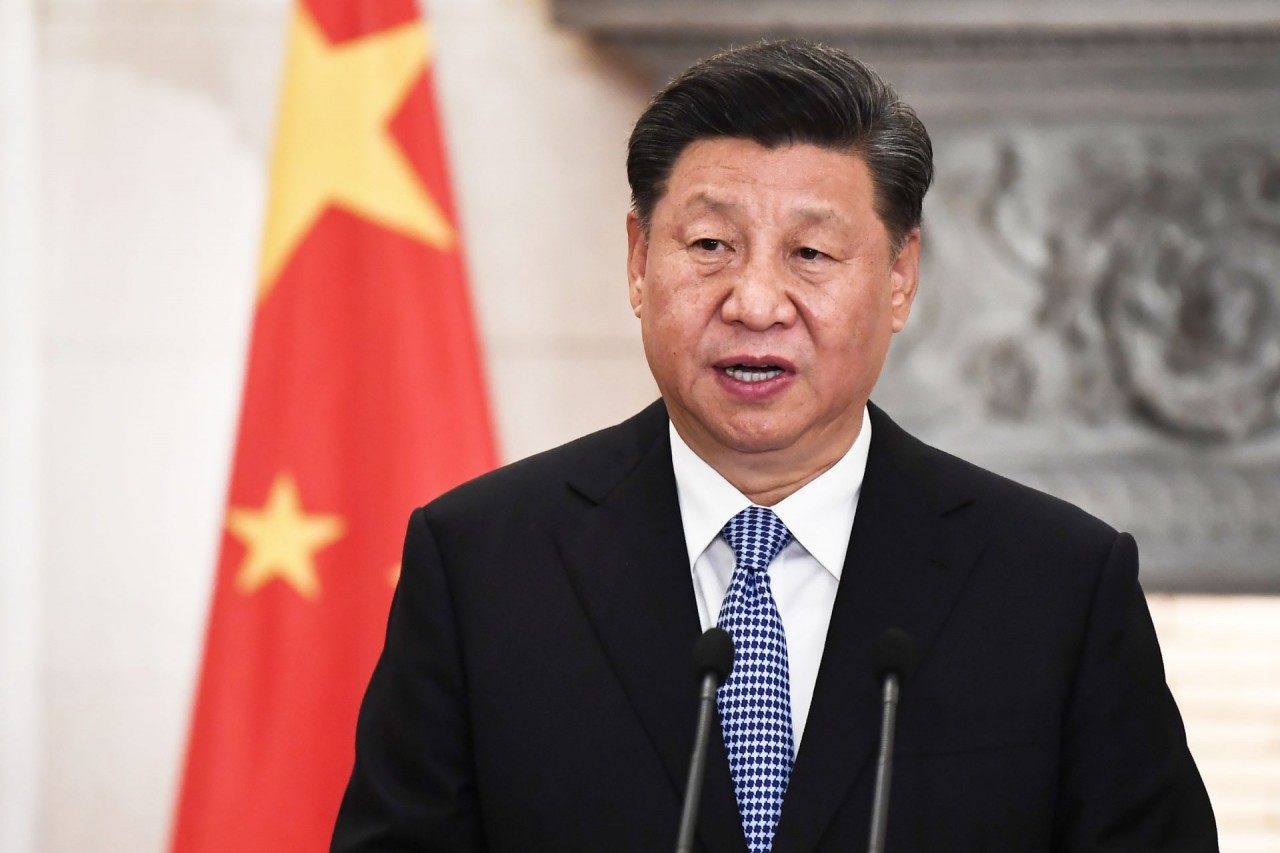
China has unveiled its 15th Five-Year Plan (2026–2030), a crucial roadmap to steer the country toward its goal of achieving socialist modernisation by 2035.
Adopted during the fourth plenary session of the 20th Central Committee of the Communist Party of China (CPC) held in Beijing from October 20 to 23, the plan will serve as a crucial bridge between past progress and future ambitions.
The China Daily reports that the release of the plan marks a defining phase as China consolidates its foundations and accelerates high-quality development.
Experts say the new plan comes at a time when the global environment has grown more complex and domestic challenges have deepened. China faces what analysts describe as a convergence of short-term and structural pressures — from subdued demand and weak business confidence to risks in the property and financial sectors.
Zhang Jun, chief economist at China Galaxy Securities, said the plan must “anchor the 2035 goal” while providing “forward-looking guidance informed by both past achievements and shifting global dynamics.”
He said the next five years will mark “a key stage of fully advancing the development of new quality productive forces,” with technological innovation, digital transformation, and emerging industries at the core.
“Greater emphasis will be placed on measurable indicators such as research intensity, patents per capita, and the share of strategic emerging industries and the digital economy in total output,” Zhang added.
The plan prioritises strengthening basic research, tackling “bottleneck technologies,” and enhancing supply chain security. It also seeks to expand the digital economy, build a robust AI industry ecosystem, and nurture new sectors such as commercial spaceflight, the low-altitude economy, and deep-sea technology.
Zhang said fiscal policy will increasingly shift “from investing in goods to investing in people,” with higher spending expected on childcare, education, and social welfare. “In 2024, services accounted for 46.1 percent of household consumption expenditure — still below advanced economies, signalling vast potential for expansion,” he noted.
Experts emphasise that boosting domestic demand — both consumption and investment — will remain central. With global conditions uncertain, China is expected to rely more on internal drivers of growth, particularly the expanding services sector and consumption upgrades.
China’s five-year plans also serve as reform blueprints. The 15th Plan coincides with the rollout of more than 300 reform measures adopted at the third plenary session of the CPC Central Committee, aimed at reinforcing institutions that support high-quality development.
The National Development and Reform Commission (NDRC) has invited research on reform priorities, including balancing state-owned and private sector growth and optimizing fiscal relations between central and local governments — a clear signal that institutional reform remains a key focus.
Luo Zhiheng, chief economist at Yuekai Securities, said China’s economy is shifting “from high-speed growth to high-quality development, and from supply shortages to insufficient demand.”
“Demand shortfall remains the central challenge during the 15th Five-Year Plan period,” he said. “Boosting consumption and optimizing investment structure will be major priorities.”
Luo identified three major challenges — trade frictions, demographic pressures, and local fiscal constraints — but also three key opportunities: strengthening non-U.S. economic partnerships, developing a unified national market, and accelerating human capital and technology innovation.
He called for deeper fiscal and taxation reforms to “balance short-term debt control with long-term modernization goals,” while improving income distribution and stabilizing property and stock markets to prevent negative wealth effects.
Xiong Yuan, chief economist at Guosheng Securities, summarized the plan’s foundation around four pillars — economy, reform, technology, and livelihoods. “Stability and high-quality growth remain the foundation,” he said. “Science and innovation will drive policy, while employment, income, education, housing, and ‘common prosperity’ stay at the heart of development.”
As China navigates global uncertainty and domestic restructuring, experts agree that the next five years will be about balancing short-term stability with long-term modernization.
“During the 15th Five-Year Plan period, we must pursue two main lines — accelerating new quality productive forces on the supply side and building a strong consumption-driven economy on the demand side,” Luo said.
Ultimately, the 15th Five-Year Plan is expected to chart a path toward resilient, innovation-led, and inclusive growth, keeping China firmly on course toward comprehensive modernization by 2035.
ALSO READ: YAS completes acquisition of Wananchi, reinforcing its leadership in Fibre across Africa