For months, Kenya has been grappling with a sharp rise in cases of gender-based violence (GBV), including femicide, sparking public outrage and renewed scrutiny of the country’s justice and protection systems.
Despite progressive laws guaranteeing equality and protection, survivors have continued to face slow justice, fragmented services, cultural barriers, and weak accountability.
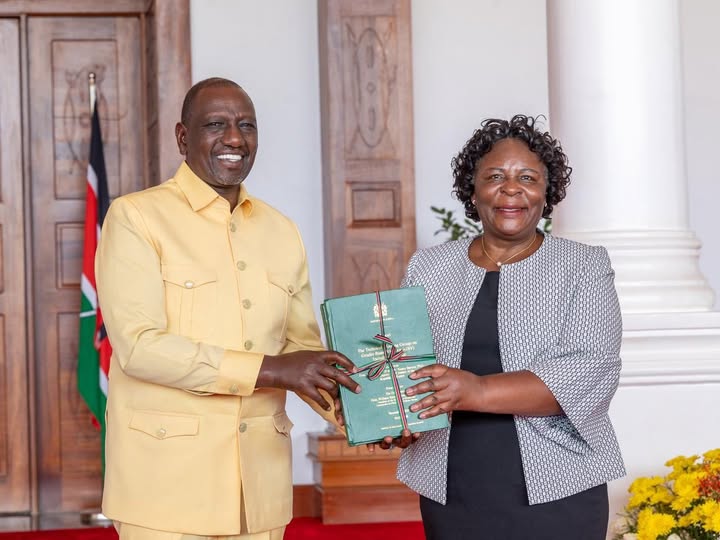
In response, the government constituted a national Technical Working Group on Gender-Based Violence and Femicide, mandated to review gaps in law, policy, and implementation.
Through public dialogues across all 47 counties, social media engagements, academic forums, and written submissions, the group documented systemic failures from the legal invisibility of femicide to the lack of survivor-centered support systems.
The result is an ambitious implementation framework that sets clear actions, timelines, and responsible institutions, stretching from immediate interventions to long-term structural reforms. The true test, however, lies not in the promises, but in the execution.
The Immediate and Short-Term Interventions (2025–Early 2026)
The earliest phase of implementation focuses on prevention, reporting, and first response.
By December 2025, the government plans to prohibit the use of traditional dispute resolution mechanisms for all GBV cases, ensuring such matters are handled exclusively through formal judicial processes.
This marks a direct shift away from informal settlements that have historically prioritized reconciliation over justice.
Within the same timeframe, GBV prevention is set to move into health and family spaces. Positive parenting education is to be integrated into all antenatal care visits, while the National Parenting Policy will be rolled out to engage parents in structured GBV prevention programs.
By January 31, 2026, a national integrated toll free GBV helpline and call centre is expected to be operational under the government’s ICR3 framework.
The system is designed to provide reporting, counselling, and referral services with a rapid response mechanism, jointly managed by the Ministries of Gender and Health alongside the National Police Service.
Funding is also addressed early. By March 31, 2026, the National Treasury is expected to allocate a dedicated national budget line for GBV prevention, response, and survivor support in the 2026/2027 financial year a move aimed at ending reliance on fragmented donor funding.
Strengthening Response Systems and Justice (Mid–2026 to 2027)
The second phase targets institutional capacity and survivor support services.
By June 30, 2026, a standardized national protocol for handling GBV cases is scheduled for rollout. This protocol is meant to ensure trauma-informed care and seamless referrals across health facilities, police stations, and legal services nationwide.
By September 2026, several critical reforms are expected. These include the establishment of specialized police units dedicated to GBV cases, enhanced gender-sensitive training for police officers, prosecutors, and judicial officers, and the development of an integrated GBV information management system to improve case tracking and reporting.
By September 2027, community policing structures are to be strengthened across all counties to actively support GBV prevention, with initiatives such as Nyumba Kumi playing a central role.
Education reforms have also been extend into this period as well. By September 2027, GBV prevention content and family values are to be mainstreamed into the national education curriculum, embedding prevention efforts from early learning stages.
Expanding Survivor Support Infrastructure (2027–2029)
Longer-term actions focus on physical infrastructure, access to justice, and data systems.
By September 2027, one-stop GBV response centres are to be established in high-prevalence counties, offering integrated medical, legal, and psychosocial support under one roof. Rescue centres providing shelters and rehabilitation services are planned for all counties by September 2028.
The justice system is also set for expansion. The Gender justice courts are to be rolled out to all 47 counties by September 2028, aimed at reducing delays and increasing access to justice for GBV and femicide victims.
There is also a Forensic capacity a long-standing bottleneck in GBV prosecutions scheduled for decentralization to all counties by September 2029, reducing delays in evidence processing that have often derailed cases.
On the data front, the government plans to commission a nationwide GBV survey and establish a National GBV and Femicide Observatory by 2028, producing annual disaggregated data to inform policy and accountability.
Reforming Correctional Services
The implementation plan also turns inward to address GBV within correctional institutions. By mid-2026, the Kenya Prisons Service is expected to adopt a comprehensive gender policy, establish confidential grievance mechanisms, and implement a stand-alone sexual harassment policy to protect both inmates and officers.
For survivors and their families, these timelines are not abstract policy milestones they are now a countdown to justice, safety, and dignity