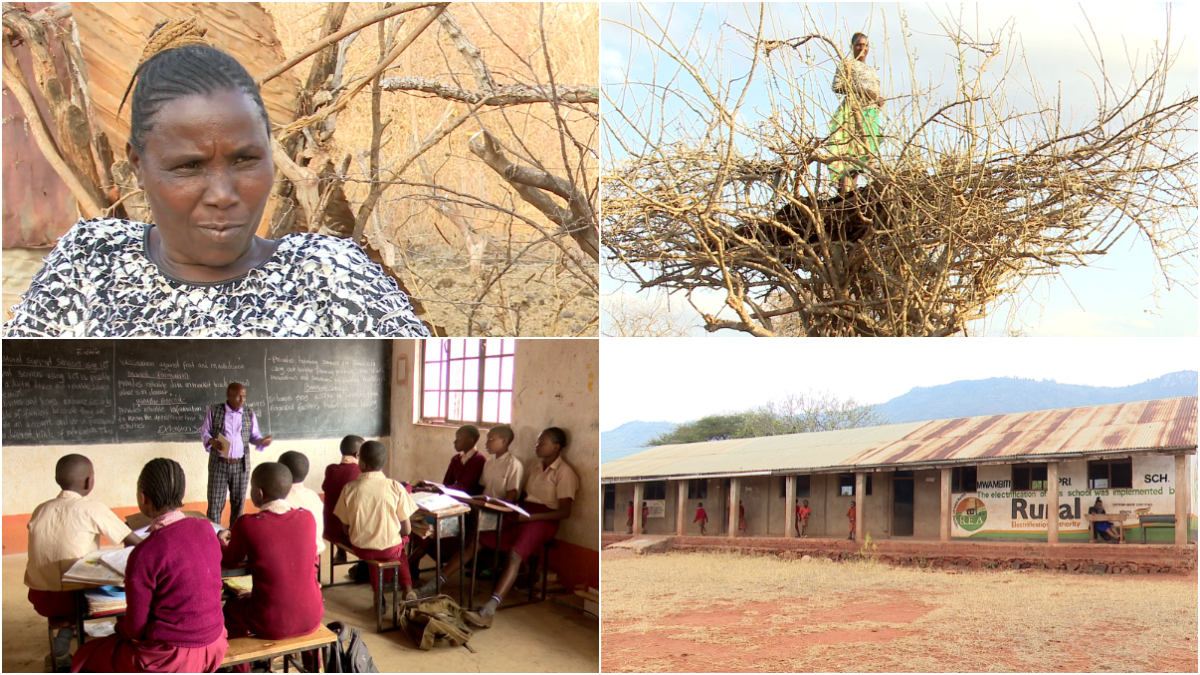
As the community goes to sleep in Sagalla Ward, Voi Constituency, Taita Taveta County, elephants roam the night. During the dry season, the sound of approaching footsteps can be heard metres away, as they search for water and food.
At the foot of Sagalla Hills, danger lies on the dusty roads to and from school. Early in the morning, or late in the evening, learners gather courage, as they hope they do not meet face to face with one of the planet’s largest animals.
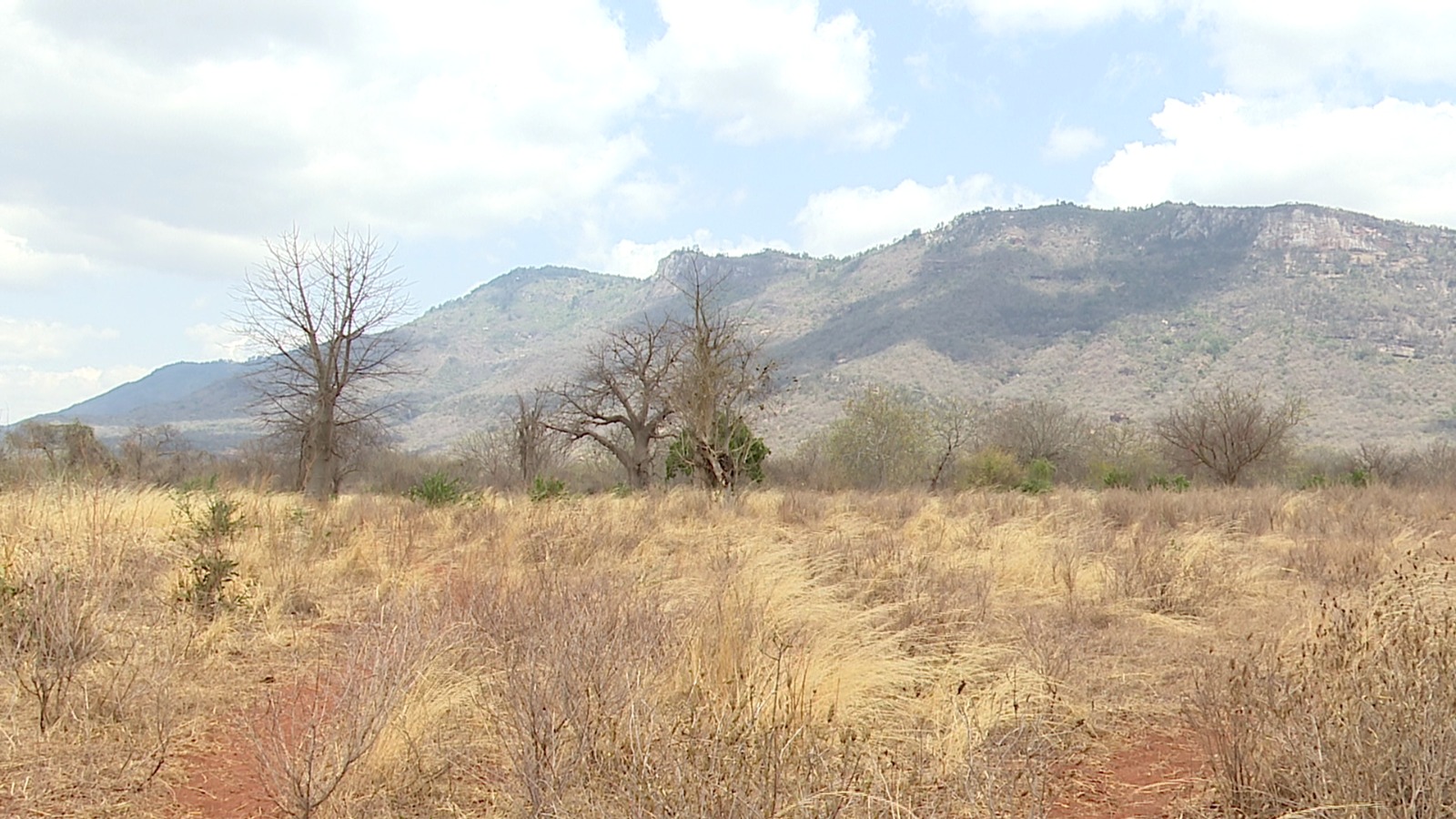
Data by the National Wildlife Census 2021 shows that elephant population in the expansive Tsavo Ecosystem is approximately 14, 964. One of the schools in this ecosystem is Mwambiti Primary school, which has a close proximity of 20km to the Tsavo East National Park.
As learning continues in this school, parents at home clutch their pearls, hoping their children will return home safely. Faith Guyo, a farmer, says that she would rather stay indoors with her child if elephants were to camp outside her house in the morning.
“…siwezi vuka katikakti ya ndovu nikielekea ati ninampeleka mtoto shuleni.” she says.
Other parents, however, decry that the school administration has at times been at fault for sending their learners home despite having a credible reason for coming in late.
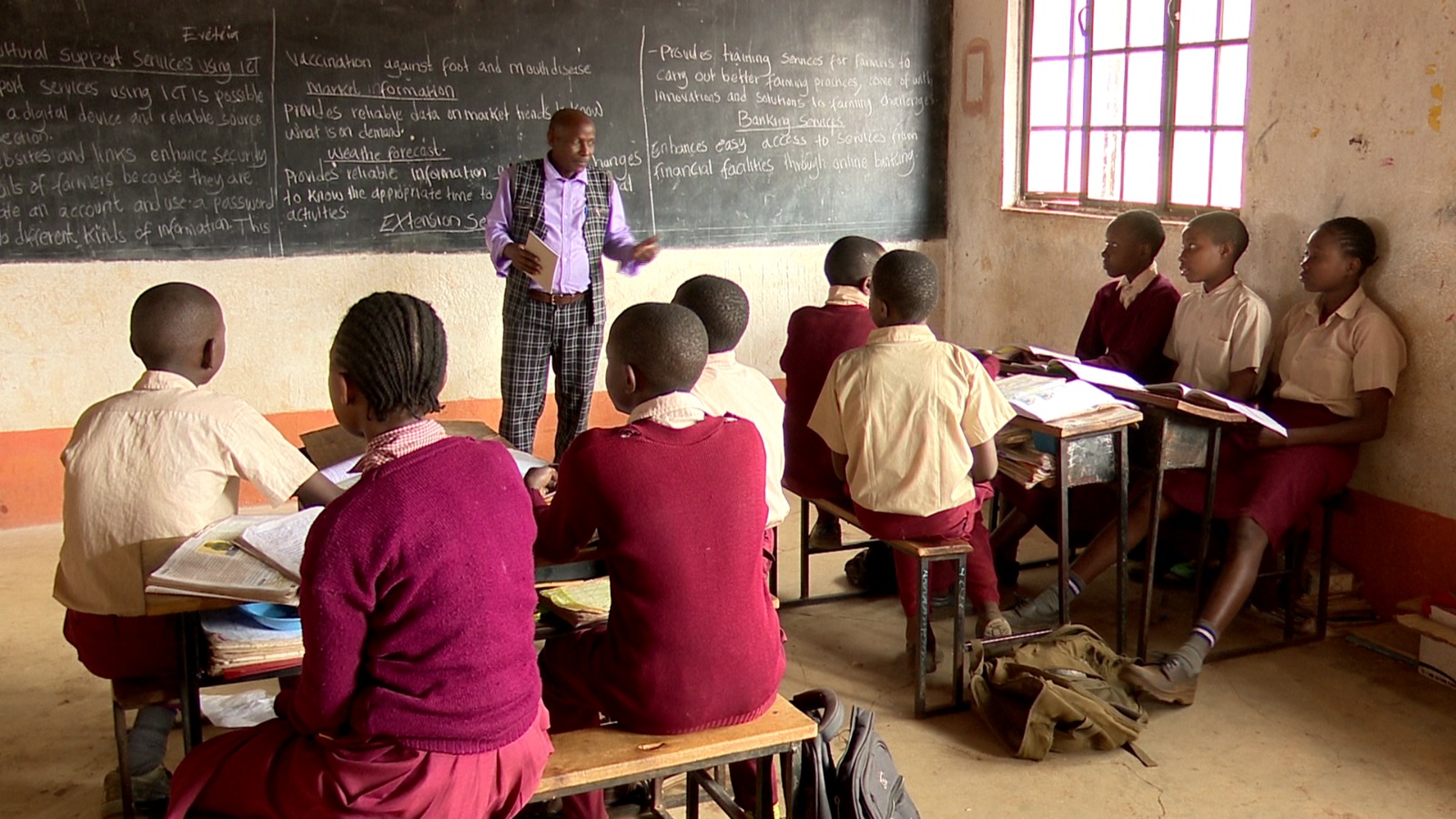
However, Mwambiti Primary School headteacher Boniface Sogha emphasizes that there is a constant communication between parents and teachers, to ensure learners arrive safely in school in the morning and arrive back home safely in the evening.
“…na sometimes kama last week, tunapigiwa simu na kijiji fulani …ya kwamba ndovu zimeonekana mchana so muachilie watoto mapema ….tunaita wale watoto wa hiyo direction, tunawaambia watoke mapema,” Sogha says.
Violet Malandi, a mother of four, is technically the father and mother of the family. Her husband was trampled to death by marauding elephants in August 2006 when he went to search for food for the family.
Sagalla residents co-existing with elephants
Malandi has over the years been forced to teach her children different methods of co-existence with the animals. One of them is by cutting old rags in square shapes, then dipping them in engine oil which has been mixed with powder chillie.
She says this method deters elephants but a farmer has to be close by to ensure the herds are successfully chased away.
Malandi stays guard at night by perching on a thorny tree.With her torch in hand, she braves the cold breeze as she lies her back on a thin blanket which is also the only comfort she has between her body and the sharp thorns.
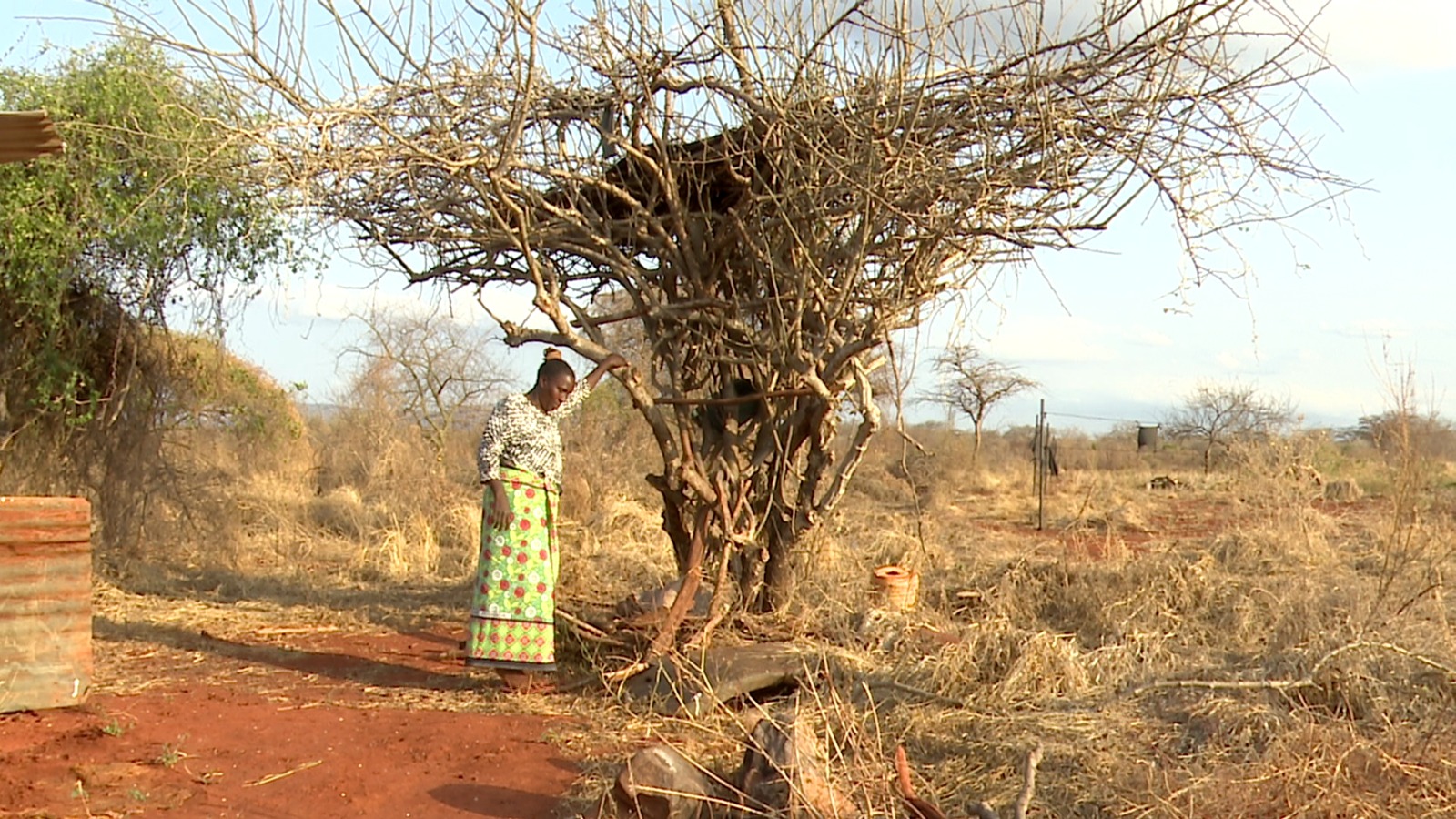
“Sasa hapa, tuko na muungano, mwenzangu akisikia nikipiga nduru ‘ndovu!’ wanakuja tunawafukuza, kwa hivyo hata tunaweza wapeleka hata mbali,” she narrates.
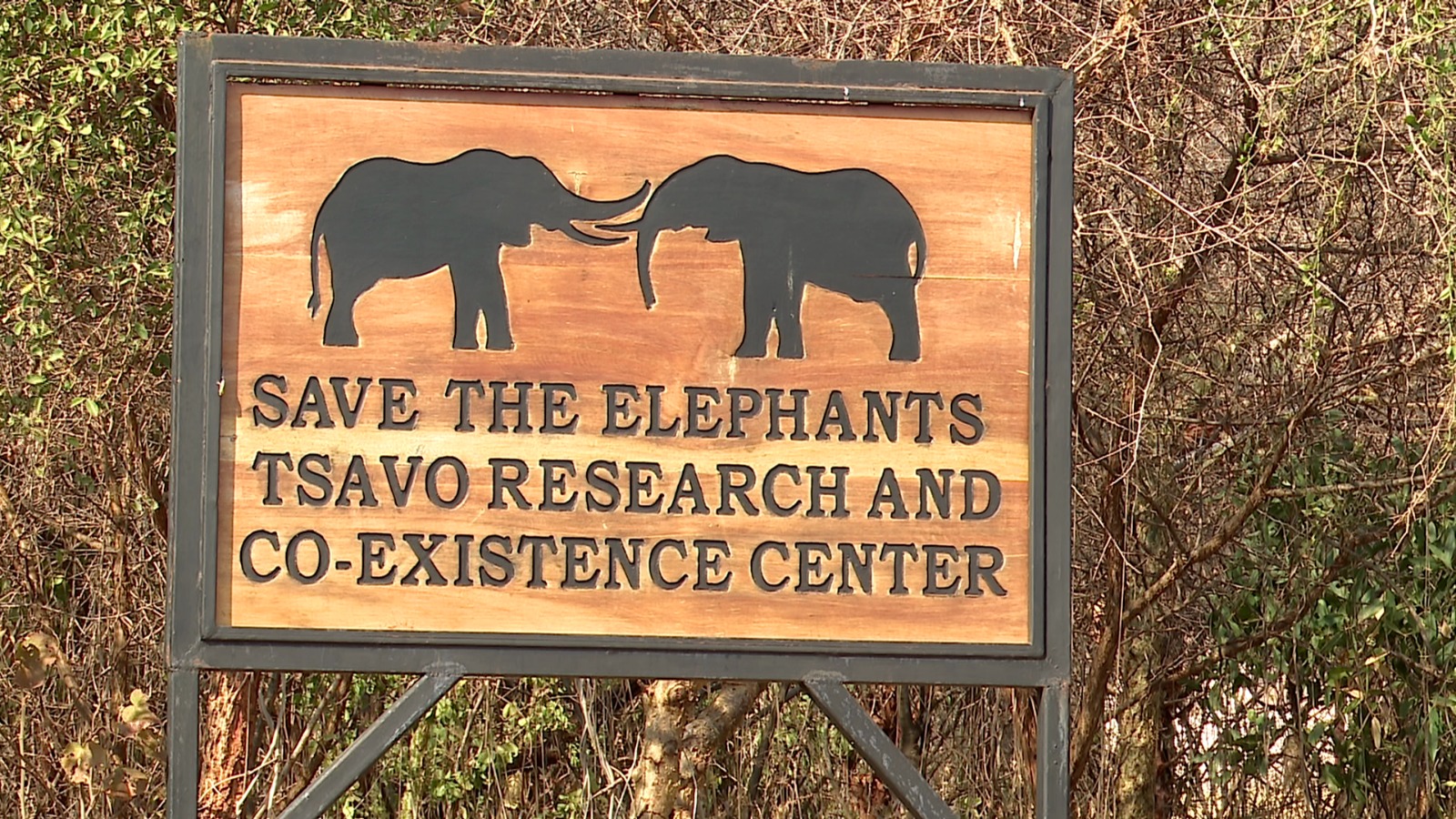
The Kenya Wildlife Service (KWS) in partnership with Non-Governmental organizations like Save the Elephants, has been on the forefront of working with the community on conservation education in a bid to reduce human wildlife conflicts.
A report released by KWS in 2025 shows that in 2023 and 2024, it recorded 26,641 cases of human wildlife conflicts. Out of this, 255 lives have been lost, 725 people seriously injured and 5, 200 livestock killed.
The community hopes that these figures will continue to reduce, but they insist that they would rather learn to co-exist with the animals than leave. As Malandi bids us good bye, she stares at her farm, sighs and tells us… :”siwezi toka hapa ama kuenda kuomba shamba kwa mtu mwingine, na hapa nikona shamba kama yote.”