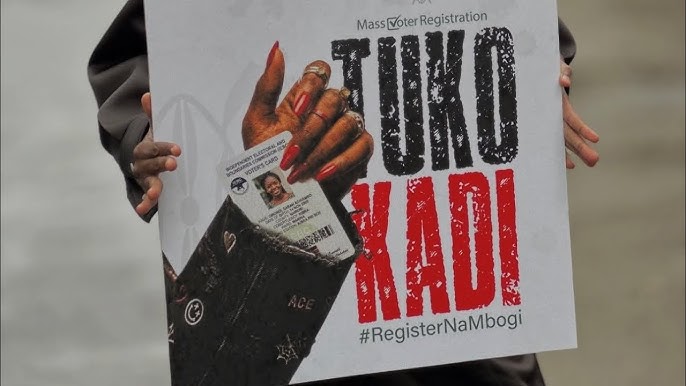
In Kenya, like many other African countries, the youth make up the largest share of the population. A new rallying cry has been echoing across social media as well as in towns and villages: “Tuko Kadi”.
What began as a trending hashtag has now transformed into a vibrant grassroots movement, pulling thousands of young Kenyans from TikTok, X and other social media platforms into voter registration queues across the country.
How did #TukoKadi movement start?
The movement was born online under the hashtag #TukoKadi, fueled by influencers and digital creatives who urged their peers to arm themselves with a voter’s card as a way to ensure the youth have a say in the 2027 General Elections, by taking up their civic duty to elect leaders they want.
The same platforms that mobilized youth during the 2024 Finance Bill protests are now being harnessed to drive civic participation.
From urban centres to rural areas across the country, the energy is palpable. Long queues at registration centres with young people have been witnessed showing that young men and women are ready to take up their civic duty with pride.
Social media clips have been capturing the excitement: TikTok videos of friends registering together, Instagram reels capturing content creators with fellow youths at registration centres and X threads urging peers not to be left behind.
What it aims to achieve
The campaign’s leaders have set their sights high, saying they are aiming to hit 15 million young Kenyans registered ahead of the 2027 elections. Their message is clear… that civic duty is not just about protest, but about shaping the future through the ballot.
The youth have dismissed attempts by politicians to hijack the movement, insisting it belongs to the people and their resolve remains to elect leaders who will bring about meaningful change.
“In 2024 we went to the streets, but in 2027 we will vote,” one youth declared, calling the voter’s card their final weapon: “Risasi imebaki moja… the voter’s card.”
Challenges
Despite the enthusiasm, the youth have come across challenges. Youths have pointed to inadequate IEBC officials in some registration centres, slowing down the process.
Through Commissioner Dr. Alutalala Mukhwana, IEBC has acknowledged that older voters still dominate new registrations.
Mukhwana revealed that as of 24th March 2026, Kenya’s total number of registered voters stood at 22,352,923. Newly registered voters stand at 250,391, with 50.9 per cent being male, while 49.1 per cent are female, indicating a near gender balance.
According to IEBC data, those aged above 35 years account for 67.35 per cent of new registered voters, compared to 32.65 per cent who are below 35 years.
The data shows that those aged 18–20 are performing poorly in the ongoing Enhanced Continous Voter Registration exercise due to delays in acquiring national IDs and limited civic awareness.
Yet, Commissioner Dr. Mukhwana admits the ‘Tuko Kadi’ wave has triggered a surge in youth registrations, proving the movement’s impact.
Kenya’s Gen Z has already shown its power from shaking corridors of power during the Finance Bill protests to now coming out in large numbers to register as voters. But as the 2027 elections draws closer, one question lingers: Will they actually have the same energy from the streets and screens into the polling stations?
Kenya’s future may well depend on whether its youngest citizens choose to be heard where it matters most, at the ballot box.