
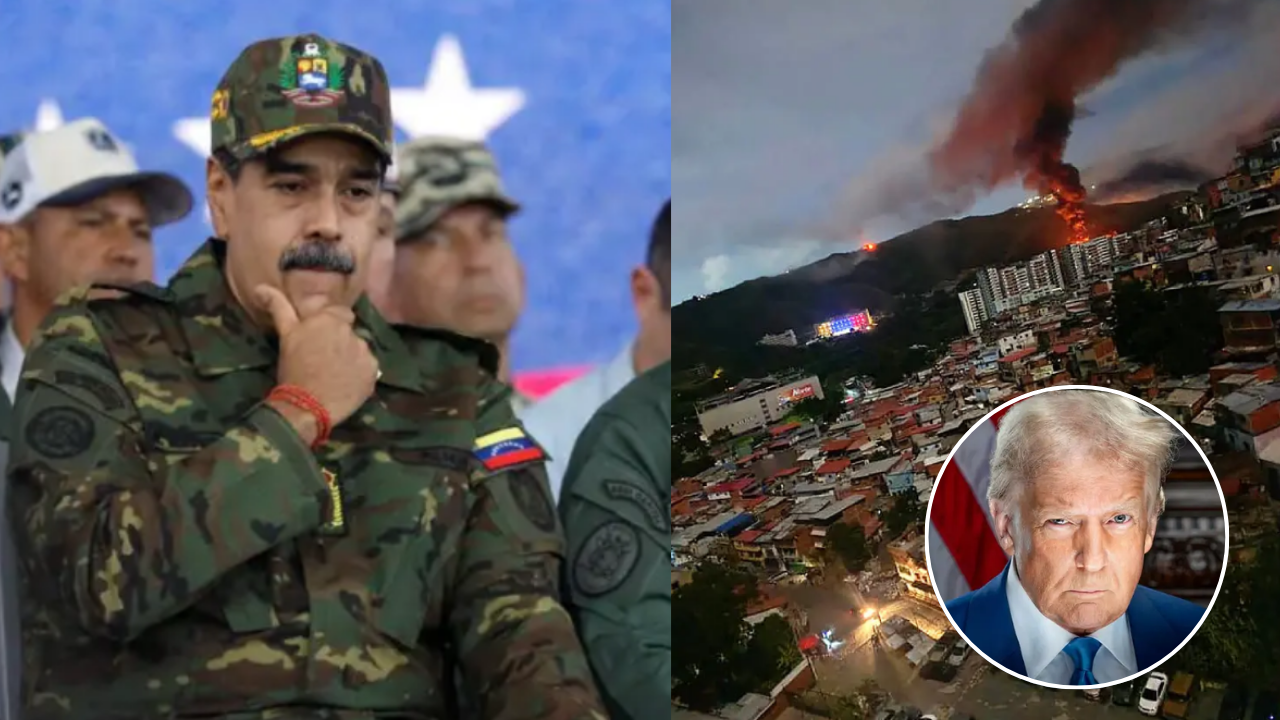
Serious legal and diplomatic questions have emerged following the capture of Venezuelan President Nicolás Maduro by United States forces in a dramatic military operation early Saturday morning.
According to US officials, Maduro was seized in what Washington described as a targeted operation and was later placed aboard a US military vessel en route to New York, where he is expected to face multiple criminal charges. His wife, Cilia Flores, was also detained during the operation.
The move caps months of escalating pressure by President Donald Trump’s administration, which has repeatedly accused Maduro of backing international drug cartels designated by the US as terrorist organisations. The White House claims the networks are responsible for thousands of drug-related deaths in the United States.
However, the operation has drawn sharp criticism from sections of the international community and legal experts, who question both its legality and broader implications.
How the US justified the operation
US authorities say the action was carried out at the request of the Department of Justice after a New York grand jury indicted Maduro, his wife, their son, senior political allies and an alleged gang leader. The charges include terrorism, drug trafficking and weapons-related offences.
Attorney General Pam Bondi said the suspects would “face the full wrath of American justice” in US courts.
President Trump, however, appeared to complicate the legal justification by suggesting Washington may assume control of Venezuela for a transitional period, citing claims that the country had “stolen” US oil interests. No further details were provided.
Legal scholars say these statements blur the line between a law enforcement operation and an act of military intervention.
“You cannot claim this was simply a law enforcement action and then suggest running the country,” said constitutional law expert Jeremy Paul. “Those positions are legally incompatible.”
Domestic and international law concerns
Under US law, Congress holds the power to declare war, although presidents may authorize limited military action in what they deem national interest. Secretary of State Marco Rubio confirmed that Congress was not notified before the operation.
International law, meanwhile, strictly limits the use of force between states, allowing it mainly in cases of self-defence or with authorisation from the UN Security Council. Legal experts argue that drug trafficking and criminal indictments do not meet the threshold of armed conflict.
“A criminal indictment alone does not give a country the legal authority to use military force to remove a foreign government,” said Columbia University law professor Matthew Waxman.
Historical parallels
The closest historical comparison is the 1989 US invasion of Panama and arrest of General Manuel Noriega, who had also been indicted on drug charges. In that case, Washington argued it was protecting US citizens and had recognised an alternative Panamanian leader.
In Venezuela’s case, although the US has not recognised Maduro as legitimate since 2019, it has not formally installed or recognised a government that could authorise such an operation.
Accountability unlikely
Despite the legal controversy, experts say the likelihood of meaningful accountability for the US is slim due to weak enforcement mechanisms in international law.
“It’s hard to see how any legal body could impose practical consequences,” Paul noted.
As Maduro prepares to face trial in the US, the operation is expected to intensify debate over sovereignty, international law and the limits of military power in global law enforcement.