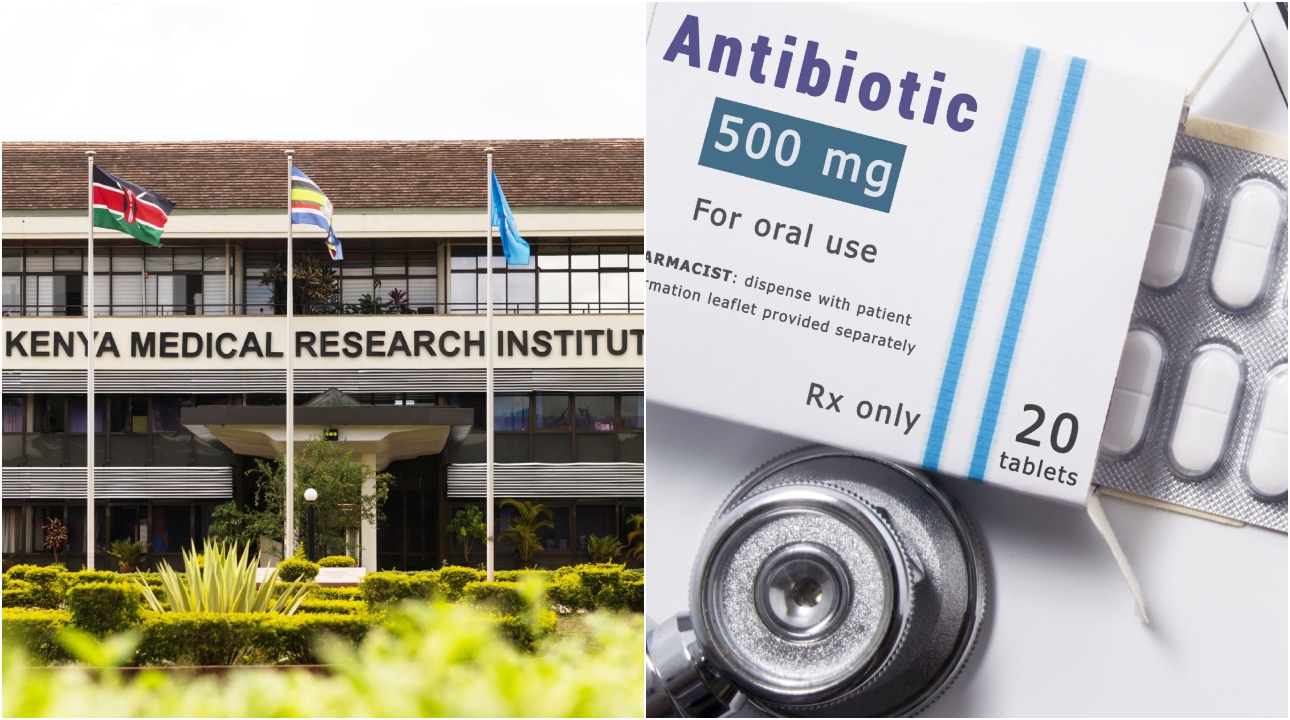
A report by the Kenya Medical Research Institute (KEMRI) has revealed that 7 in every 10 Kenyans ailing from fever are unnecessarily treating with antibiotics or painkillers.
This has led to these antibiotics becoming less effective in treating the diseases they are designed to cure, and now Kenya has been ranked the 28th country in the world when it comes to deaths related to Antimicrobial Resistance. For instance, in 2019, the country reported 37,000 deaths associated with AMR.
“The data we have from 2019, estimated that close to 1.3m deaths were directly attributable to the drug infections globally” stated Dr. Robert Onsare – Chair, Global Antibiotic Resistance Partnership (GARP)-Kenya
As the spread of Antimicrobial Resistance (AMR) grows in the country, researchers warn that this trend threatens progress in treating common infections and could undo many health improvements achieved in recent decades.
A major driver of AMR is the overuse and misuse of antibiotics in human medicine and agriculture, which allows resistant bacteria to spread more easily.
In a bid to address this silent pandemic, research scientists from the Kenya Medical Research Institute (KEMRI) have called for strengthened coverage of vaccines within Kenya’s immunization schedule to reduce antibiotic use and the burden of Antimicrobial Resistance.
“Addressing AMR starts with preventing infections in the first place, vaccines stand out as a powerful, readily available tool that can be used in the short term.” said Dr. Robert Onsare – Chair, Global Antibiotic Resistance Partnership (GARP)-Kenya
Some of the key diseases linked to AMR are Pneumonia, Typhoid, Influenza, TB, Malaria and Rotavirus. Luckily, all these diseases are largely preventable by vaccines, and now the researchers insist that they can measure the impact.
Reports indicate that Pneumococcal Conjugate Vaccine roll-out has reduced deaths linked to invasive Pneumococcal disease by more than 90% in children under 5.
Rotavirus vaccination introduced in 2014 could prevent 60,935 deaths and 216,454 hospital admissions by 2033. The malaria vaccine has reduced malaria cases by more than a third in young children.
The Typhoid conjugate vaccine introduced recently is expected to substantially decrease drug resistant typhoid cases among children aged 9 months to 15 years.
“When we have had outbreaks, we have had like 60 children getting infections acquired in hospitals and we record mortalities of up to 85%.
This is serious because antibiotics are limited, and they are more limited for that pediatric population where some molecules are not very safe to use in children.” Dr. Annemarie Macharia – Science Researcher, UON
KEMRI and its partners have launched a policy report on the value of vaccines to address AMR in Kenya, where researchers also called on policymakers to develop a clear strategy for vaccine use as part of Kenya’s response to AMR so as to protect public health.