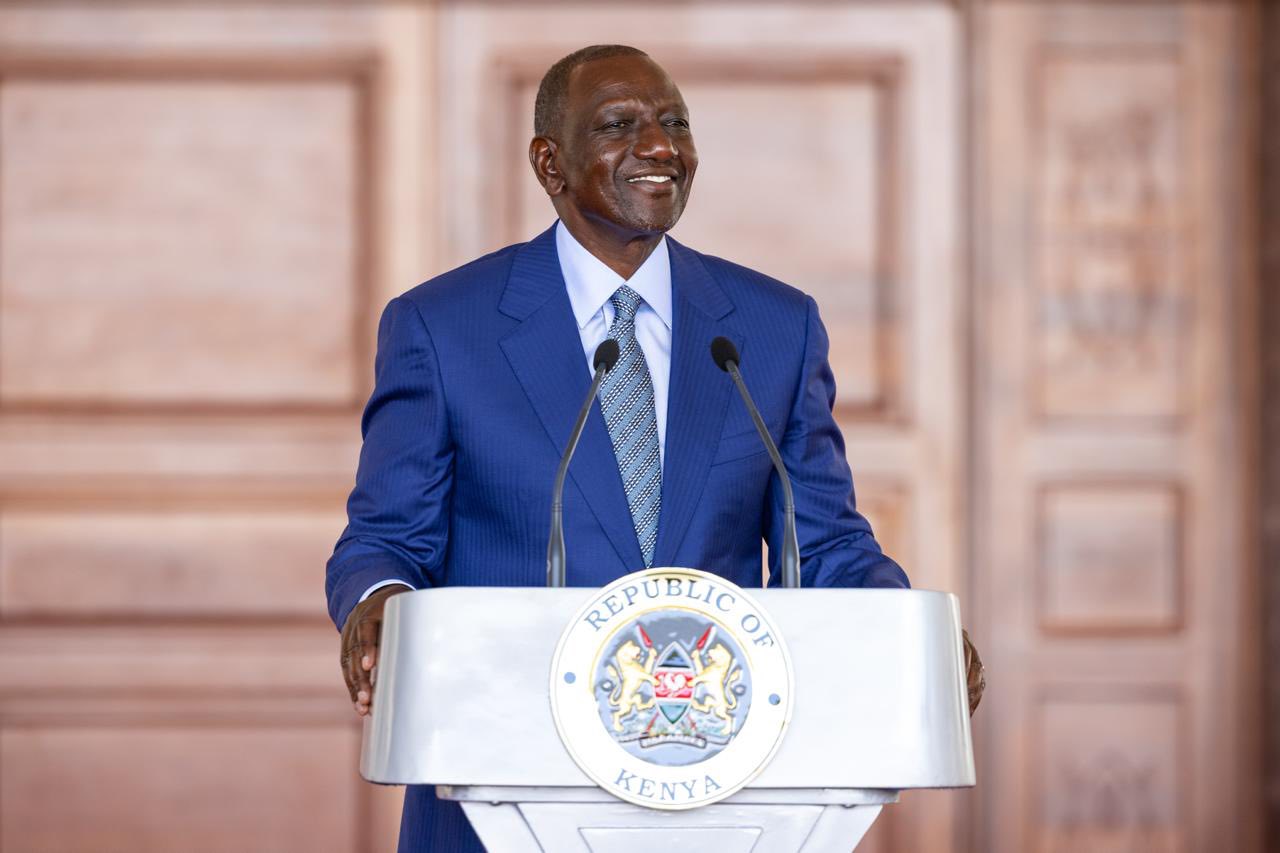
President William Ruto’s directive to admit all Grade 10 students regardless of uniforms or other items is a humane and necessary intervention. It affirms a simple truth. No child should be denied education because of poverty.
For this directive to work, three things must happen immediately.
First, capitation must be released in full and on time. Second, schools must receive clear, enforceable national guidelines on what constitutes essential admission requirements, including the freedom for parents to purchase uniforms locally and the removal of non-essential items. Third, Kenya must fix the fragmented bursary system that leaves families navigating multiple political offices with unpredictable outcomes.
Without these steps, access exists only on paper.
Across the country, families are still being asked to pay up to Ksh38,000 in uniforms and boarding requirements. Ksh2,300 for school-pattern pajamas. Ksh2,700 for patterned bedsheets. Ksh650 for a cup, spoon, and plate. These are not marginal expenses for households already under strain. They are costs that quietly exclude children after admission letters are issued.
At the same time, expecting schools to absorb new students without adequate funding sets administrators up to fail. When capitation is delayed or incomplete, schools are forced to recover costs through unofficial charges and inflated requirements. The result is predictable. Quality suffers, trust erodes, and the very children the policy is meant to protect are pushed out.
Education cannot be funded by goodwill alone. Directives without resources collapse at the point of implementation.
There is no need to reinvent the education system to fix this. Community-led approaches already show what works. Through the SHOFCO Urban Network, trusted community leaders identify households at genuine risk of dropout using on-the-ground knowledge that national databases cannot capture.
Through this network, in 2025 alone, SHOFCO supported 21,000 learners with school uniforms across Kenya.
For many families, a uniform is the line between staying in school and dropping out.
The government already has the tools to do this at scale. What is missing is coordination and political will. Bursaries issued separately through MPs, MCAs, Governors, and the Presidency are fragmented, uneven, and often opaque. Consolidating these into a single, well-managed national fund would allow predictable, needs-based support to reach the learners who need it most, rather than those best connected.
President Ruto has taken an important first step by prioritising access over appearance. The next step is ensuring affordability.
Schools must be prevented from treating admission requirements as revenue streams. Parents should be free to purchase uniforms locally. Non-essential items should be clearly designated as optional or removed entirely. And capitation must match enrollment reality.
Safeguarding this generation of learners will not be achieved through announcements alone. It requires enforceable policy, reliable funding, and fairness in how schools operate.
If Kenya can admit every learner, it can also fund every learner. We cannot celebrate access while quietly pricing children out of education.
Dr. Kennedy Odede is CEO of SHOFCO and 2025 United Nations Nelson Mandela Prize Laureate.