The Institution of Engineers of Kenya (IEK) has launched a blistering attack on what it calls the outsourcing mentality creeping into Kenya’s mining discourse, declaring that the country has all the expertise needed to lead its own mineral revolution.
In a strongly worded rebuttal following the frenzy over the reported KSh680 billion gold discovery in Kakamega, the engineers’ body dismissed claims that Kenya lacks capacity to run large-scale mining projects without foreign dominance.
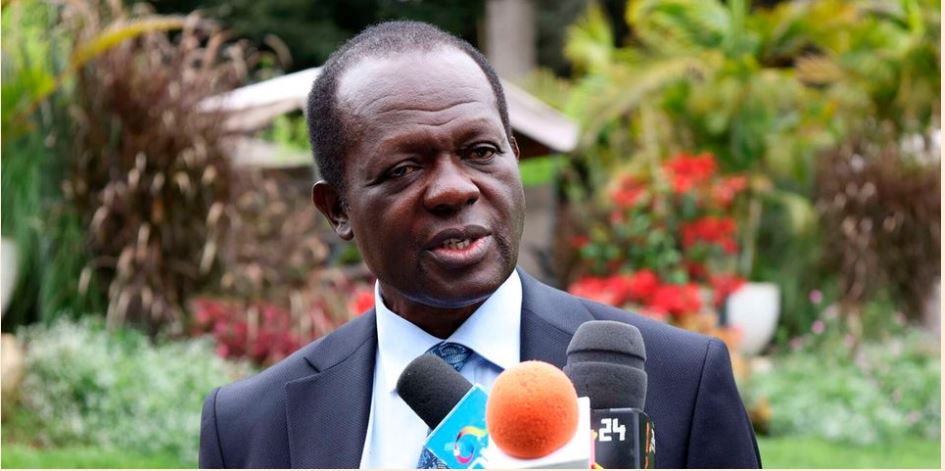
“Kenya has the expertise, the laws, the minerals and the professionals needed to shape its own mining destiny,” IEK stated in a statement shared by Eng. Shammah Kiteme, President of the institution of engineers of Kenya, warning that sidelining local experts in favour of foreign firms would amount to a betrayal of national interest.
Kenya’s engineers are ready and proven
According to IEK, the country’s technical community has repeatedly demonstrated its ability to deliver complex and capital-intensive projects ranging from geothermal plants and hydropower systems to oil, gas and renewable energy facilities.
“There is no technical justification for placing Kenyans on the periphery while external entities take the lead,” the institution declared. “Our professionals are not only capable of exploration and design; they are ready to manage and supervise entire value chains.”
The engineers emphasized that Kenya’s mineral potential stretches far beyond gold, encompassing rare earths, titanium, copper, graphite, manganese, limestone, silica sands, and geothermal energy, all resources that could anchor a modern, locally driven mineral economy if properly managed.
IEK accused policymakers and investors of paying lip service to the Local Content Framework and the Mining Act (2016), both of which explicitly require the prioritization of Kenyan expertise and firms in mineral exploration, processing and supply chains.
“These laws were not written for decoration,” IEK asserted. “Kenya cannot preach local content on paper while practicing foreign dominance in the field.”
The institution warned that without firm adherence to local content laws, Kenya risked perpetuating the old colonial pattern of exporting raw minerals cheaply and importing finished products at a premium.
‘Stop making Kenyans spectators’
In an increasingly competitive world where critical minerals dictate geopolitical alliances and industrial power, IEK said Kenya cannot afford to be a bystander.
“The age of spectatorship must end,” the statement read. “Kenyans must not remain field workers while others make the real decisions. The country’s engineers have the knowledge and experience to lead from the front.”
IEK urged the government to anchor mining policy and resource management in scientific and engineering expertise rather than politics or external influence.
“Engineering must shape national policy from geological investigation and project design to environmental safeguards and community compensation frameworks,” the engineers said. “Technical leadership is the only way to ensure that mineral wealth translates into national prosperity.”
The institution pointed to last month’s 32nd IEK International Convention in Mombasa as proof of Kenya’s deep technical bench, where both local and international delegates affirmed that Kenya is capable of leading complex, resource-driven development.
In its final call, IEK challenged the government and the public to abandon dependency thinking and embrace homegrown leadership in resource management.
“Kenya must move from being resource-rich to resource-empowered,” the statement concluded. “We have the brains, the laws, and the minerals. What we now need is the resolve to lead.”