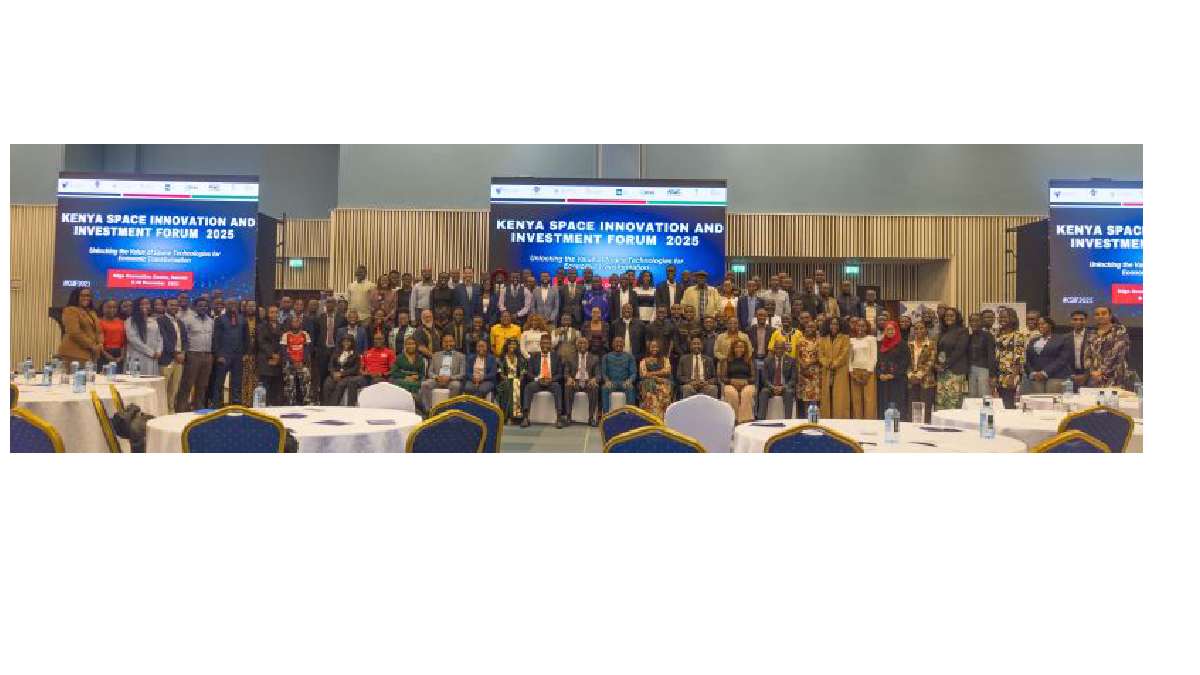
Kenya has launched an ambitious national conversation on the future of its space economy as more than 500 stakeholders convened Thursday, December 11 for the inaugural Kenya Space Innovation and Investment Forum (KSIIF) 2025 at The Edge Convention Centre in Nairobi, from 9th to 10th December.
The two-day forum—bringing together government, private sector, academia, innovators, and international partners—aims to position Kenya as a continental powerhouse in space technology and investment.
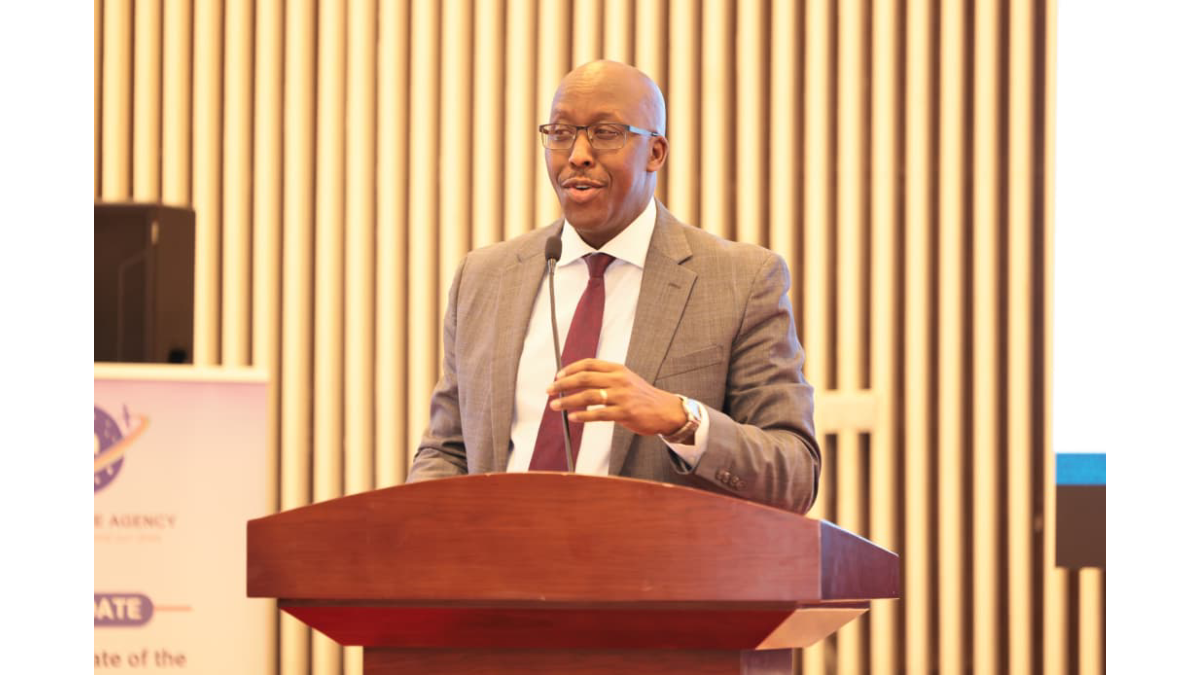
Speaking during the official opening on behalf of the Principal Secretary for Defence, Dr Patrick Mariru , his representative, Mr Isaack Masinde said Kenya now views space technology as a strategic pillar of national development.
“Kenya is an emerging and developing space-faring nation,” he noted. “We seek to develop our national space capability and space economy because space-derived data is now central to decision-making, scientific advancement and improving the wellbeing of society.”
He emphasized that Kenya’s growing space ecosystem is directly tied to job creation and long-term economic stability.
“The African space economy is projected to hit 22 billion dollars by 2026. There is great potential for us as Africans, and it begins with supporting innovations and investments that will progressively raise our space economies to globally competitive levels,” he added.
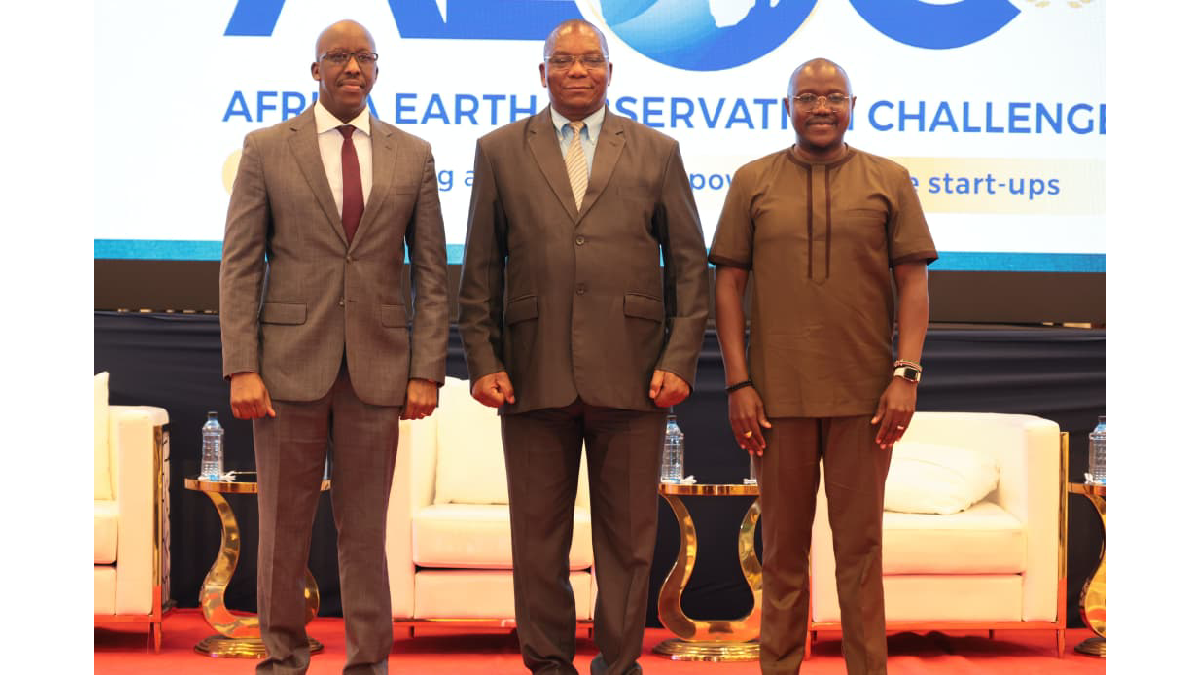
Opening the event, Brigadier Hillary Kipkosgey, Acting Director General of the Kenya Space Agency (KSA), called the gathering “a historic milestone” for the country’s growing space ecosystem.
“This is the first-ever Kenya Space Innovation and Investment Forum. It is not just a conference—it is a rallying call to unlock the value of space technologies for our economic transformation,” he said.
A forum with three high-stakes missions
According to KSA, the forum serves three major purposes:
- Driving innovation and investment in Kenya’s space sector.
- Hosting the Africa Earth Observation Challenge (AEOC) where top innovators from the continent pitch space-driven solutions.
- Bringing together young professionals for the Space Generation Advisory Council Summit.
Brig. Kipkosgey emphasized that space-derived data is now central to global decision-making:
“Space technologies support agriculture, climate resilience, security, planning, and predictive analytics. Kenya must not remain a consumer—we must become creators.”
‘Kenya at a socio-economic crossroad’ – VIFFA warns
Delivering one of the keynote addresses, Victor Otieno, Managing Director of VIFFA Consult, painted a stark picture of the challenges Kenya faces—youth unemployment and rising poverty—but insisted that space technology can be part of the country’s turnaround strategy.
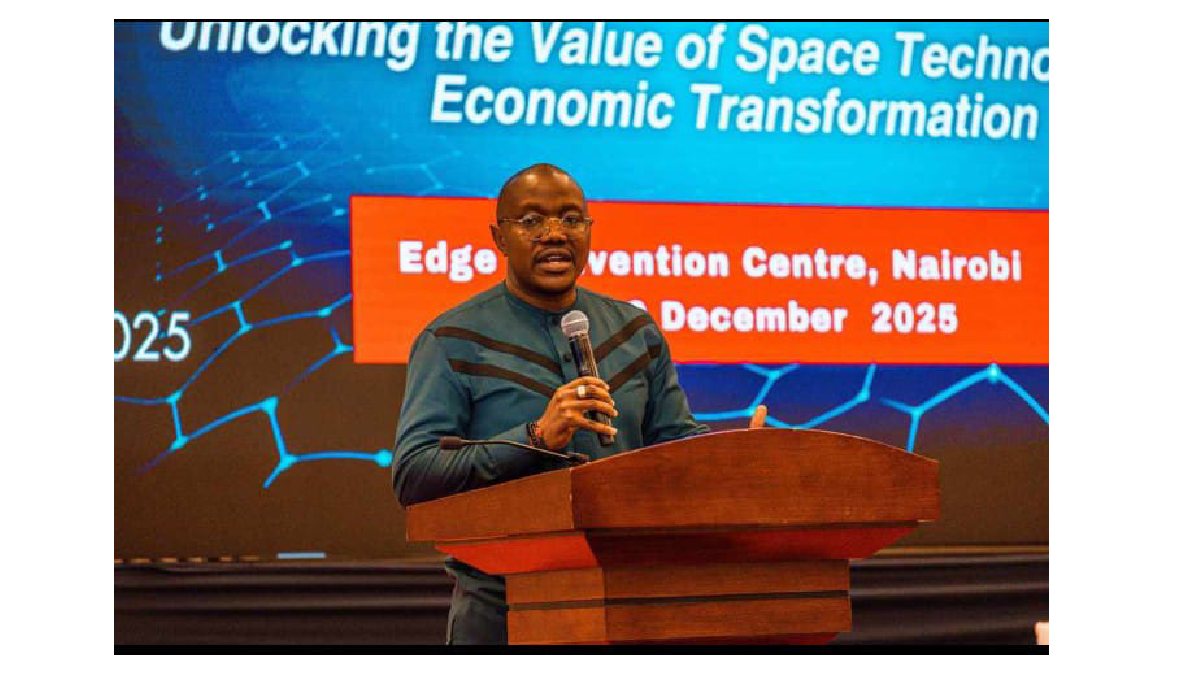
“Kenya must create jobs for more than one million youth entering the labour market every year,” Otieno said. “Space technology, just like M-Pesa and ride-hailing apps, can unlock productivity, save resources, and create new revenue streams for both public and private sectors.”
He noted that Kenya’s geographic location offers unique advantages, including:
- Equatorial position suitable for satellite launches
- Clear skies and low radio interference ideal for ground stations
- A vibrant startup ecosystem attracting over 20% of Africa’s VC inflows
Themed “Unlocking the Value of Space Technologies for Economic Transformation”, KSIIF 2025 focuses heavily on building partnerships.
The forum’s agenda includes:
- High-level policy and industry panels
- Kenya Space Industry Report briefing
- Astro-tourism discussions
- Space entrepreneurship sessions
- Working group formations
- An AEOC pitch competition
- Cultural and industry showcases
According to organizers, the event aims to create matchmaking opportunities among innovators, venture capitalists, accelerators, and government agencies.
Otieno highlighted practical next steps the sector must take within the next year:
“We need a national data-sharing framework, an earth observation data portal, county-level partnerships, and stronger positioning of Kenya as a space investment destination.”
The KSA announced that KSIIF 2025 also sets the stage for a major global event Kenya will host next year—the Global Data Festival 2026, in partnership with KNBS and other international bodies.
“Space-derived data complements earth-based data. We cannot talk about development without talking about data,” Brig. Kipkosgey said while inviting the attendees to the 2026 festival.
Why this forum matters for Kenya and Africa
The organizers emphasized that space technology is no longer a futuristic dream—it is a practical tool for solving real challenges in:
✔ Disaster management
✔ Agriculture and food security
✔ Climate action