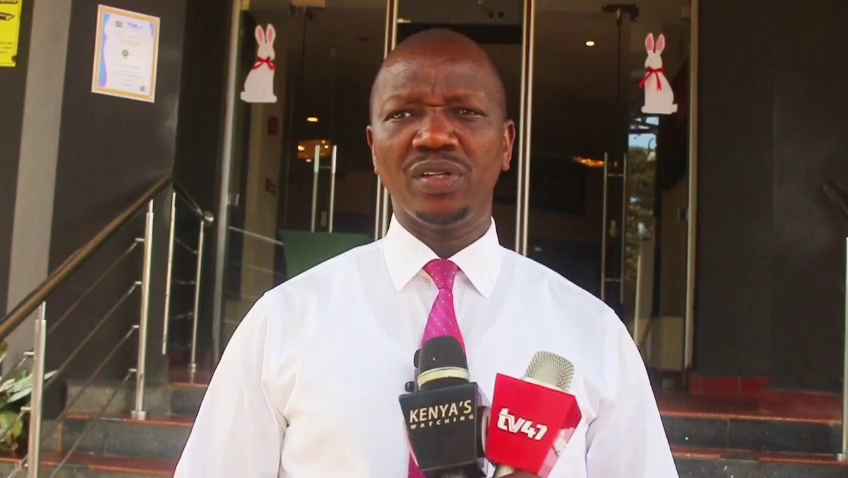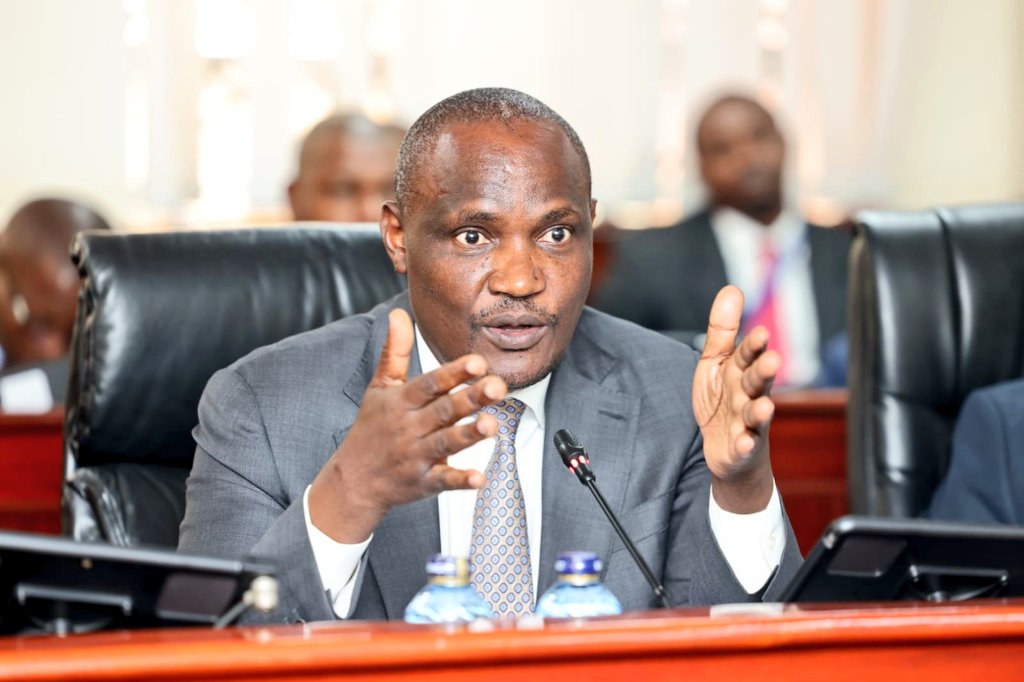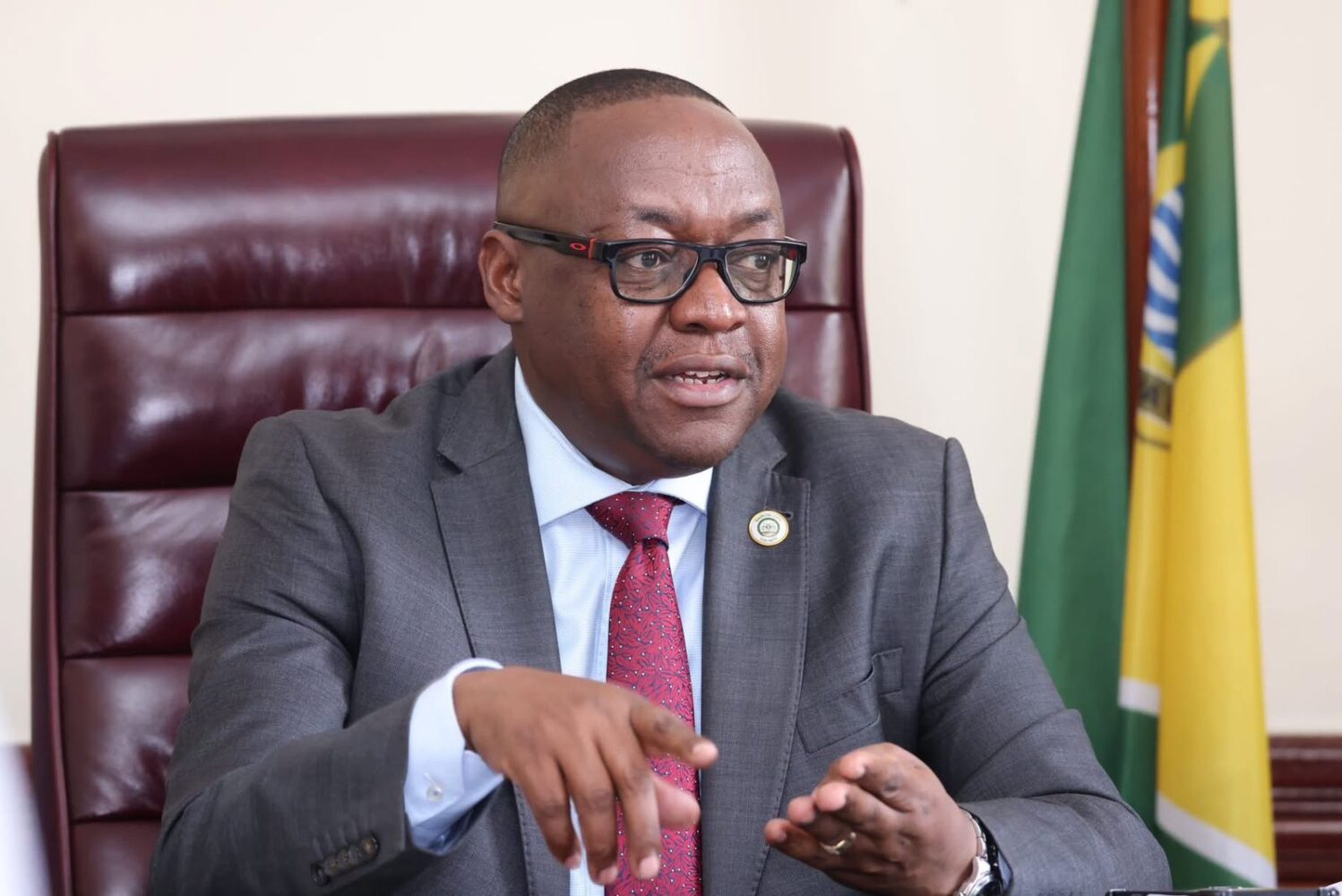
The latest Kenya Track Survey 2026 has revealed the Cabinet Secretaries who have most effectively driven national development, governance, and social stability. Ranking from first to tenth, the survey highlights leaders whose policy execution, operational efficiency, and strategic vision have translated into measurable impact across the country.
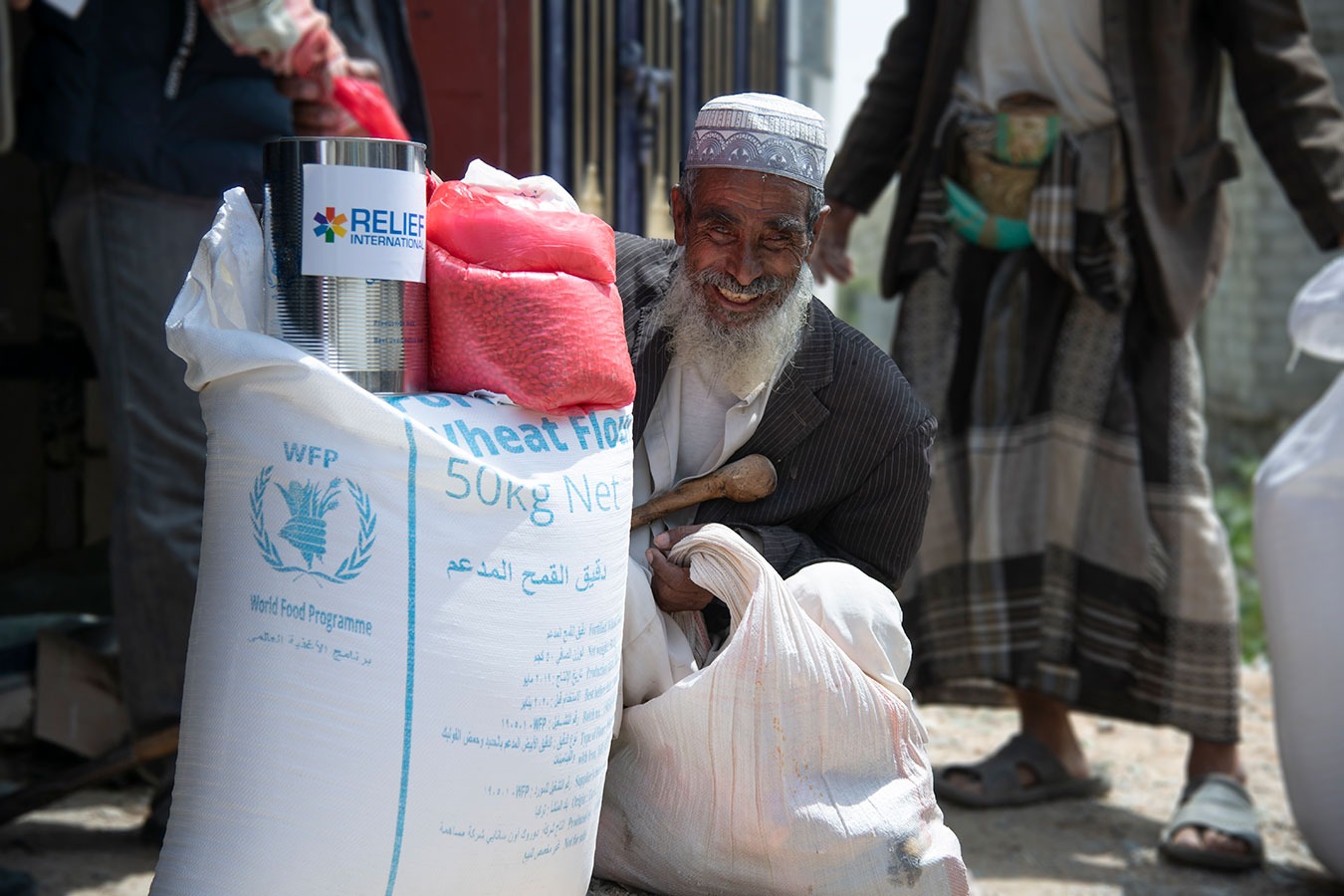
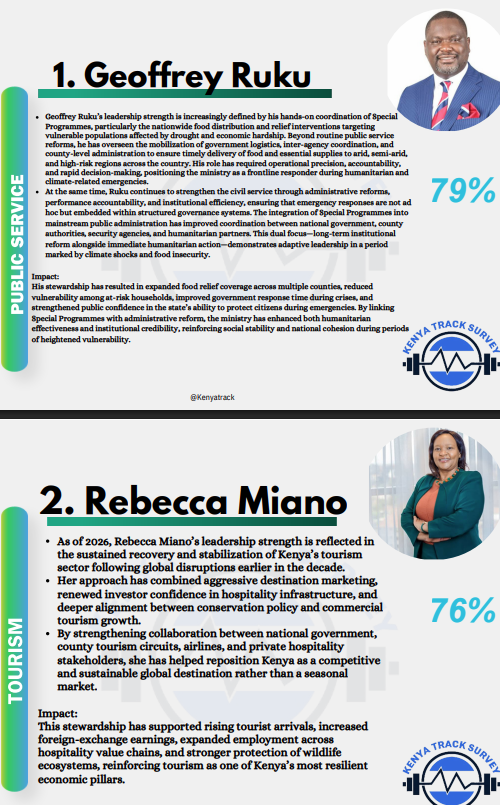
Topping the rankings, CS Geofrey Ruku, with a performance score of 79%, has strengthened public service through his stewardship of Special Programmes, particularly nationwide food distribution and drought relief initiatives. By institutionalizing these interventions within structured governance systems, CS Ruku has expanded coverage, reduced household vulnerability, improved crisis response times, and reinforced public trust in government protection. His leadership has positioned the ministry as a frontline responder during humanitarian and climate-related emergencies, demonstrating adaptive governance at its best.
In second place, also with 76%, CS Rebecca Miano has spearheaded Kenya’s tourism sector recovery following earlier global disruptions. Her approach combines aggressive destination marketing, renewed investor confidence in hospitality infrastructure, and alignment between conservation policies and commercial tourism growth. Collaboration with national government agencies, county tourism circuits, airlines, and private stakeholders has repositioned Kenya as a competitive and sustainable global destination. These efforts have boosted tourist arrivals, foreign exchange earnings, employment in hospitality value chains, and wildlife protection, making tourism one of Kenya’s most resilient economic pillars.
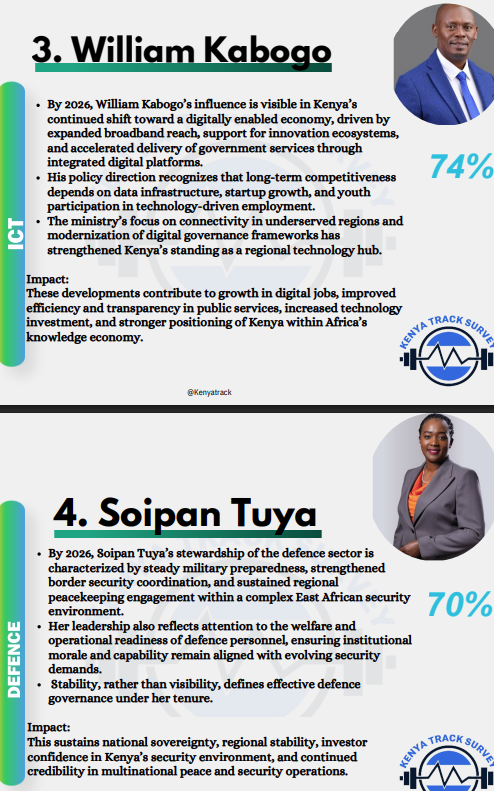
Ranked third with 74%, CS William Kabogo has driven Kenya’s digital transformation. Expanding broadband access, supporting innovation ecosystems, and integrating digital government services has strengthened Kenya’s position as a regional technology hub. These initiatives have created digital jobs, improved public service efficiency, and attracted technology investment, advancing Kenya’s knowledge economy.
Fourth in the rankings with 70%, CS Soipan Tuya has maintained robust defence sector leadership, emphasizing military preparedness, border security, and regional peacekeeping. Her focus on personnel welfare and operational readiness has sustained institutional morale and capability, supporting national sovereignty, investor confidence, and Kenya’s credibility in multinational peacekeeping operations.
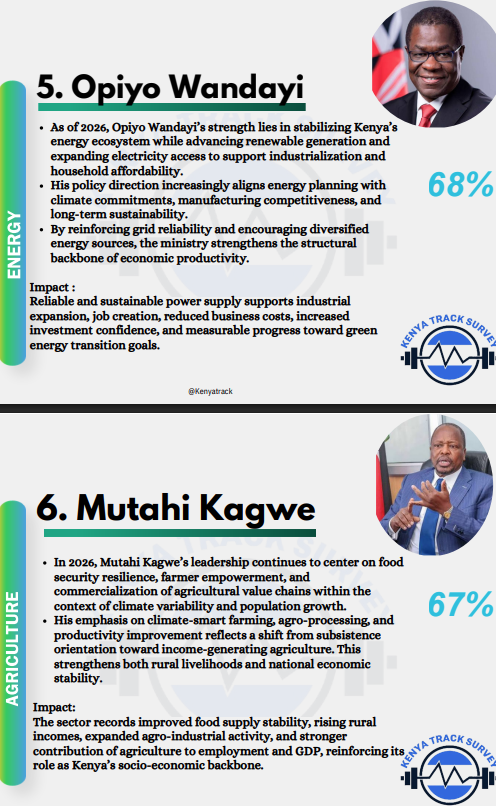
Ranked fifth with 68%, CS Opiyo Wandayi has stabilized Kenya’s energy sector, expanding renewable generation and electricity access to households and industry. His policies enhance industrial competitiveness, reduce business costs, and advance the country’s green energy transition.
Sixth on the list with 67%, CS Mutahi Kagwe has strengthened agricultural resilience through climate-smart farming, agro-processing, and commercialized value chains. These measures have improved food stability, raised rural incomes, expanded agro-industrial activity, and reinforced agriculture’s contribution to GDP and employment.
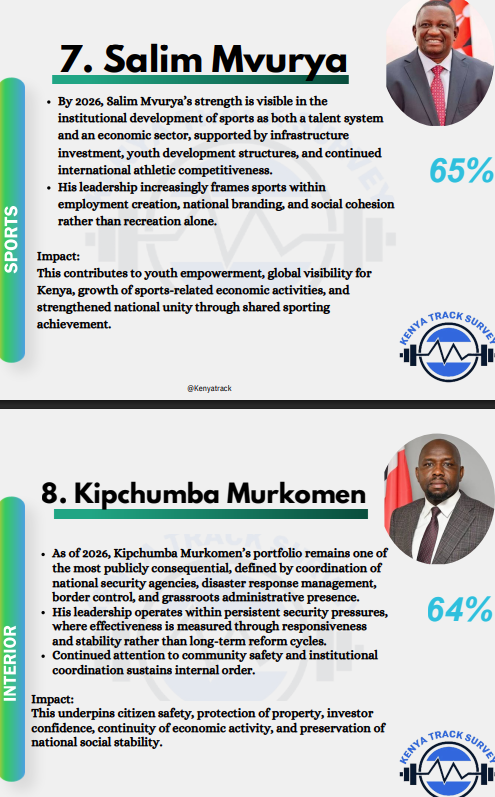
Seventh in the rankings with 65%, CS Salim Mvurya has transformed sports into a structured talent and economic system. Investments in infrastructure, youth development, and international competitiveness link athletics to employment, national branding, and social cohesion, empowering youth and strengthening national unity.
Eighth in the rankings with 64%, CS Kipchumba Murkomen has safeguarded internal security through coordination of national security agencies, disaster response, border control, and community administration. His leadership enhances citizen safety, property protection, investor confidence, and continuity of economic activity.
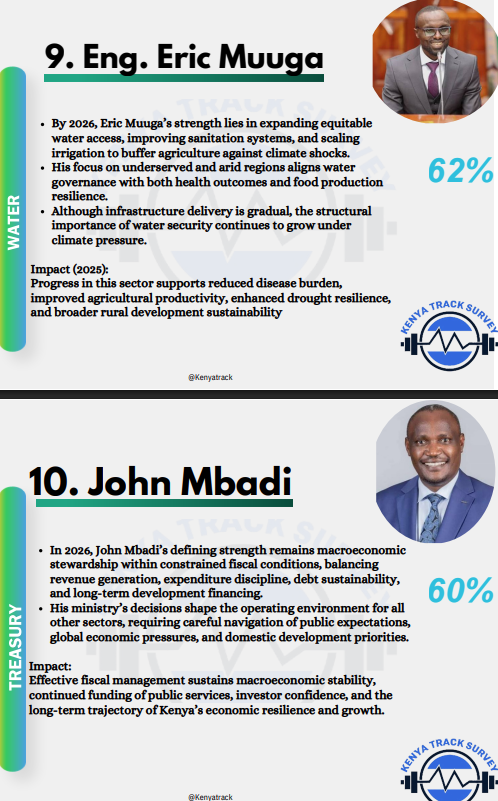
CS Eng. Eric Muuga, ranked ninth with 62%, has expanded equitable water access, improved sanitation, and scaled irrigation in arid regions, bolstering health outcomes, agricultural productivity, and rural development.
Closing the rankings, CS John Mbadi, with 60%, remains central to macroeconomic stability. By balancing revenue generation, expenditure discipline, debt sustainability, and long-term development financing, his stewardship ensures fiscal stability, sustained public service funding, and investor confidence, providing the foundation for all other sectors to thrive.
The Kenya Track Survey 2026 illustrates that leadership is not only about policy design but about tangible, measurable outcomes. From public service and tourism to ICT, defence, energy, and agriculture, these Cabinet Secretaries have demonstrated that consistent, effective governance is critical to Kenya’s economic growth, institutional strength, and social cohesion.