Kenyan entities and infrastructures will now undergo mandatory accreditation to ensure they meet global standards, Dr. Walter Ongeti Chief Executive Officer, Kenya Accreditation Service (KENAS) has said.
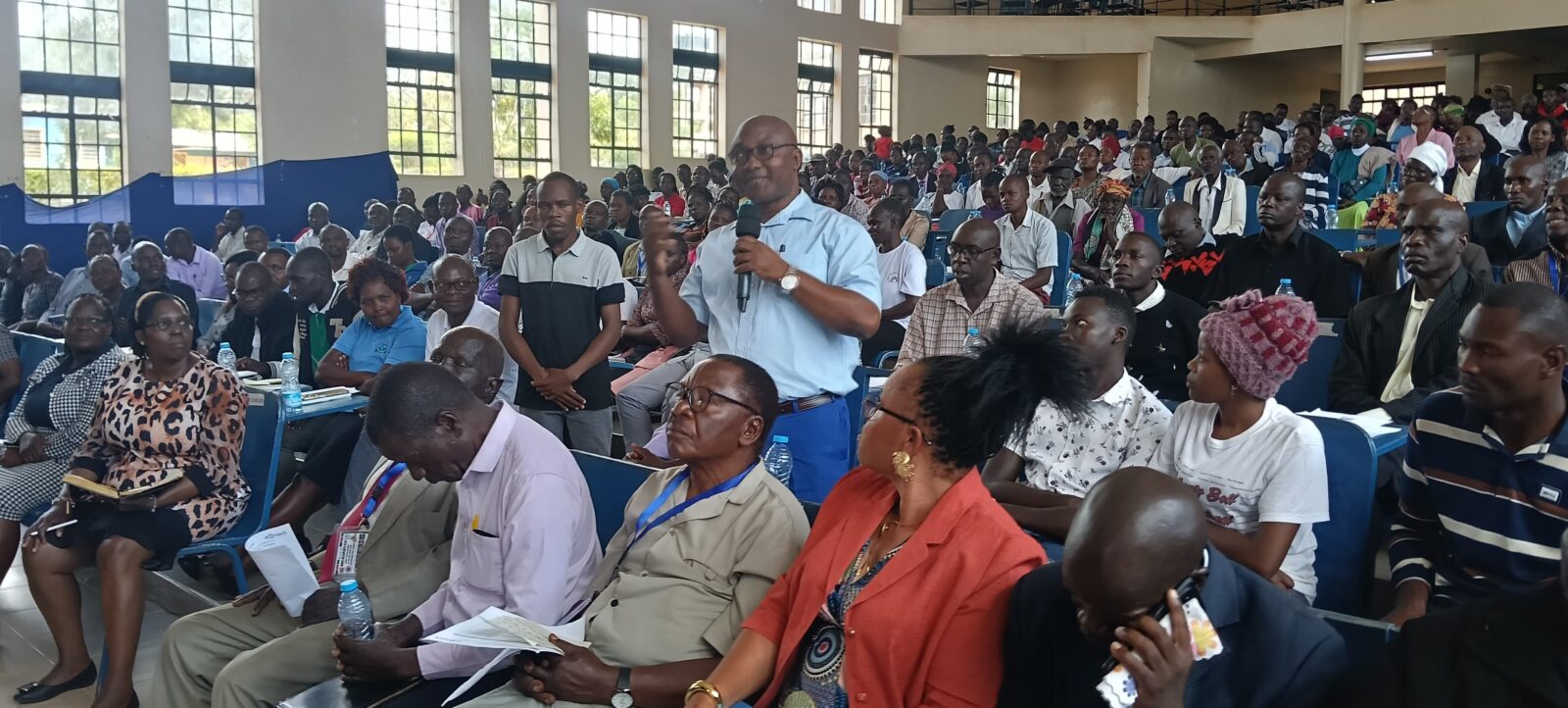
Speaking at a public participation forum at Kibabii University on the proposed Kenya Accreditation Service (Amendment) Act, 2025 on Friday, Dr. Ongeti emphasized that the legislation seeks to strengthen quality assurance across all sectors and enhance Kenya’s presence in international markets.
The forum brought stakeholders from Bungoma, Trans- Nzoia and Kakamega Counties.
“Kenya is moving towards the first world, the Kenya Accreditation Service has to align towards the first world to fit purpose, and ensure that we support all entities that undertake certification, inspection as well as testing,” he noted.
Dr. Ongeti argued that entities responsible for testing products used within the country, as well as those destined for international markets must adhere to strict accreditation standards to guarantee quality, safety and global acceptability.
“We also accredit entities that undertake inspection of goods, services and all items that fall within the space of inspection as well as certification,” he noted.
Further, he said that as Kenya is moving towards ensuring that manufactured goods contribute to 20 percent of the GDP arguing that for this contribution to arise then exports must be enhanced in that regard.
“For these exports to be enhanced these goods must be acceptable worldwide and accreditation of these institutions ensures that goods produced in this country are not re-tested, re- certified and re- inspected again when they cross the borders,” he said.
Dr. Ongeti emphasized that the accreditation of facilities is crucial for public safety, citing past incidents where lapses in quality had led to serious consequences.
“There have been cases of misdiagnosis in hospitals and even building collapses,” he noted, highlighting the real-world risks of substandard services and materials.
He explained that many of these failures stem from the poor quality of materials and services used, which the amendment seeks to address.
“These buildings collapse because of the quality of materials and services that were offered and used. This Bill seeks to strengthen our ability to regulate and monitor these standards, ensuring not only public safety but also public health,” Dr. Ongeti said.
By enforcing mandatory accreditation, he added, Kenya aims to prevent such avoidable tragedies and elevate the quality of services and infrastructure nationwide, aligning local practices with global standards.
He revealed that on 27th 2024, President Ruto ascended to the business amendment laws adding that part of those laws included the Kenya Accreditation Service Act in which section 10 (a) was introduced that makes any entity that undertakes inspections, certification as well as testing to be accredited.
“Under the current law, accreditation is mandatory. Through our public participation consultations across the country, the people of Kenya have clearly expressed that they want to benefit from the value of accreditation, being the reason why it has been made compulsory. As the implementing agency, we are now fully committed to operationalizing these requirements to ensure that all facilities and services meet the prescribed standards,” he said.
Dr. Ongeti further revealed that several facilities in Bungoma County have already undergone accreditation, citing Bungoma County Referral Hospital and Webuye County Hospital, among others, as examples of institutions that now meet the required standards.
He noted that these accredited facilities not only enhance public confidence in the quality of services offered but also serve as a model for other institutions across the county and the country.
Kakamega County CECM for trade Godfrey Owuor welcomed the move saying that the accreditation will help in boosting the quality of services in facilities.