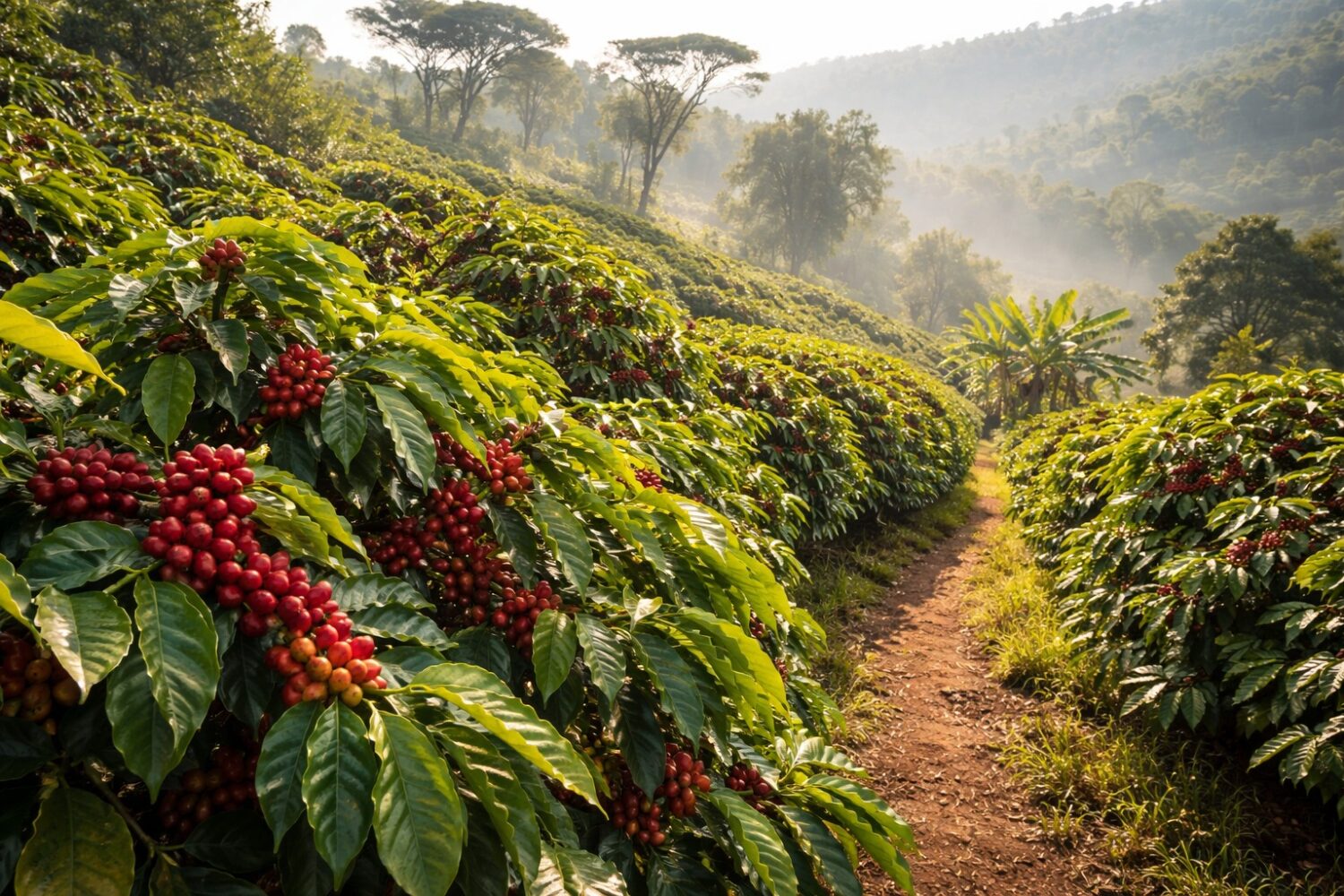
For over a million Kenyan farmers, selling coffee to Europe may soon be about more than quality. The success of their coffee sales could hinge on providing proof of avoiding deforestation.
A new European Union rule mandates that coffee entering its market must trace back to land that remained untouched after December 31, 2020.
Every shipment would need verified data showing exactly where the coffee was grown. For farmers who have worked the same hillsides for decades, owning the land may no longer be enough. They may have to prove its history.
The stakes are significant. Europe takes more than half of Kenya’s coffee exports, supporting around 800,000 households. Failure to comply could put that market at risk, with potential losses running into tens of billions of shillings over time.
Yet many farmers are not fully prepared. By mid 2025, only a fraction of farms had been mapped. The challenge is not just access to smartphones but knowing how to use them, capturing accurate data, and understanding where that information goes. Mapping costs add further pressure on farmers already dealing with erratic weather and unstable prices.
There has been some breathing room. In late 2025, the EU delayed full implementation by one year, pushing deadlines to late 2026 for large companies and mid-2027 for smaller players.
The official reason was that Europe’s own systems were not ready. Kenya, meanwhile, has already shipped its first compliant coffee consignment to the European market.
Programs like KAHAWA Plus are now mapping farms and bringing more farmers into the system. Some farmers see opportunity in the shift, arguing that protecting forests and growing quality coffee are the same goal.
Kenya did not write these rules. But its farmers may have to move faster than the people who did.