
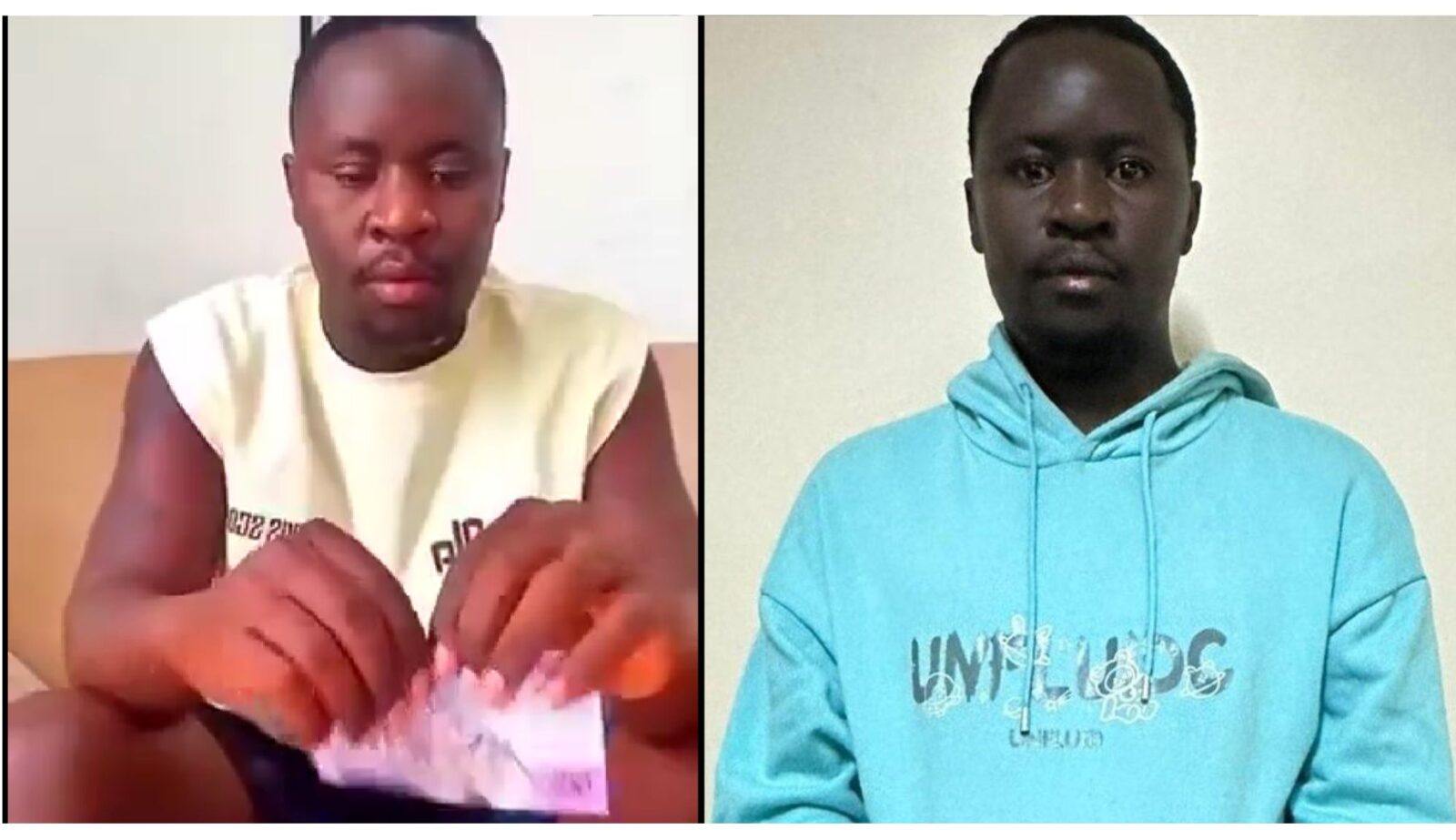
Maximilian Motara likely expected to go viral the moment he posted videos of himself tearing Kenyan 100 shilling notes on TikTok. Instead, the clips ended with detectives knocking on his door early Tuesday morning.
Officers from the Banking Fraud Investigations Unit arrested Motara on March 10, 2026 after videos began circulating online showing him ripping apart stacks of the 100 Kenyan shilling notes.
Each note is worth roughly 0.77 US dollars, but in the eyes of the law the value is not the point. What matters is the act itself.
Under Section 367A of the Kenyan Penal Code, deliberately mutilating or defacing currency is a criminal offense.
Anyone found guilty can face up to three months in prison, a fine of 2,000 shillings, or both. The law exists to protect the integrity of Kenya’s legal tender and to prevent the unnecessary cost of constantly replacing damaged notes.
The Central Bank of Kenya has repeatedly warned about a growing trend where people treat money as a prop for social media content, wedding displays, and decorative bouquets.
Notes are often folded, stapled, glued, or torn in the process. While these acts may appear harmless online, the damage quietly adds to the cost of reprinting currency, a burden ultimately carried by the public.
Financial and legal experts often point out a detail that many people overlook. Once a banknote enters circulation, it is considered public property.
Even if it sits in your wallet, you do not have the legal right to deliberately destroy it. Currency is part of a national system that depends on trust and respect for the notes themselves.
The arrest has turned into a wider conversation about social media culture and the lengths people go for attention online.
In the race for views, shares, and viral fame, the line between entertainment and illegality can sometimes disappear.