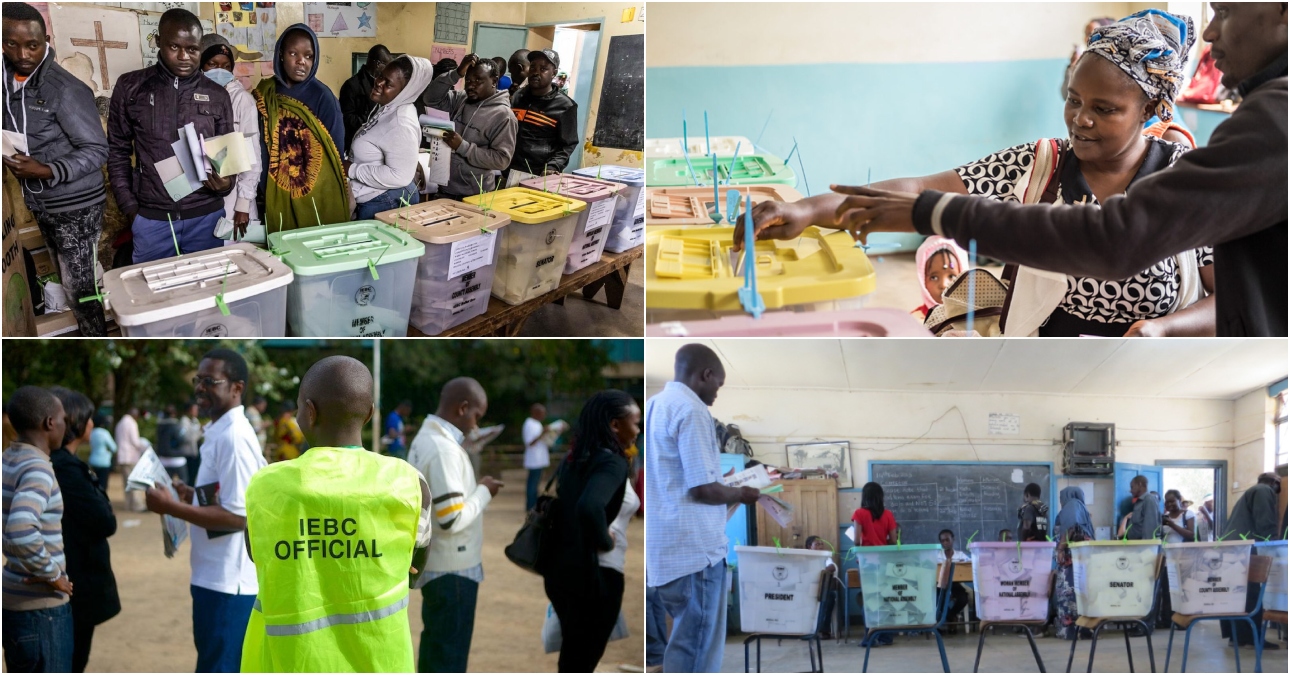
In less than two years, Kenya will once again stand at a critical crossroads. The 2027 General Election is shaping up to be one of the most consequential in the country’s history, with the presidency, parliamentary strength, and the nation’s future direction all at stake.
Nearly 70 per cent of Kenya’s population is made up of young people a demographic increasingly restless and demanding jobs, opportunity, and accountability.
Frustrations over unemployment, corruption, and the rising cost of living could significantly influence the balance of power.
This comes as the “Tuko Kadi” movement gains momentum, driving a surge in voter registration among the youth. Still, a key question remains: will young people turn out in large numbers to exercise their civic duty at the ballot?
The opposition’s unity
The opposition heads into 2027 with a clear objective to unite and unseat President William Ruto. However, unity remains elusive. Behind the scenes, negotiations are tense, with competing ambitions and internal rivalries threatening cohesion.
Former Deputy President Rigathi Gachagua, once a central figure, now appears increasingly isolated, accusing defectors of acting as “moles” aligned to the President.
Uhuru–Gachagua factor
Speculation continues to swirl around former President Uhuru Kenyatta, who could re-emerge as a key political power broker.
A potential alliance between Kenyatta and Gachagua could reshape the race, particularly in the Mount Kenya region either deepening divisions within the opposition or providing the unity it urgently needs.
ODM’s internal wrangles
Within the Orange Democratic Movement (ODM), internal divisions are becoming more pronounced. A faction linked to Oburu Oginga is pushing for cooperation with the ruling party, while another aligned to Edwin Sifuna warns that such a move would betray the party’s grassroots base.
How ODM resolves these differences could determine whether it strengthens the opposition or aligns itself with the government ahead of 2027.
Ruto’s re-election strategy
President Ruto appears to be leaving little to chance. His re-election strategy is anchored on flagship initiatives such as the Nyota Programme, aimed at appealing to young voters through promises of jobs and economic empowerment.
However, questions persist over whether these initiatives will translate into electoral support or be dismissed as political rhetoric.
Battle for Deputy President slot
Another looming contest is over the deputy president’s position. ODM has reportedly demanded the slot in any cooperation with the ruling party, while leaders from the Coast are rallying behind Hassan Joho.
At the same time, leaders from the Mount Kenya region insist they are ready to defend Kithure Kindiki’s position. Whether Kindiki remains President Ruto’s running mate in 2027 remains an open question.
The underdogs
Beyond the political heavyweights, a group of underdog candidates is also emerging.
Figures such as activist Boniface Mwangi, former Chief Justice David Maraga, and gospel musician Reuben Kigame are positioning themselves as champions of integrity and inclusivity.
While they face an uphill battle against established political machinery, their presence could reshape the national conversation, particularly on accountability and youth empowerment.
Regional battlegrounds
The Mount Kenya, Western, and Nyanza regions are emerging as key battlegrounds. These voting blocs will play a decisive role in shaping alliances and voter turnout, potentially redefining traditional political strongholds.
IEBC preparedness
Questions are also being raised about the preparedness of the Independent Electoral and Boundaries Commission (IEBC). Will the commission meet its voter registration targets? Is it fully ready to conduct a credible election?
IEBC Chairperson Erastus Ethekon has expressed confidence, stating that “stealing elections in Kenya is an impossibility.”
Recent disruptions of political rallies by hired groups have raised fresh concerns about political freedoms and security. While authorities have pledged accountability, critics argue that stronger safeguards are needed.
As defections, coalition-building, and political realignments intensify towards late 2026 and early 2027, the stage is being set for one of Kenya’s most unpredictable elections.
The question is not just who will win, but what kind of Kenya will emerge from the process. One thing is clear: the 2027 election will not be just another contest it will be a defining chapter in the country’s democratic journey.