Kirinyaga County has recorded a remarkable decline in new HIV infections, ranking among the best performing counties in terms of HIV management.
As the county celebrated the World AIDS Day (WAD) on Monday, December 1, statistics showed that there were only 91 new cases registered in the county this year, down from 779 cases recorded in 2013.
During the event held at Kirinyaga University, the County Executive Committee Member for Health, Medical Services and Sanitation, George Karoki, said that the notable progress has been a result of concerted effort in advocacy for prevention, enrollment in HIV management programs among other measures.
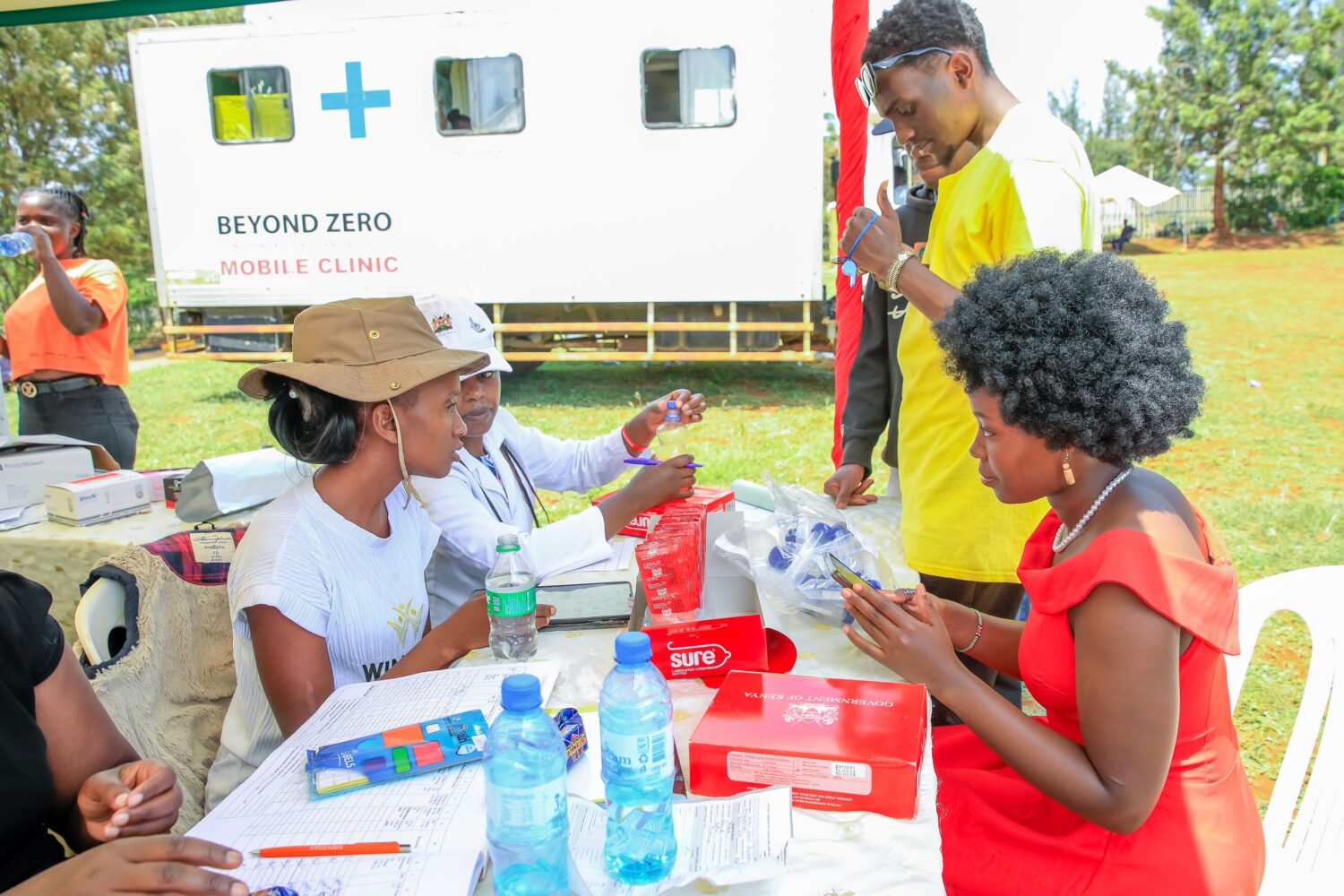
Describing the decline as one of the key public health achievements in the county, Karoki pointed out that the County administration has invested in digitized diagnostic equipment, expanded advocacy programmes and strengthened Community Health Promoters (CHP) networks to improve on prevention and management.
The CECM also announced that the county has achieved the UNAIDS 95–95–95 target, meaning that 95% of residents know their HIV status, 95% of those diagnosed are on antiretroviral therapy (ART), and 95% of those on treatment have achieved viral suppression.
At the same time, reports showed that about 13,000 people are living with HIV in Kirinyaga, with 12,998 already on treatment, representing near-universal enrolment. Among them are 447 children below 14 years, the reason the county is emphasizing on family testing to ensure no child is left behind.
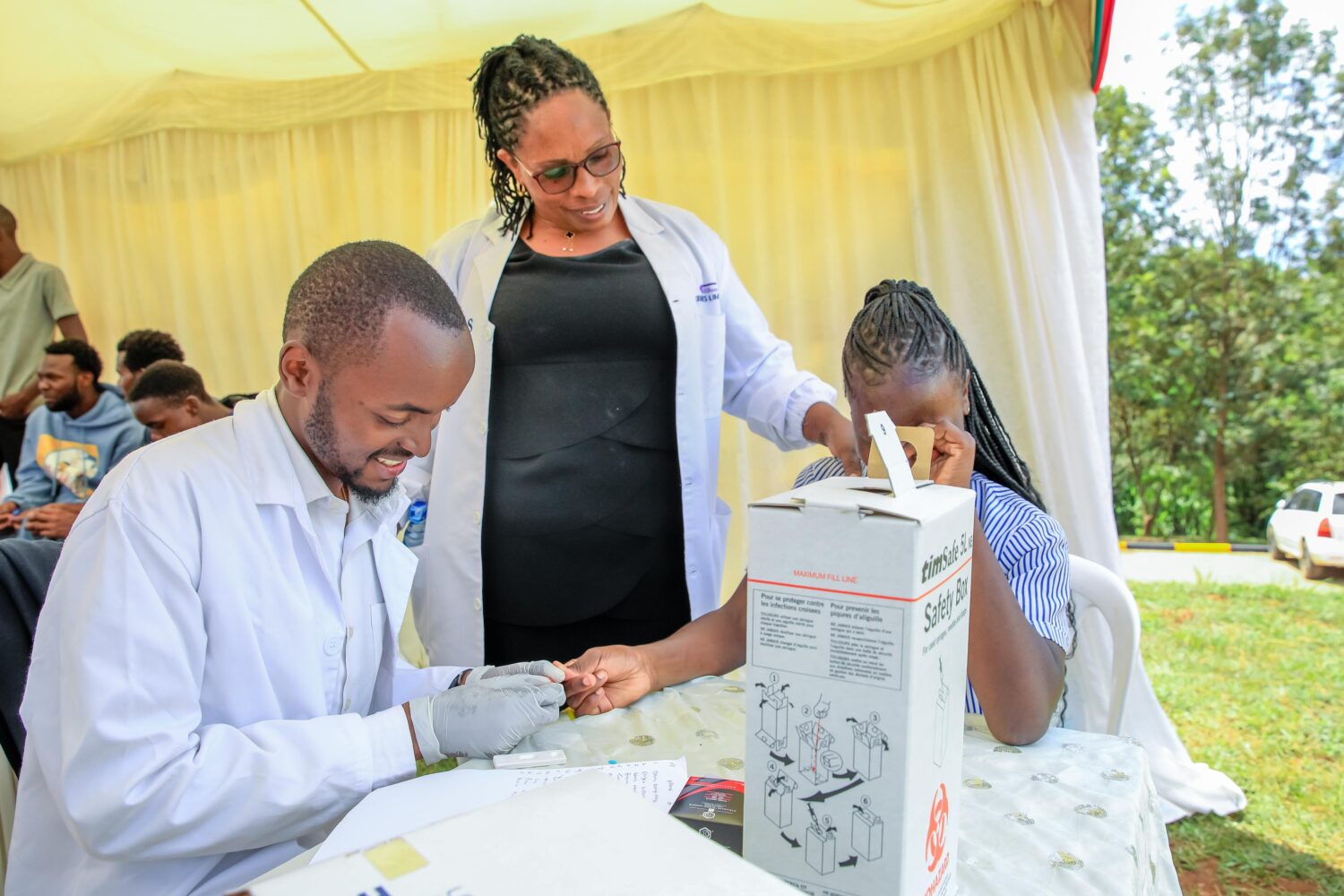
Out of those on treatment, 97% are virally suppressed and cannot transmit the infection but are advised to continue adhering to the recommended treatment regime which has now been simplified to one pill a day with fewer side effects.
Karoki noted that this year’s themes ‘Ending AIDS in Adolescents and Young People’ and ‘Overcoming Disruption, Transforming the AIDS Response’ resonated with the reality on the ground, where adolescents and young adults continue to bear the highest burden of new infections.
While delivering the state of the county address recently, Governor Anne Waiguru, had emphasized that the county was achieving major milestones in HIV management with mother-to-child transmission of HIV having reduced from 13% to 6.5%, reflecting improved antenatal and maternal health interventions.
She noted that since the time she took office, the investments made in the health sector have greatly improved key indicators in the county.
“Mother-to-child transmission of HIV reduced from 13% to 6.5% , TB Treatment Success Rate increased from 81 to 89%, antenatal coverage improved from 45 to 63%, reduction of maternal mortality ratio from 88 to 55 deaths in every 100,000 live births, neonatal mortality rate from 26 to 10 deaths in every 1000 live births. Skilled birth attendance of mothers delivering in a health facility also improved from 87to 92%, while the coverage of children immunized by 12 months improved from 81 to 91%,” Waiguru observed.
Despite the good progress made by the county on HIV management, Karoki, however, observed that there was still significant risk of infection especially among the young people, warning that 41% of new infections involve young people aged between 14 and 24, making adolescents the centre of the county’s prevention strategy.
The County HIV/STI Programme Coordinator Joseph Kanyi also underscored the urgency of focusing on adolescents and children, saying they now represent the most vulnerable group.
“This year we are targeting adolescents and children because new infections are increasing among them, and they are also facing the biggest burden of gender-based violence and teenage pregnancies,” Kanyi said, explaining that many young people have never witnessed the severe late stages of AIDS, which has created a false sense of safety.
At the same time it was observed that sexual and gender-based violence (SGBV) remained a major driver of new infections, emphasizing that the county’s goal is to eliminate the triple threat of HIV, SGBV and teenage pregnancies by 2030.
The County Executive Committee Member for Gender and Youth, Millicent Nyawira, reiterated the county government’s commitment to combating gender based violence in the county noting that the WAD commemoration coincided with the ongoing observation of 16 days of activism against GBV.
She noted that the County is running a coordinated campaign to empower families and reduce vulnerabilities that expose young people to a risky environment.
“We are empowering youth, women and men to reduce poverty. All children should be in school, and women should be able to provide for their families,” she said, encouraging young people to use social media as a platform for creating awareness and mobilization in the fight against HIV.
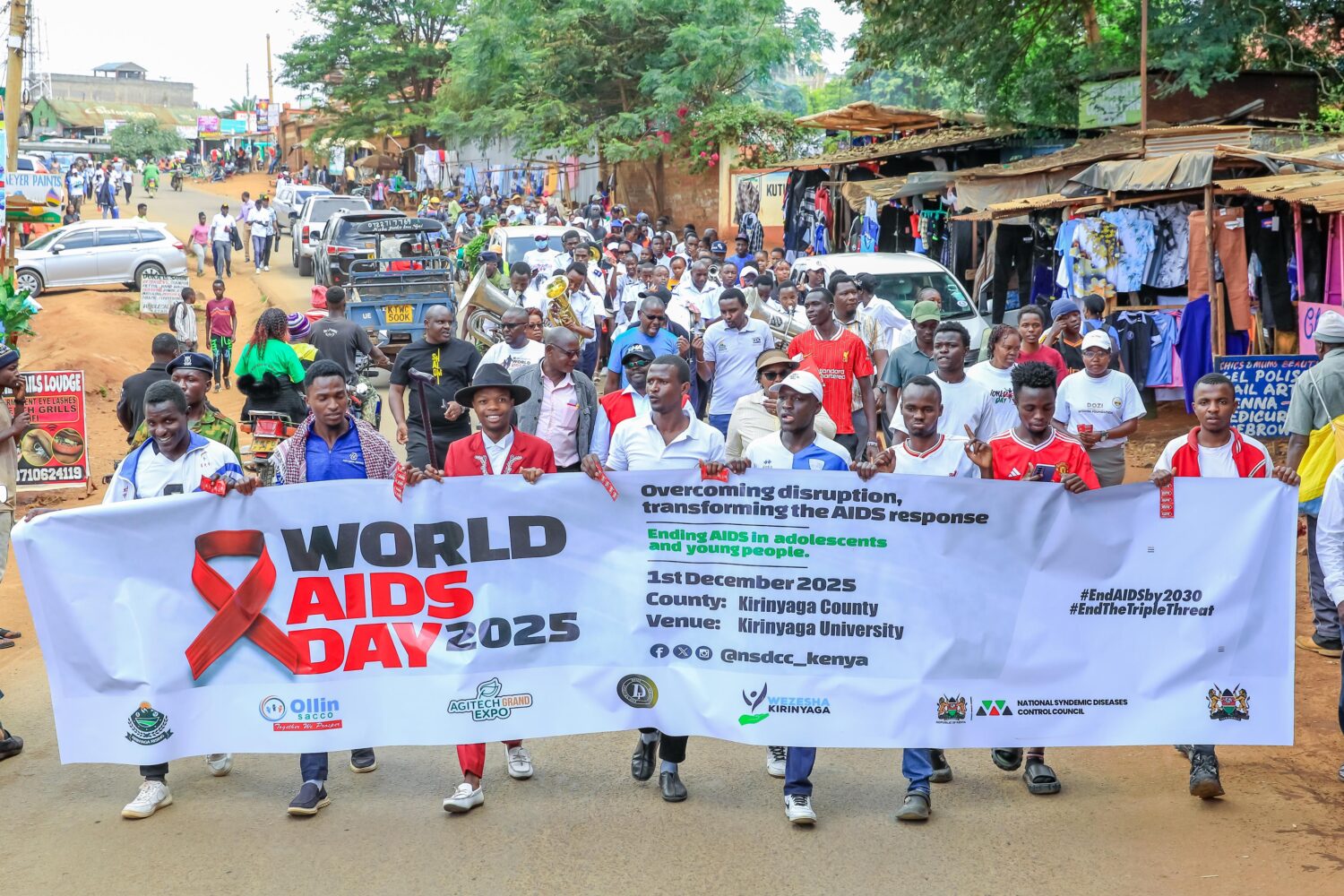
The WAD event, organized by the County Government, brought together health officials, students, community groups and partners who participated in a public awareness procession along Kutus town streets before marching to the event venue for further reflection, advocacy and public education.
Kenya currently has 1.3 million people living with HIV, while 22% of new infections and 13% of new HIV-related deaths occur among children. Among young people aged 15 to 24, the country records 23,000 new infections annually, translating to 54 new infections and 22 deaths every week.