Kisumu County has once again affirmed its place as a frontrunner in health system transformation, becoming one of the first devolved units to roll out the Kenya Quality Model for Health Plus (KQMH PLUS), a national framework designed to embed quality and safety into all levels of healthcare delivery.
The official launch, held at Angola Health Centre in Kolwa East Ward, was presided over by Deputy Governor H.E. Dr. Mathew Owili, who hailed the initiative as a timely intervention that cements healthcare as a right for every Kenyan.
“Every Kenyan, wherever they live, deserves safe, effective and respectful healthcare of acceptable quality and safety, as a right, not a privilege,” Dr. Owili stated.
“KQMH PLUS strengthens the use of data, digital tools, learning and accountability, in full alignment with our county’s health reforms and the Universal Health Coverage agenda,” he added.
Dr. Owili emphasized that Kisumu’s leadership in healthcare transformation stems from early investments in strong foundations in infrastructure, utilities and digital readiness, particularly within its Primary Health Care Network (PHC) hubs.
Building Foundations for Quality
He cited numerous examples of progress across the county:
●Muhoroni County Hospital, now a dignified referral facility after ward refurbishment, improved sanitation and enhanced lighting for 24-hour services.
●Lumumba County Hospital, fully digitized through TaifaCare, where nurses use digital partographs to detect and manage complications in real time.
●Ojola Sub-County Hospital, which now houses a modern Outpatient Department and a Wellness Centre offering preventive screening.
●Katito Sub-County Hospital, upgraded with solar power, Wi-Fi and CCTV to support 24-hour, digitally enabled care.
●Ahero County Hospital, modernized with improved maternity, mortuary and power systems, linked to real-time county supervision.
●Gita and Kombewa, where expanded maternity wings, new theatres and specialist deployments have brought advanced care closer to communities.
“These investments were strategic,” Dr. Owili explained. “They have laid the groundwork for quality, because quality must be established on systems that work.”
Empowering the Workforce and Driving Digital Innovation.
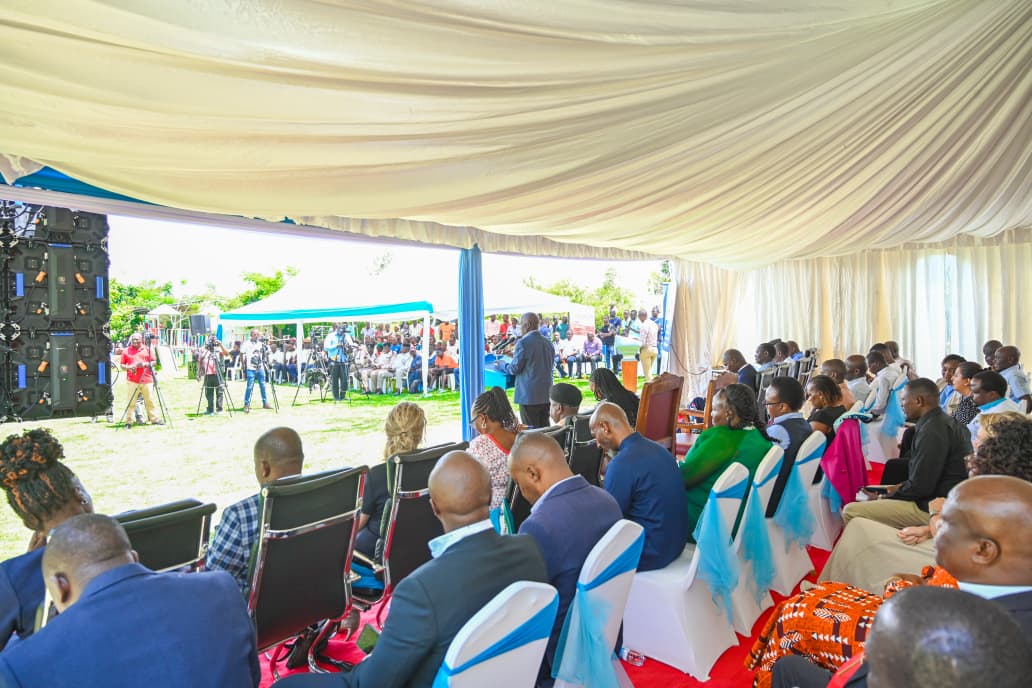
Dr. Owili announced that the County Executive Committee had approved the recruitment of more healthcare workers to improve responsiveness, reduce workloadsand enhance service delivery, especially in maternity, outpatient and emergency services.
He further noted that Kisumu’s commitment to innovation remains unmatched. Through SafeMamaTech, the county identifies high-risk mothers early, supports clinical decisions digitally and links emergency referrals through a 24-hour ambulance network that operates free of charge.
“The results speak for themselves,” he said. “Here in Kolwa East Ward, all mothers who have passed through the SafeMamaTech programme have had good outcomes.”
Kisumu has also integrated the SafeCare approach, supported by PharmAccess, into its Primary Care Networks.
“Today, no Authority to Incur Expenditure is issued without a dedicated allocation for quality improvement,” Dr. Owili added. “Maternal health preparedness in Kolwa East improved from 26% to 54% in just one year. That is progress. That is accountability. That is leadership.”
Courtesy Visit Strengthens Collaboration
During the launch, a high-level delegation paid a courtesy call on Deputy Governor Dr. Mathew Owili and County Commissioner Mr. Benson Lopermorijo, to discuss deepening collaboration on quality health delivery.
The meeting explored ways to enhance primary healthcare, build workforce capacity and ensure that health facilities continue to provide safe, effective, and people-centred care.
Dr. Muthoni, Head of Quality and Standards at the Ministry of Health, commended Kisumu for setting a national benchmark.
“Kisumu has set the pace for other counties,” Dr. Muthoni said. “From infrastructure readiness to digital innovations like SafeMamaTech and the integration of the SafeCare model, Kisumu has demonstrated what is possible when leadership, data and community ownership align. The Kenya Quality Model for Health Plus builds perfectly on these foundations.”
She emphasized that Kisumu’s success embodies the essence of KQMH PLUS, integrating community, facility, referral and data systems into a seamless, people-centred health network.
A Broader Message of Unity and Leadership
In a reflective close, Dr. Owili took a moment to congratulate Dr. Ida Odinga on her appointment as Kenya’s Permanent Representative to the United Nations Environment Programme (UNEP), calling it a well-deserved honour.
He also urged members of the ODM Party to remain united amid recent internal turbulence following the demise of the late Rt. Hon. Raila Odinga, whom he described as “an irreplaceable icon.”
“The late Raila Odinga was such an icon that his unexpected death would naturally cause what we are witnessing in ODM,” Dr. Owili said. “But even when Baba was alive, the party went through moments of turmoil and always came together to chart a common way forward.”
He reiterated his loyalty to the ODM leadership and called on members to align with recent resolutions made in Kisumu, where Dr. Oburu Oginga was endorsed to lead party negotiations with the Head of State.
Dr. Owili concluded by reaffirming Kisumu’s readiness to lead in implementing KQMH PLUS, noting that the county’s progress is a product of deliberate strategy, strong partnerships and accountable governance.
“Kisumu County is proud to be among the first in this rollout. We are ready to lead, to learn and to deliver,” he said. “We reaffirm our commitment to safe, effective, respectful and high-quality care for every patient.”
As Kenya advances toward Universal Health Coverage, Kisumu County stands as a model of how visionary leadership, digital innovation and community-focused health planning can translate national health policies into tangible, life-changing outcomes.