The tone of Kenya’s political rallies is changing and not for the better. What was once a contest of ideas has increasingly become a theatre of insults, where women’s dignity is auctioned for laughter and applaud
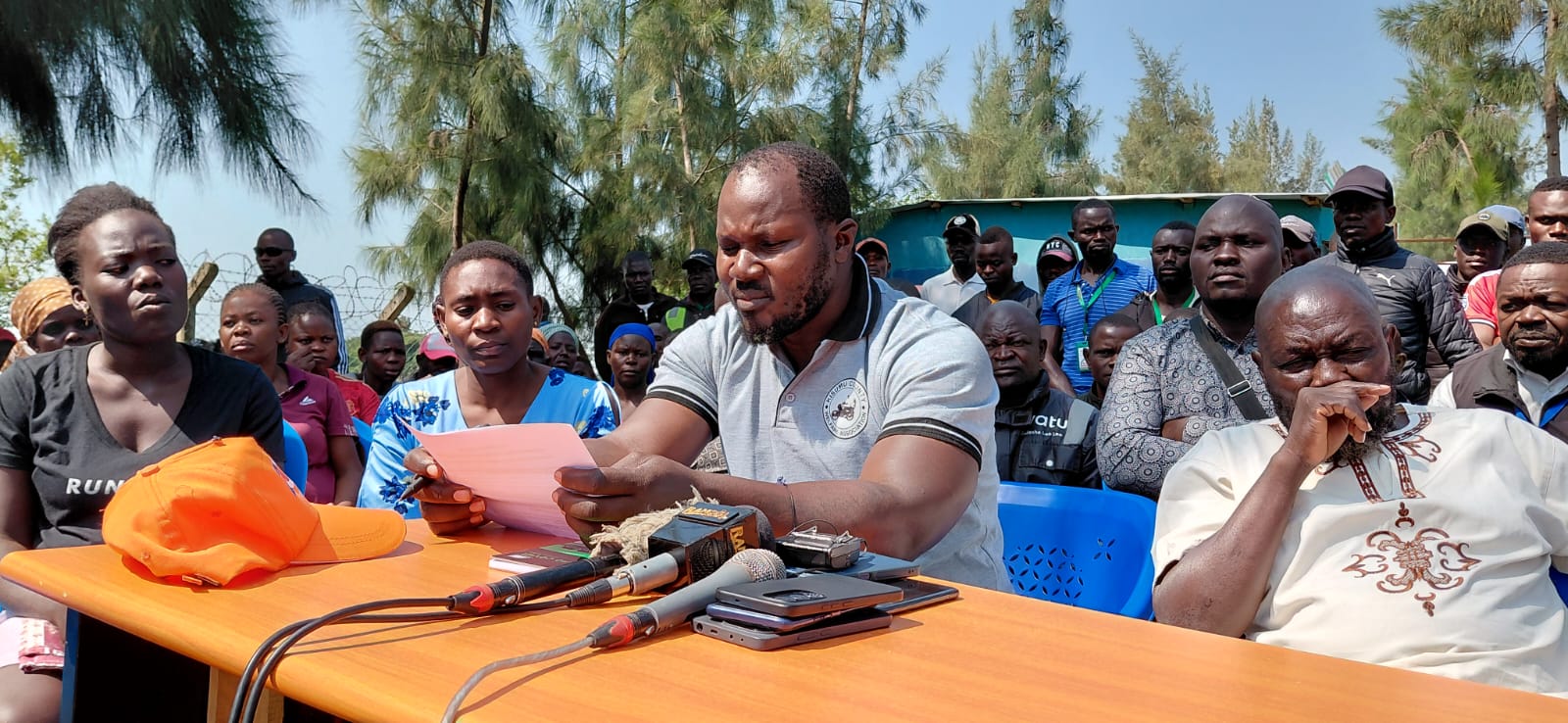
Wednesday, February 25 political gathering in Kisumu County once again exposed the dark underbelly of Kenya’s political culture, where crude and sexualized remarks against women are normalized as “entertainment.”
The most recent outburst came from ODM politician Richard Omondi Odhiambo, popularly known as Makamu wa Makamu, whose words directed at the embattled Secretary General of the ODM Party, Edwin Sifuna, drew outrage far beyond the county borders.
To many women in attendance, the remarks were not just indecent but also, were dangerous.
“These are not mere jokes,” said Linda Ogweno, Director at Women United for Our Future. “They represent a calculated, historical strategy to dehumanize women candidates, to reduce their intellect and leadership to sexual innuendos.”
The statement, delivered jointly by Women United for Our Future and the Civil Society Organization (CSO) Network, warned that the normalization of sexualized insults has real consequences and history agrees. Kenya’s past elections have shown how verbal degradation of women often precedes physical aggression.
“The path from words to violence is very short,” Ogweno explained. “When a society laughs at the humiliation of its women, it begins to justify their abuse.”
Analysts argue that the language of politics has quietly turned into a tool of exclusion. By sexualizing women’s presence, the political stage becomes unsafe for female leaders and aspirants, shrinking the already narrow space for women’s participation in governance.
Misogyny as political currency
What makes the Kisumu incident particularly disturbing is how ordinary it has become. Across the political divide, male politicians continue to lace their speeches with sexual analogies to describe alliances and rivalries, all without facing any real consequences.
From national rallies to county barazas, the pattern is consistent. Women are objectified, trivialized and reduced to their physical form rather than acknowledged for their competence.
“We’ve seen women encouraged to demean themselves on stage, to dance, to bow, to act submissive, all for male applause,” Ogweno lamented. “This erodes the progress women have fought so hard to achieve.”
Her words resonate with many who see Kenya’s political field as still deeply patriarchal. The message from Kisumu’s women leaders is clear: if women cannot be respected on the podium, they cannot be safe on the campaign trail.
For years, women in politics have been told to “grow thick skin” and ignore insults. But the silence has only emboldened the perpetrators.
“Our silence has become a license for impunity,” Ogweno said. “Every unchallenged insult normalizes the next one. Every joke told at a woman’s expense weakens the moral fabric of leadership.”
Political observers note that this behavior is not accidental. Sexualized language has long been used to undercut women’s credibility, framing them as emotional, unserious, or dependent on male approval. It is, in essence, a strategy of exclusion disguised as humor.
Call for accountability
In their statement, Kisumu women issued a three-point demand: a public apology from Mr. Odhiambo, an immediate investigation by the National Cohesion and Integration Commission (NCIC), and strict enforcement of the political parties’ code of conduct by the Office of the Registrar of Political Parties.
They argue that any candidate who weaponizes sexualized rhetoric should be deemed unfit for public office.
“Leadership is defined by competence, not by the ability to insult or endure abuse,” Ogweno declared. “Our bodies are not political tools and our silence is not consent.”
The Kisumu rally may have sparked outrage, but it has also ignited a broader conversation about respect, dignity and the future of Kenyan politics.
Kenya stands at a crossroads. As the country inches closer to another election season, the tone of political discourse will either uplift or degrade the moral compass of leadership.
In the words of Ogweno: “It’s not enough to condemn violence after it happens. We must stop normalizing the language that feeds it.”