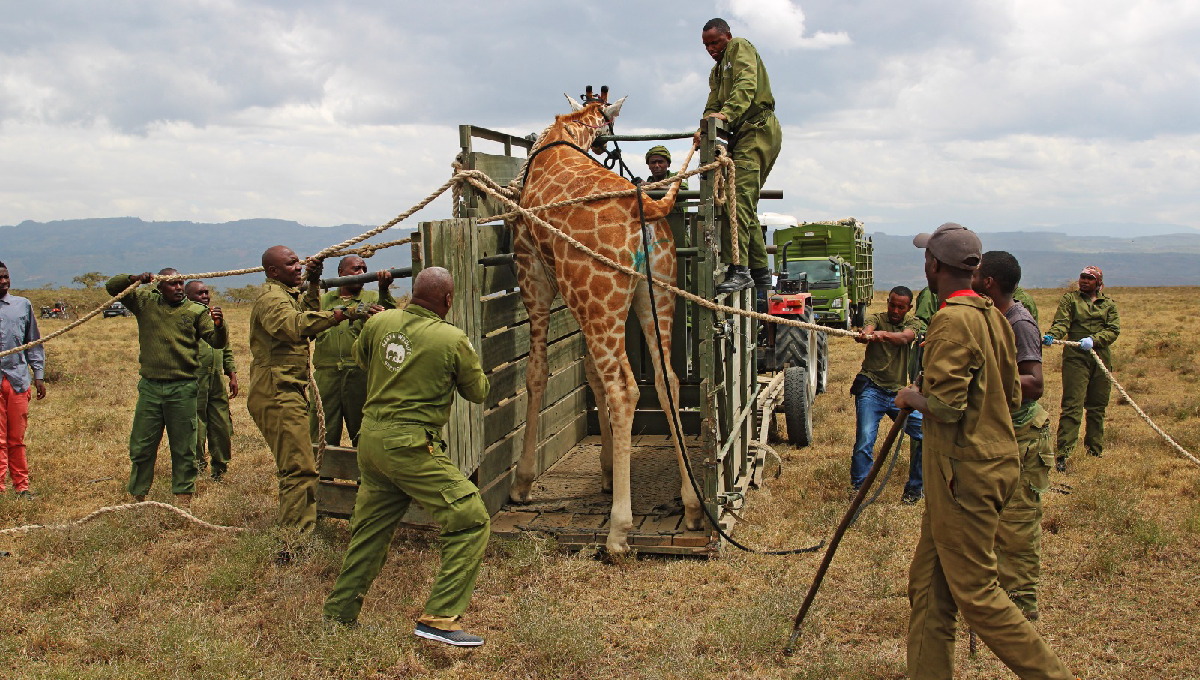
The Kenya Wildlife Service (KWS) has successfully completed the translocation of three young Rothschild giraffes from Soysambu Conservancy in Naivasha to the Giraffe Centre in Nairobi, marking a major step in efforts to protect one of Kenya’s most threatened wildlife species.
In a statement shared on its X account, KWS said the giraffes aged between two and three years were moved to strengthen the genetic pool of the Nubian giraffe population and reduce the risk of inbreeding.
“Aged between 2–3 years, the giraffes were relocated to strengthen genetic diversity, prevent inbreeding, and secure the long-term sustainability of the Nubian giraffe population through continued breeding,” KWS stated.
The conservation agency described the operation as a milestone achieved through strong collaboration with key partners, including the Giraffe Centre and Syosambu Conservancy.
The young giraffes were carefully transported under veterinary supervision to ensure their safety and smooth adaptation to their new environment.
“This milestone conservation effort, implemented through strong collaboration between Kenya Wildlife Service, the @GiraffeCenter , and Soysambu Conservancy, emphasises the power of partnerships in safeguarding biodiversity,” the statement read.
Rothschild, also known as Nubian giraffes, are listed as endangered, with their numbers in the wild significantly reduced due to habitat loss, human encroachment, and poaching.
Conservationists say controlled breeding programs and strategic relocations are essential to preserving the species for future generations.
KWS noted that the move is also expected to support conservation-based tourism and strengthen Kenya’s wildlife economy by giving visitors a chance to learn more about the giraffes and the broader efforts to protect them.
“Safeguarding biodiversity, supporting conservation-based tourism, and strengthening Kenya’s wildlife economy—today and for generations to come,” the agency added.
The Giraffe Centre, a popular educational and conservation facility in Nairobi, is expected to play a key role in monitoring the giraffes’ progress and contributing to ongoing breeding and awareness programs aimed at securing the future of the species.