Somewhere right now, a girl is skipping lunch because she believes she is too big. In parts of Mauritania, another girl is urged to keep eating because she is considered too small.
That reality is called leblouh.
Leblouh, also known as gavage, is the practice of force-feeding young girls (ages 5-15) to increase their body weight before marriage.
The logic is blunt: the larger the bride, the wealthier and more respectable the family appears. In communities shaped by drought and long periods of scarcity, thinness can signal poverty. A fuller body becomes visible proof of prosperity.

While many societies obsess over calorie deficits and weight-loss trends, some Mauritanian households measure success in added kilos. Different standards, same pressure. Women’s bodies become public statements.
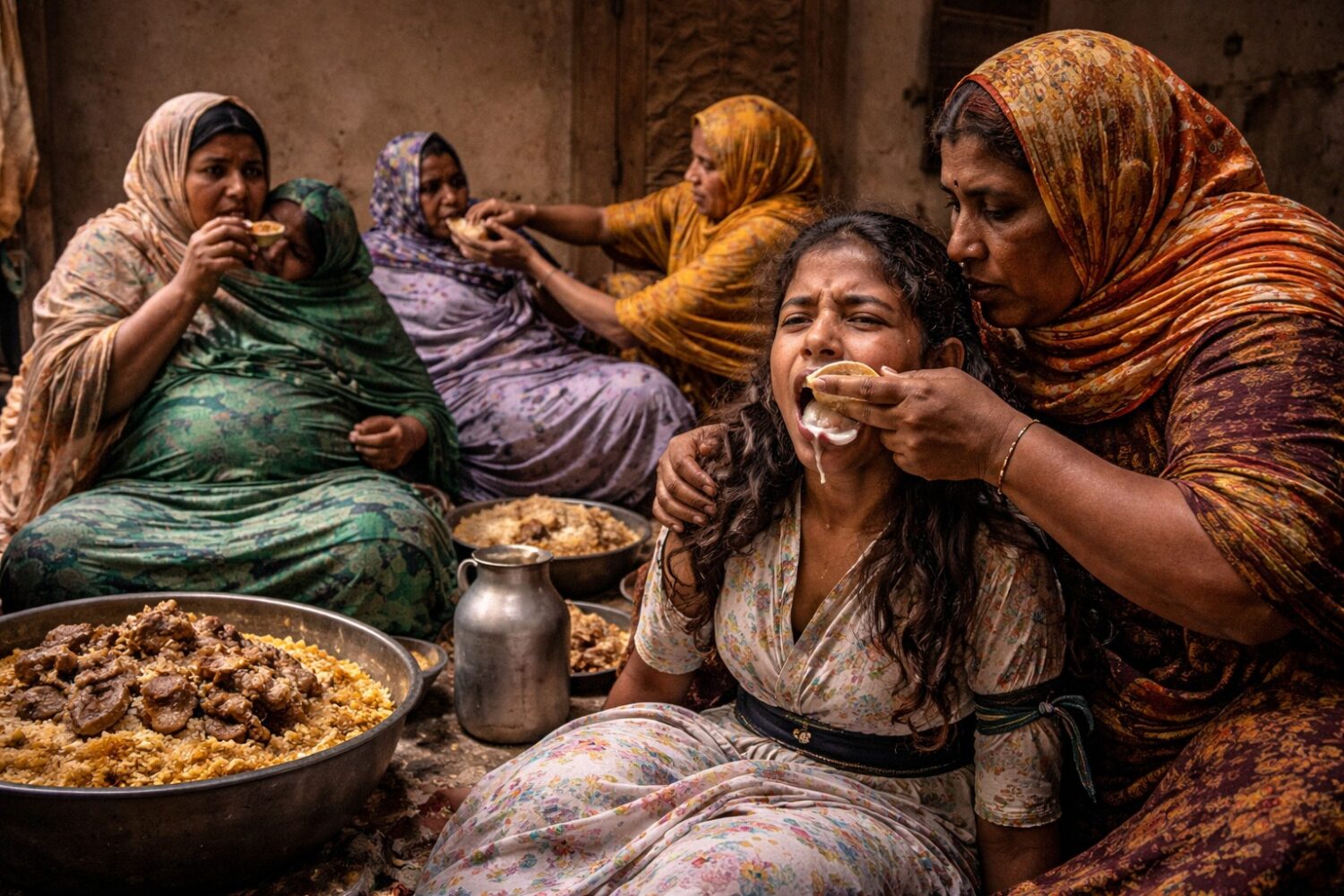
In certain areas, girls are sent to so-called fattening camps where eating is compulsory. Meals are served from sunrise to nightfall. Daily intake can reach 4,000 calories or more, roughly equivalent to consuming 20 cheeseburgers in a single day.

Camel milk, couscous, fatty meats, and butter are consumed in heavy portions. In extreme cases, reports indicate girls may be tied down or prevented from seeing friends to enforce compliance. Refusal is complicated when marriage prospects and family honor are at stake. Tradition pushes forward.
The health consequences are immediate and measurable. Rapid weight gain strains the heart, liver, and joints. Girls may experience stomach pain, vomiting, fatigue, and shortness of breath. Over time, the risks expand to obesity, type 2 diabetes, cardiovascular disease, and chronic joint complications. In a country where specialized healthcare access is limited, such conditions can define the course of a lifetime.

At its core, leblouh reflects power and economics. For generations, a woman’s size has served as evidence of her family’s status. A larger bride signals that this household can provide. In harsh seasons, marriage can also mean one less mouth to feed. Yet change is unfolding.
Urbanization, education, and global media exposure are introducing younger Mauritanian women to alternative ideas of beauty and autonomy. Activists and health professionals are speaking more openly about the medical toll. A pressing question is gaining volume: should cultural tradition outweigh long-term health?
This is not an isolated phenomenon. Every society reshapes women’s bodies to fit an ideal. The pressure is familiar because when beauty becomes an obligation rather than a choice, the cost is absorbed by the body.