The National Dialogue Committee (NADCO) brought its ongoing national consultations to Kisumu on February 5, 2026, hosting its inaugural public engagement forum at The Mama Grace Onyango Social Hall.
The session, attended by local leaders, civic groups and members of the public, focused on reviewing and deliberating on the implementation of NADCO’s 10-point agenda, which seeks to bridge governance gaps and strengthen public institutions.
NADCO, co-created in March last year through a landmark agreement between William Ruto and the late, Raila Odinga, was formed to provide a structured platform for dialogue on issues that have long divided the nation, ranging from the cost of living to electoral reforms and inclusivity.
The Kisumu forum marks a turning point in translating that dialogue from elite negotiation to public participation.
A Courtesy Call and a Conversation on Governance
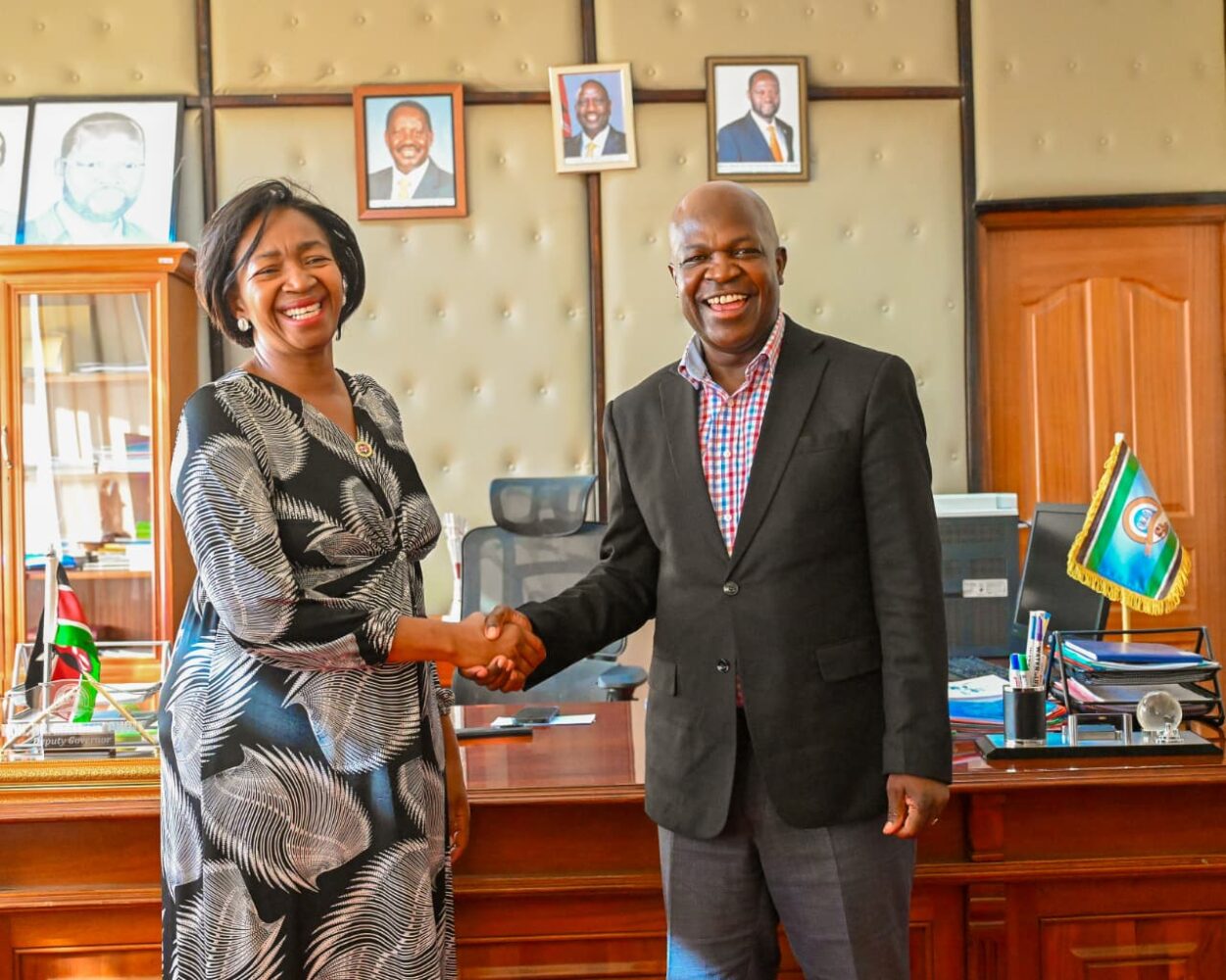
Before the forum, the NADCO team, led by Chairperson Senator Agnes Zani, paid a courtesy call to the office of Kisumu Deputy Governor Dr. Mathew Owili. They were accompanied by Nominated MCA Hon. Kennedy Ajwang’ and County Executive for Finance George Okong’o, where they held discussions on governance, devolution and the broader significance of public dialogue in policy reform.
Dr. Owili commended the committee for its inclusive approach and urged it to ensure the process reflects the real struggles of ordinary Kenyans.
“The NADCO report will only make sense if it touches the lives of ordinary Kenyans,” he said. “It must serve the people, not the powerful.”
Senator Agnes Zani, in her remarks, emphasized that the committee’s mission is not merely to document grievances but to transform them into actionable policies that strengthen governance and service delivery.
“We are here to listen, to gather voices and to ensure that every Kenyan feels part of the reform process,” she said. “Dialogue is not about politicians talking to each other but about the nation speaking to itself.”
IEBC Reconstitution: Restoring Electoral Trust
In his address, Dr. Owili turned his attention to one of the most delicate aspects of the NADCO process, the reconstitution of the Independent Electoral and Boundaries Commission (IEBC).
“The independence of IEBC is not negotiable,” he asserted. “You can’t build trust in elections by dividing commissioners along party lines. We need a referee who doesn’t wear any team’s jersey.”
He linked this to the recent resignation of IEBC Chief Executive Officer Marjan Hussein Marjan, calling it a worrying signal that institutional confidence remains fragile.
“If senior officials are quietly walking away, it tells us that reforms must go deeper than names and numbers. We must fix the culture of interference,” he said.
Cost of Living: Dialogue vs. Daily Survival
On economic matters, Dr. Owili was candid, warning that national dialogue loses meaning if it does not address the cost of living.
“The people wanted solutions, not statistics,” he said. “Kenyans expected the NADCO report to lower the cost of unga, fuel and electricity, not to recommend another committee. The real dialogue we need is between the hungry stomach and the empty pocket.”
He called for immediate interventions in food pricing, energy costs and youth employment, arguing that economic frustration remains the biggest threat to national stability.
“You can’t preach peace on an empty stomach. True stability begins with economic justice,” he noted.
Protecting the 2010 Constitution: Guarding the People’s Victory
The Deputy Governor also warned against using the NADCO process to re-open constitutional debates through political maneuvering.
“We remind the nation that the 2010 Constitution was not a gift from the powerful, it was a victory of the people,” he said. “Any attempt to alter it under the table is betrayal. Let reforms strengthen devolution, not weaken it.”
He said that devolution had transformed Kisumu and other counties and must remain the heartbeat of local empowerment.
“Counties like ours are living proof that devolution works. Weakening it would be reversing history,” he added.
Inclusion: Beyond Token Representation
Dr. Owili echoed ODM’s traditional stance on inclusion, calling on the NADCO process to give real power and participation to youth, women and persons with disabilities.
“ODM has always believed in inclusion. The youth, women, and persons with disabilities must not just be mentioned, they must be meaningfully involved,” he said. “NADCO should not be an old boys’ club writing policies for a generation it does not understand.”
He proposed structured representation of youth in future dialogue platforms, not as symbolic presence but as agenda-setters in policy formulation.
The Bigger Picture
Senator Agnes Zani, in closing remarks, acknowledged that public participation remains NADCO’s cornerstone.
“What we have started here in Kisumu will shape the rest of our national journey,” she said. “Our commitment is to ensure that every recommendation comes from the people and returns to the people.”
As Kisumu hosted the dialogue, the mood was one of cautious optimism and a mix of reformist hope as well as political realism. For Dr. Owili, it was also an opportunity to reassert ODM’s moral compass in national reform debates: dialogue, yes; but always anchored in the daily realities of the people.
“Dialogue is important,” he concluded, “but it must never replace democracy. The people’s voice remains supreme.”