
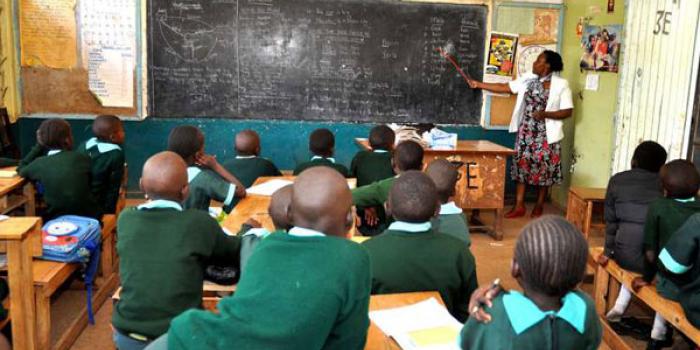
Despite government capitation grants of KSh1,420 per primary pupil and KSh15,042 per junior secondary student under the Competency-Based Curriculum (CBC), parents across Kenya report being forced to pay a growing list of unauthorised charges.
According to a survey by Elimu Bora titled ‘Breaking the Promise’, conducted between November 2025 and January 2026 among 370 parents and guardians nationwide, more than 90 percent of schools charge admission fees, with some demanding as much as KSh25,000 per pupil — higher than what some private schools require.
“In Kisumu, M.M. Shah Primary School reportedly charges between KSh15,000 and KSh20,000 per child, while Victoria Primary imposes combined levies exceeding KSh20,000. Similar cases were reported in Nakuru, Nairobi, Mombasa, Migori and Machakos,” the survey reads in part.
Beyond admission, parents are allegedly compelled to pay for desks, lockers, development levies, exam fees, and remedial lessons, all prohibited under the Basic Education Act (2013). Some schools reportedly require parents to bring furniture or pay disguised construction fees.
The survey found that 85.7 percent of schools send learners home for what it termed “non-payment of illegal fees,” while 80 percent do not issue receipts, creating opaque financial systems.
“Many parents described intimidation and humiliation of their children as schools enforced payment through punitive measures such as withholding report cards or denying exams. Receipts for payments were rarely issued,” the report states.
However, parents in Kisumu have strongly disputed the report.
“What a malicious report!” exclaimed Cephas Ogwang’. “I have never heard of a learner sent home or denied admission. M.M. Shah is so densely populated that the management is creating more spaces for learners,” he said.
The report alleged that M.M. Shah charged KSh1,000 per term for a non-existent school bus, but school records seen by TV 47 Digital show that a 67-seater, double axel Isuzu worth over KSh18 million was purchased through a joint initiative. Each student contributed Ksh 1,000 for seven terms, while the area MP, Dr. Joshua Oron, funded the remaining KSh8 million. All these, according to the documentation, was achieved with approval from the County Education Board.
“Parents no longer contribute to the school bus,” Ogwang’ said. “Such alarming claims are malicious and meant to discredit our school’s achievements.”
M.M. Shah, located in Kisumu Central, is one of the region’s top-performing schools. “In 2025, out of 324 KJSEA candidates, over 250 scored within the C1 category. That cannot happen where there is chaos,” Ogwang’ added.
Similar allegations were made against Victoria Primary School, with calls for disciplinary action against its headteacher. Yet, parents there also dismissed the claims.
Victoria Primary, situated in Milimani Estate, posted excellent 2025 KJSEA results. Out of 231 candidates, 124 qualified for C1 placement and 91 for C2. “It takes leadership and cooperation between parents and teachers to achieve such results,” said Dan Omollo, the Parents Association chairperson.
“If that survey were accurate, our school wouldn’t be as full as it is,” Omollo argued. Victoria Primary now has over 2,600 learners, and the number keeps growing each year.
According to human rights defender Chris Owalla, however, all public primary schools in Kisumu municipality charge admission fees. “They charge not less than Ksh 10,000. Some even force parents to buy uniforms from the school,” he claimed.
He listed several schools, including Arina, Arya, Central, Highway, Joel Omino, Kaloleni Muslim, Kondele, Kibuye Mixed, Kisumu Union, Lake, Lutheran Church Special, Manyatta Arab, M.M. Shah, Shaurimoyo, St. Matthew Ondiek, St. Vitalis Nanga, Victoria and Xaverian.
Owalla further alleged that these schools run private lunch programs despite cheaper alternatives provided by Safaricom. “Parents are suffering because profiteers control these programs,” he said.
School officials refuted the claims. “About a quarter of our parents pay for lunch consistently, but no learner is ever sent home. We ensure all learners eat on time,” said Joseph Oruko, chairperson of Migosi Primary’s Parents Association.
Migosi Primary, which serves many learners from Obunga slums, is under review by the Ministry of Education for a pilot feeding program offering balanced meals at Ksh 5 per child. “How can we approve private lunch providers while awaiting a government program?” Oruko asked.
He added that the school, which has German sponsorship, provides lockers and often donates uniforms to needy learners through the headteacher’s office. “Why would such a school be targeted?” he wondered.
Nyanza Regional Director of Education Lawrence Karuntimi emphasized that parents play a central role in school management. “Parents are key stakeholders represented through the Parents Association on Boards of Management. Their involvement promotes accountability and harmony,” he said.
Karuntimi cautioned against unverified reports, saying, “Academic excellence and infrastructural development can only thrive in harmony. Unsubstantiated claims risk derailing the progress made in the education sector.”
As debate continues over the Elimu Bora survey, a clear divide has emerged between advocacy groups and parents in Kisumu. While the report highlights possible abuse of Kenya’s Free Education policy, local school communities insist that most institutions operate transparently and within the law.