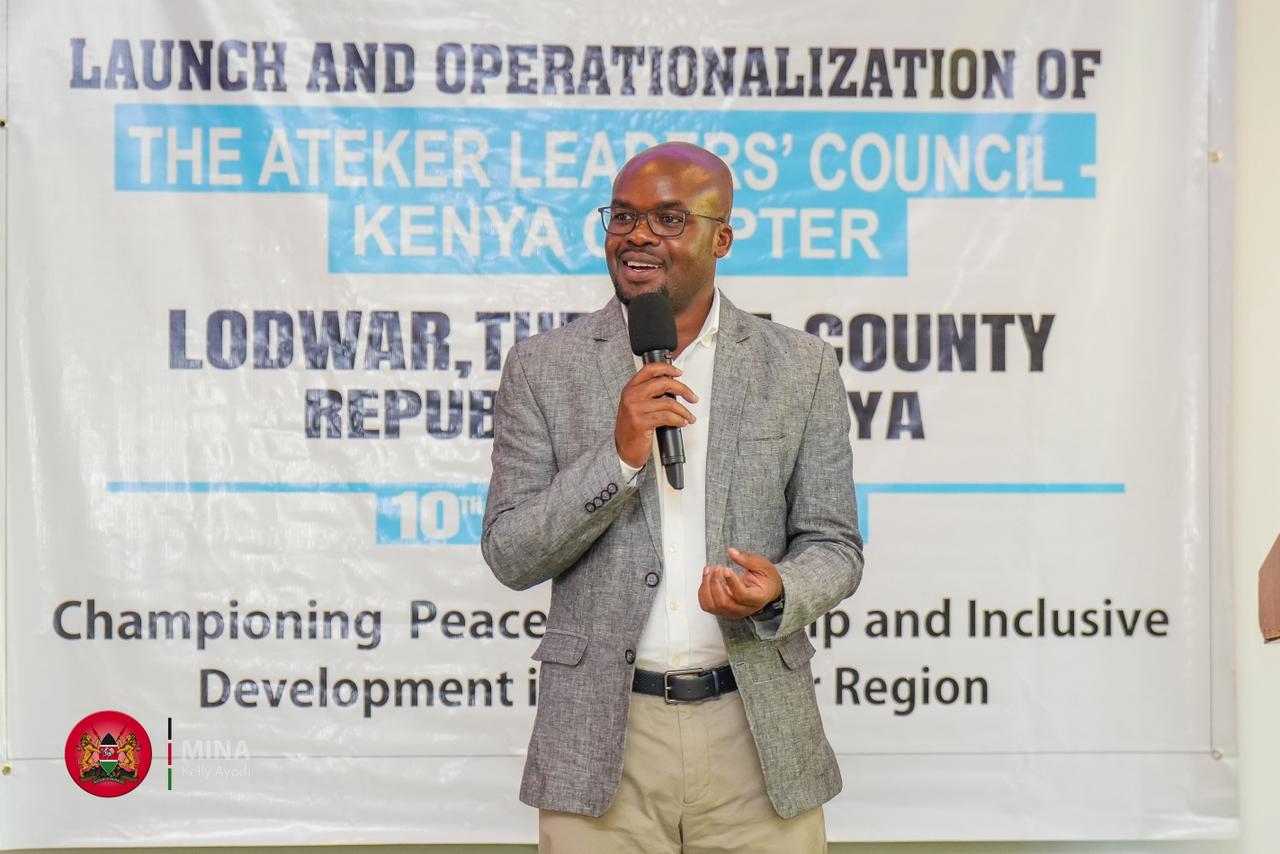
The Government of Kenya has issued a strong warning against criminal gangs and political violence, affirming that decisive action will be taken against all individuals involved, even as targeted security operations continue to restore stability in affected regions.
Speaking in Lodwar, Turkana County, the Principal Secretary for Internal Security and National Administration, Dr. Raymond Omollo, was unequivocal.
“Criminal gangs and political goonism are a national challenge and will not be tolerated. Any individual or leader who engages in or facilitates such acts will be held accountable in accordance with the law.”
Dr. Omollo noted that armed groups, banditry, and cattle rustling have had devastating effects on pastoral communities, and confirmed that the Government has intensified disarmament operations to remove illegal firearms from circulation.
“The ongoing disarmament operation is part of our broader security intervention to ensure that illegal firearms are removed from circulation and do not remain in the wrong hands.”
The mop-up exercise has already yielded significant recoveries and will continue until the threat is fully addressed.
“We have recorded significant recoveries of illegal firearms, and the operation will continue for as long as the threat persists.”
Acknowledging concerns raised by local leaders over the conduct of the operation, the Principal Secretary assured the public that the Government remains responsive without losing focus on public safety.
“We have engaged local leadership on concerns raised and will address them, but the objective remains clear — ensuring that firearms are not in the hands of criminals.”
He further underscored the need for coordination between law enforcement agencies and the justice system to ensure accountability.
“Law enforcement agencies must act impartially, and the justice system must ensure that those apprehended are prosecuted based on evidence.”
The Principal Secretary was speaking during the official launch of the Ateker Leaders Council – Kenya Chapter, a community-driven platform aimed at strengthening peace, cooperation, and development among Ateker communities across Kenya, Uganda, South Sudan, and Ethiopia.
The Council brings together leaders from Ateker communities, including the Turkana and Teso, and is expected to provide a structured mechanism for addressing cross-border insecurity, fostering dialogue, and promoting inclusive development.
“Today, we have officially launched and operationalised the Ateker Leaders Council – Kenya Chapter to drive lasting solutions on peace, security, and development.”
Dr. Omollo emphasised that the initiative draws on a shared identity, culture, and history that transcend national boundaries.
“We are bound together by language, culture, and a shared way of life. Our forefathers moved freely across these lands, united by trust and tradition.”
He reiterated that sustainable peace must be anchored within communities and driven by inclusive leadership, calling on Council members to take ownership of the process.
“Peace cannot be imported. It must begin within our communities. When elders speak, communities listen, and when leaders come together, people follow.”
“No council, no government, and no institution can succeed without the people. Leadership now requires you to go back to the communities, engage them, and ensure they are part of this process.”
The Principal Secretary highlighted inclusive development as a key pillar of lasting peace, noting that the Government is implementing programmes to expand access to essential services and improve livelihoods across all regions, including historically marginalised areas such as Turkana.
“At the heart of lasting peace is inclusive development. We must invest in hospitals, schools, and livelihoods to ensure that our people benefit from national progress.”
“No region should be left behind. Turkana is part of Kenya, and development here is being prioritised just as it is across the country.”
He cited ongoing investments in affordable housing, education infrastructure, and other key projects as evidence of this commitment.
On civic participation, Dr. Omollo reported significant progress in the issuance of national identification documents and voter registration in border counties, noting that restrictive vetting processes that had historically disadvantaged border communities have been removed.
“For the first time, border counties are no longer subjected to restrictive vetting processes. We have made it easier for citizens to obtain identification documents and participate fully in national processes.”
He commended Turkana County for leading in registration efforts and urged continued mobilisation to ensure all eligible citizens are represented.