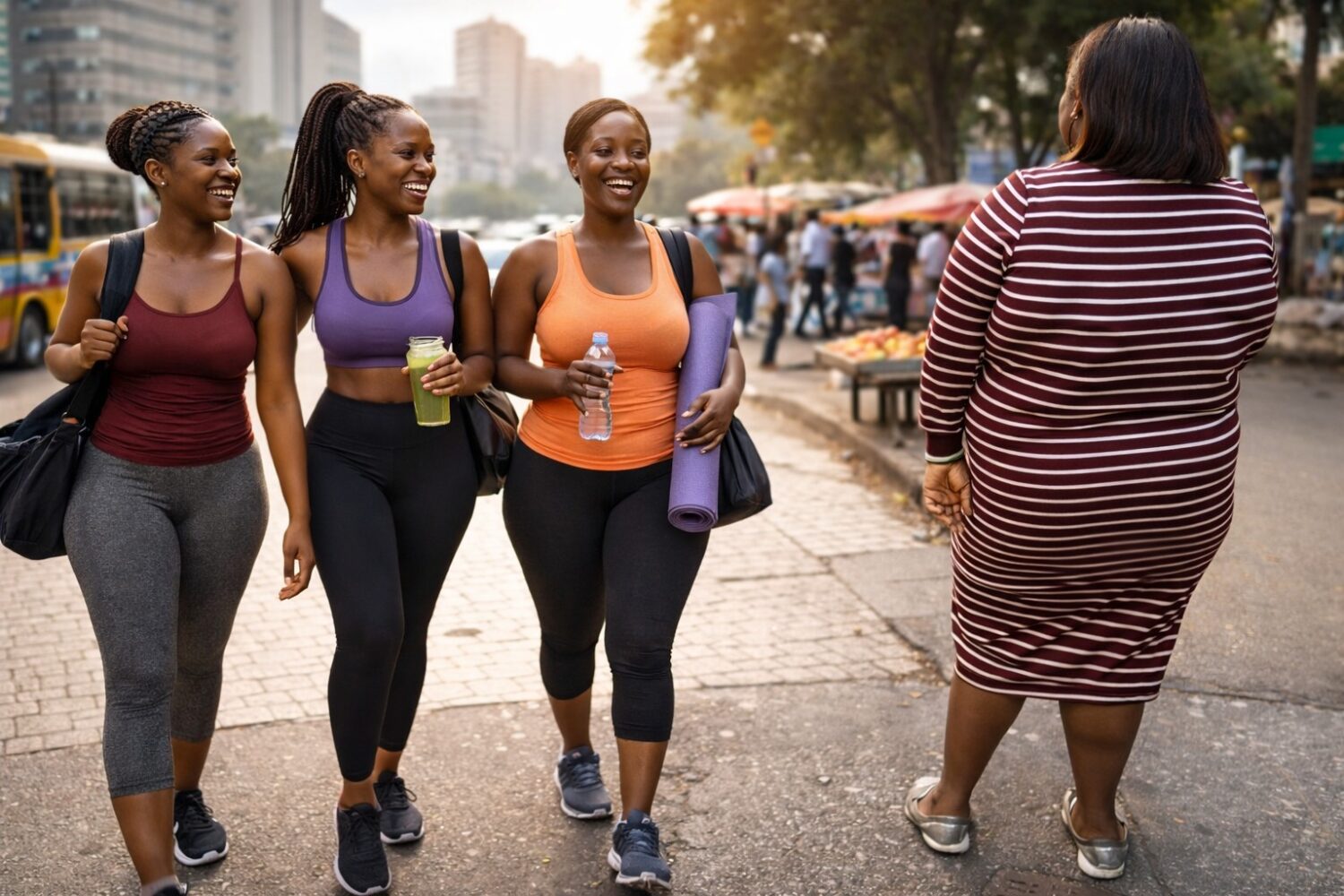
It’s that time of year when gyms suddenly remember they have members, and conversations about bodies become everyone’s business. Right on cue, old stereotypes about Kenyan women’s bodies resurface, dressed up as common knowledge. Women from certain communities are said to “just look like that,” while others supposedly won the genetic lottery. It sounds convincing because everyone repeats it. However, here at TV47, we have receipts of science saying otherwise.
Yes, genetics play a role in body shape. Nobody’s denying your DNA influences height, bone structure, and fat storage patterns. But here’s where the tribal narrative falls apart: large-scale studies published in The Lancet and Nature Medicine analyzing millions of people across continents found no ethnic blueprint that locks you into a specific body shape. Genetic researchers are clear on this: DNA creates a tendency, not a destiny. Environment and daily habits do most of the heavy lifting, and that’s actually good news because you can change those.
What’s really shaping bodies across some communities in Kenya? It’s refined food, sugar-loaded chai, and love for unbalanced-bland food like the famous pilau njeri. WHO research on African cities, including Nairobi, documents a rapid nutrition transition driven by refined carbohydrates and reduced natural protein, with clear links to abdominal fat and muscle loss. Nutritionist Maureen Kahira explains that when you flood your system with refined carbs without proteins and vegetables playing supporting roles, your body stores fat around your midsection, and lets leg muscles quietly waste away. This metabolic response happens globally wherever similar diets dominate.
Then there’s the walking myth everyone clings to. “But I walk everywhere!” That’s great for your heart; genuinely keep doing it. But research from the National Institutes of Health and American College of Sports Medicine confirms that aerobic activity alone doesn’t preserve or build muscle. Exercise physiologists are unanimous: muscles only grow when challenged with resistance like squats, lunges, or step-ups. Without that stimulus, your lower body muscle mass declines year after year, regardless of how many steps your phone counted.
Pregnancy adds another layer nobody discusses honestly. Studies in the International Journal of Women’s Health show that repeated pregnancies without postpartum rehabilitation lead to persistent changes in core strength and fat distribution, especially where physiotherapy access is limited. In Kenya, most women never get structured postpartum support, creating a healthcare gap that gets misread as genetic fate.
Chronic stress makes everything worse. Endocrine Society research confirms that elevated cortisol from financial pressure, poor sleep, and long hours drives abdominal fat storage and muscle breakdown, effects that hit women particularly hard. Instead of addressing this health crisis, we make body shape jokes and scroll on.
Here’s what actually matters: central fat with low muscle mass dramatically increases risks of diabetes, hypertension, and metabolic syndrome. Kenya Ministry of Health data shows these diseases are rising among urban women, yet we are arguing about tribal body types instead of insulin resistance.
The truly empowering part? None of this is permanent. Nutritionist Emily Manthi says that increasing protein to 1.2-1.6 grams per kilogram daily, swapping refined carbs for vegetables and whole grains, and doing strength training two to three times weekly can reverse these trends and transform metabolic health within weeks. These aren’t wellness fads; they’re proven interventions that work regardless of your surname.
Tribal stereotypes kill the possibility before it starts. If you believe body shape is ethnic destiny, why bother changing anything? That mindset spreads misinformation and discourages the exact actions that save lives. There’s no “typical” body for any community. What exists are shared urban challenges: processed food everywhere, declining activity, and rising stress. If we care about women’s health, we need science, not stereotypes. Not because it’s polite, but because lives depend on it.