
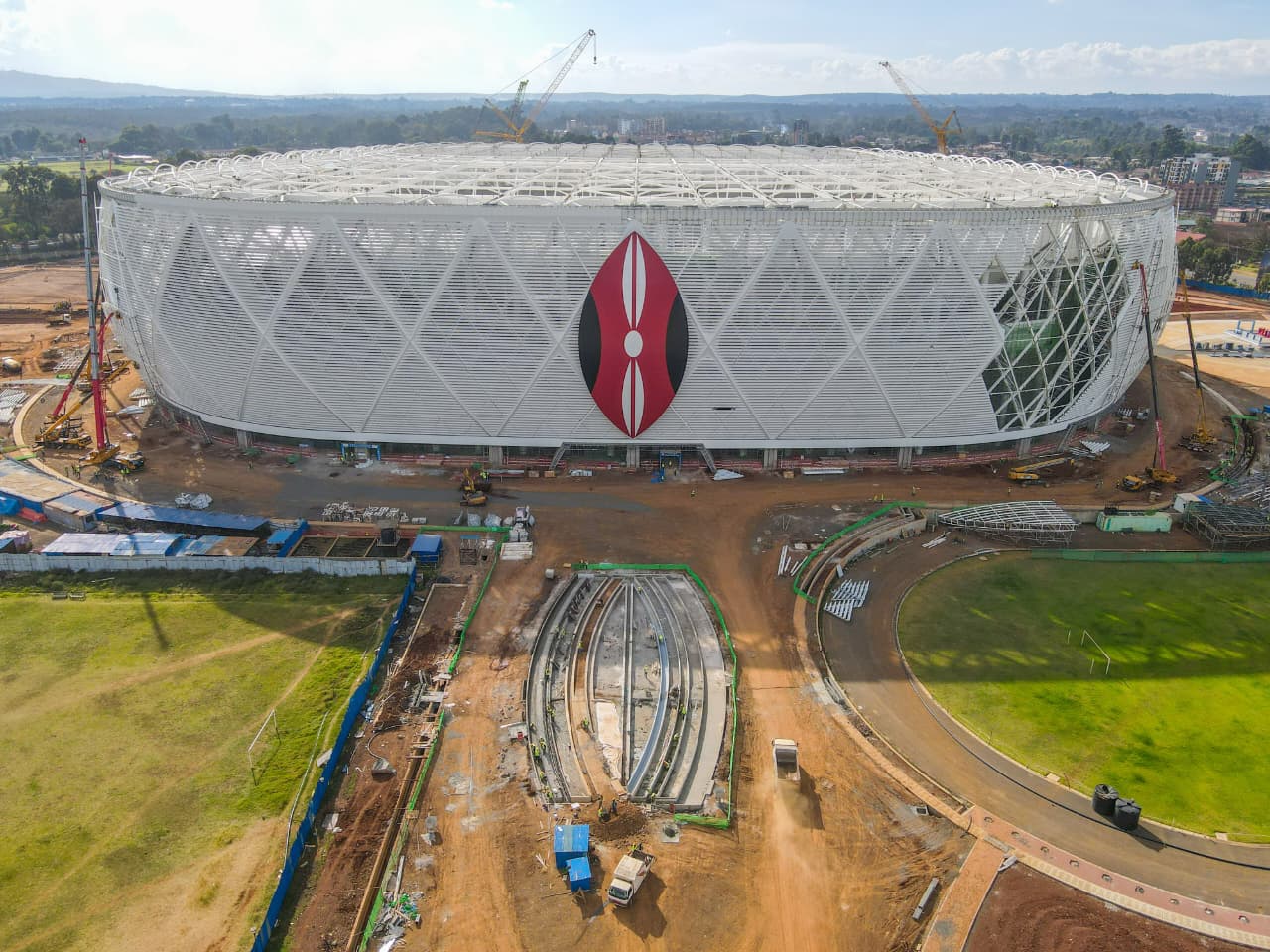
Talanta Sports City has entered a defining phase of construction, with the first of its iconic giant shields nearing completion as moulding of the accompanying spears gets underway.
The development marks a major visual milestone for the project, with the stadium’s façade beginning to reflect Kenya’s national identity on a global sporting stage.
Inspired by the Kenyan flag and coat of arms, the shields and spears form the core of Talanta’s architectural concept.
Once complete, eight giant shields, each paired with two spears, will encircle the 60,000-seater stadium, symbolising protection, unity, strength and national pride.
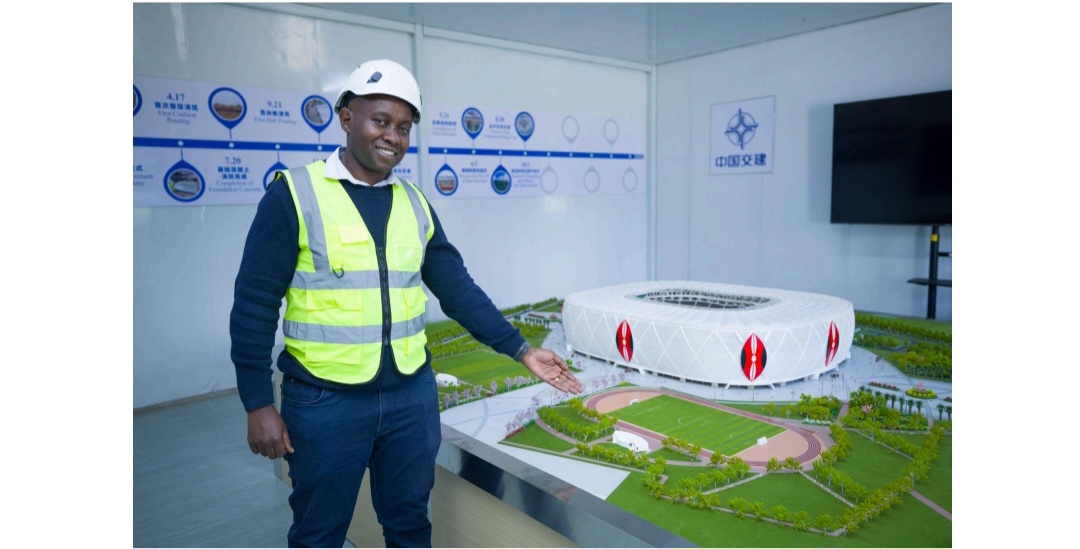
Beyond their symbolic value, the shields have been integrated into the stadium’s functionality. Each shield will mark a key entrance, enhancing wayfinding and crowd movement in line with international safety and crowd-management standards.
According to Major Victor King’e, the project architect representing the Ministry of Defence, construction began on 1st March 2024 and has now surpassed 68 per cent completion, covering both the main stadium and supporting infrastructure.
“The project has made steady progress since commencement, with significant milestones now visible, particularly on the external façade,” King’e said.
The project is being managed by the Ministry of Defence and is strategically located along Ngong Road, near the Jamhuri Showground and major transport routes including the Southern Bypass.
Talanta Sports City blends advanced engineering with cultural expression. While its overall form resembles a geometric soccer ball, the inclusion of heritage-inspired elements firmly anchors the facility in Kenya’s identity, positioning it as a unique landmark in the region.
The project team is targeting completion of the external works by the end of this year, including the façade, roof canopy and architectural features such as the shields.
Full operational completion is scheduled for 1st March 2026, exactly two years from the start date.
Once finished, Talanta Sports City will meet CAF and FIFA standards, featuring a football- and rugby-specific stadium without a running track, three training pitches, modern amenities and universal accessibility for persons living with disabilities.