In a quiet courtroom, far removed from the chaos of tear gas and gunfire, justice is being measured, carefully, clinically, in Kenya shillings. Behind every figure is a story that refuses to be reduced to numbers.
Sitting across from me, victims advocate Eileen Imbosa leans forward, not as a legal technician, but as a witness to grief.
“Damages are not random,” she says. “The court looks at pain, real pain, lived pain.”
And nowhere is that more evident than in the story of two young men. They were 22 and 24. They lived in the same house.
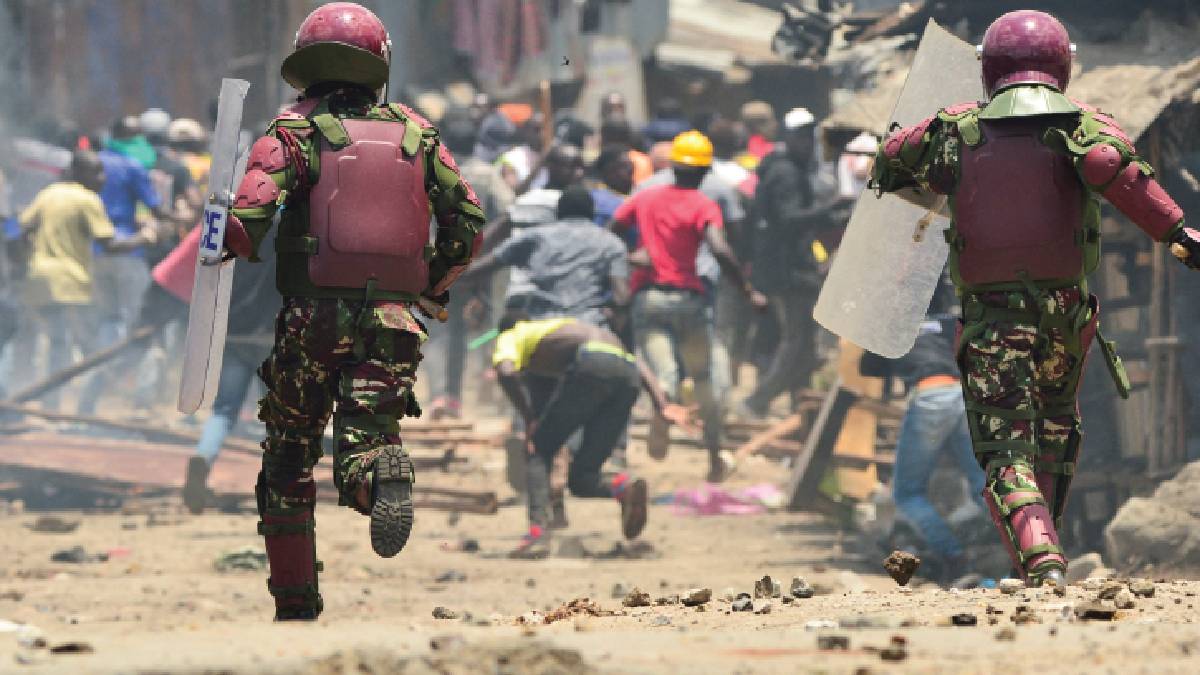
On the fateful day, men in police uniform — confirmed during the trial and the Independent Policing Oversight Authority (IPOA) — dragged them out of their home. What followed was not just brutality, but something closer to abandonment.
“They were beaten to a pulp,” Imbosa recounts.
Their families rushed them to hospital, navigating fear and chaos in an environment where, as she puts it, “the protector had become the predator.”
They did not die immediately. They lingered for four days.
“The court actually noted that,” she says quietly. “Four days of pain. Who can quantify that?”
And yet, the court had to try.
Landmark ruling
The court recently awarded compensation to the first nine petitioners for loss of life. For the rest up to the 28th petitioner the court assessed injuries, calibrating compensation based on severity, permanence, and impact.
In total, the High Court awarded a total of KSh38,627,050 in compensation to the victims and families affected by police brutality during the ‘2023 sufuria’ protests in Kisumu.
In his landmark ruling on March 25, 2026, Justice Alfred Mabeya said that state agencies violated fundamental rights guaranteed under the Constitution, including the right to life, dignity, equality, and security of the person.
For the two young men, the court awarded just over a million shillings, each figure meant to account for pain, lost life, and the futures they never lived.
“These were not just victims,” Imbosa explains. “They were providers. Maybe not in a big way but they mattered. People depended on them.”
Amnesty having none of that…
Amnesty International is, however, not having none of that.
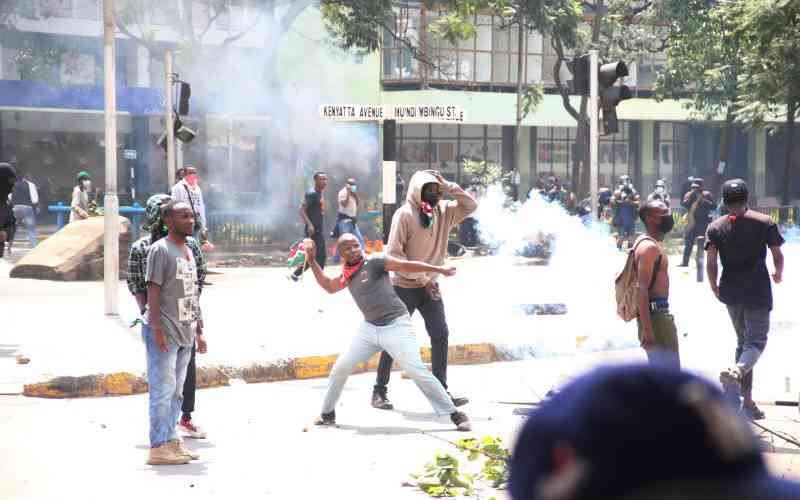
“Imagine coming back from work, walking to dinner, or being in your home when chaos erupts around you without warning. Uniformed police officers in full riot gear kick down gates, storm into your home, drag you and your neighbours outside, and repeatedly beat you with batons and boots. In the streets, officers chase unarmed civilians, fire live bullets at children running for safety, workers returning home, teenagers playing football, and commuters on motorbikes,” Amnesty wonders.
According to Amnesty, victims were shot in the chest, abdomen, legs, or face, people watched people they know collapse, bleed, unconscious, and calling for help with no medics or safe place to run to. The aftermath of that was families begin the desperate search for the missing.
“Hours later, you find them in overcrowded wards with shattered bones or cold and still in mortuaries. Patients writhe in pain from fractured jaws, collapsed lungs, torn intestines, amputated toes, and broken limbs,” the human rights body posits. “More importantly, when will such brutality finally end?
Intricate calculations
A child injured by rubber bullets, left with soft tissue damage and a 5% disability index, was awarded KSh 300,000.
Another victim, severely beaten, shot, and facing decades of medical care, was awarded nearly KSh 4.8 million.
“The court even calculates future medical costs,” Imbosa says. “Thirty years of therapy, based on life expectancy.”
Justice, in this sense, becomes a ledger, balancing loss, pain, and probability.
Even as the court pronounced its judgment, it drew a clear line: compensation is not closure.
“The court was very clear,” Imbosa emphasizes. “This is not justification. This is not absolution.”
Beyond the payouts, the court issued strict orders:
- The Independent Policing Oversight Authority (IPOA) must conclude investigations within 90 days.
- Those responsible must be brought to justice.
- The National Police Service must develop clear guidelines on policing protests.
It was, in many ways, the court asking a deeper question: How did this happen and how do we ensure it never happens again?
The court did not mince words. Twenty-five months after the 2023 protests, investigations remain incomplete. To the court, that delay was “unconscionable.”
“You cannot take that long,” Imbosa says, echoing the ruling. “You are the watchdog.”
And so, a deadline now looms: July 7, 2026.
On that day, institutions will return to court, not with promises, but with answers.
Even as victims await payment, often slowed by bureaucracy and administrative hurdles, another process is unfolding.
The Kenya National Commission on Human Rights is developing a national reparations framework, backed by a KSh2 billion allocation.
But questions remain. Will it be enough? Will previously compensated victims benefit again? Will it address deeper issues, like accountability, public apologies, and systemic reform?