For millions of smallholder farmers across East Africa, agriculture is not a business. It is a balancing act, between rainfall and ruin, middlemen and missed opportunity, survival and something just out of reach.
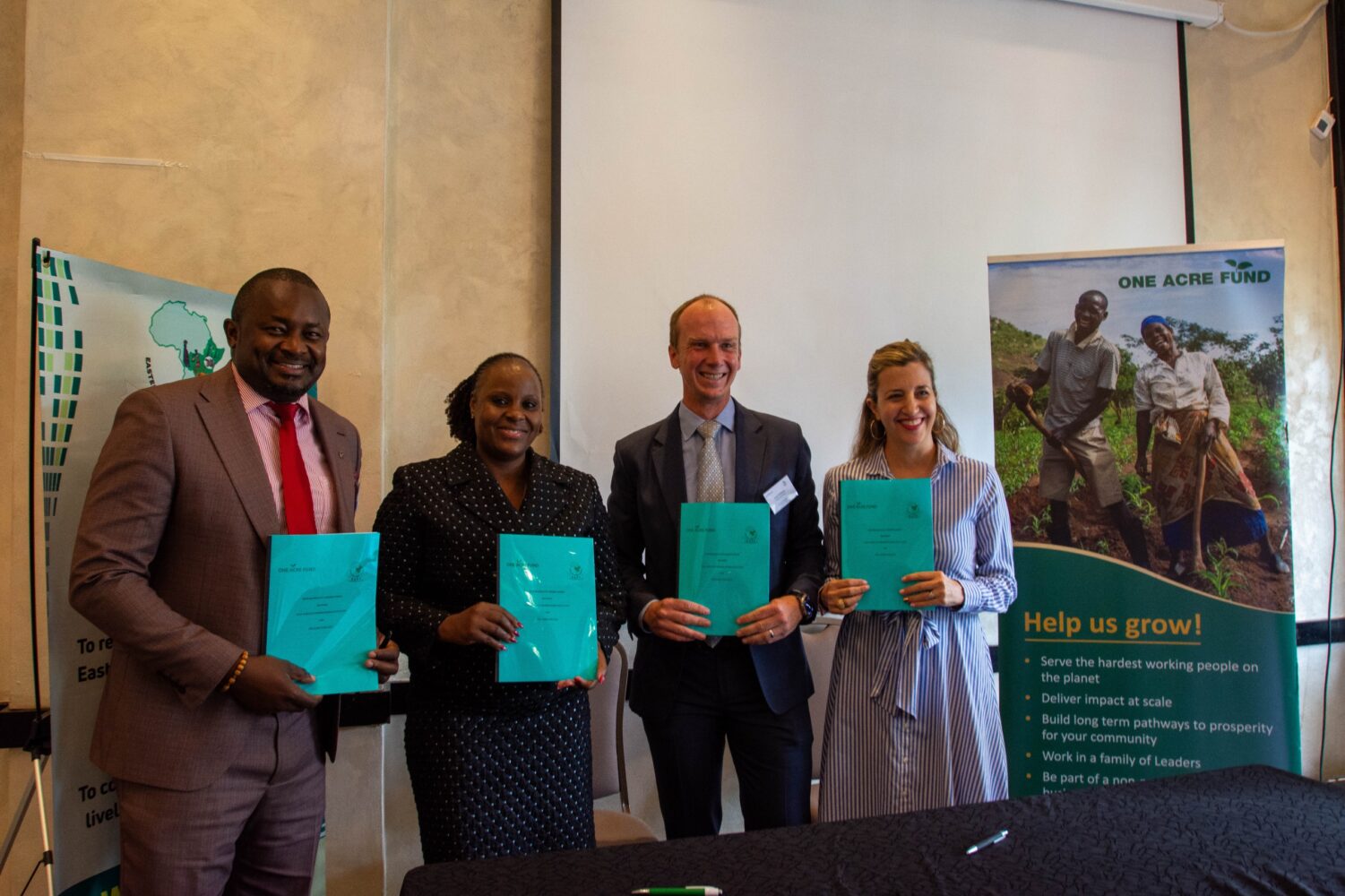
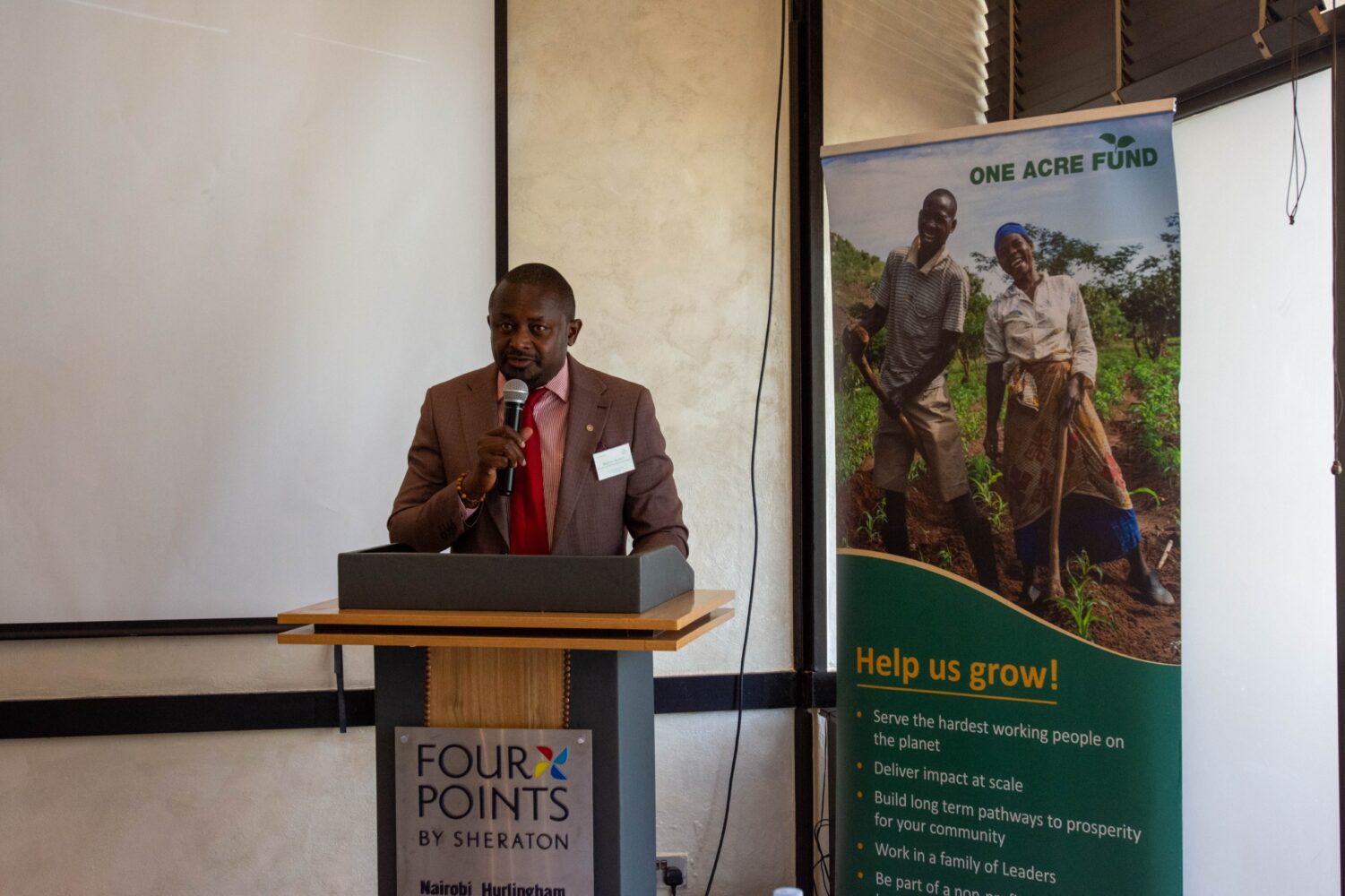
On March 31, a new partnership between One Acre Fund and Eastern Africa Farmers Federation set out to change that equation, ambitiously targeting 25 million farmers across 10 countries.
But behind the scale of that promise lies a more fundamental question: what does it actually mean to “benefit” a farmer?
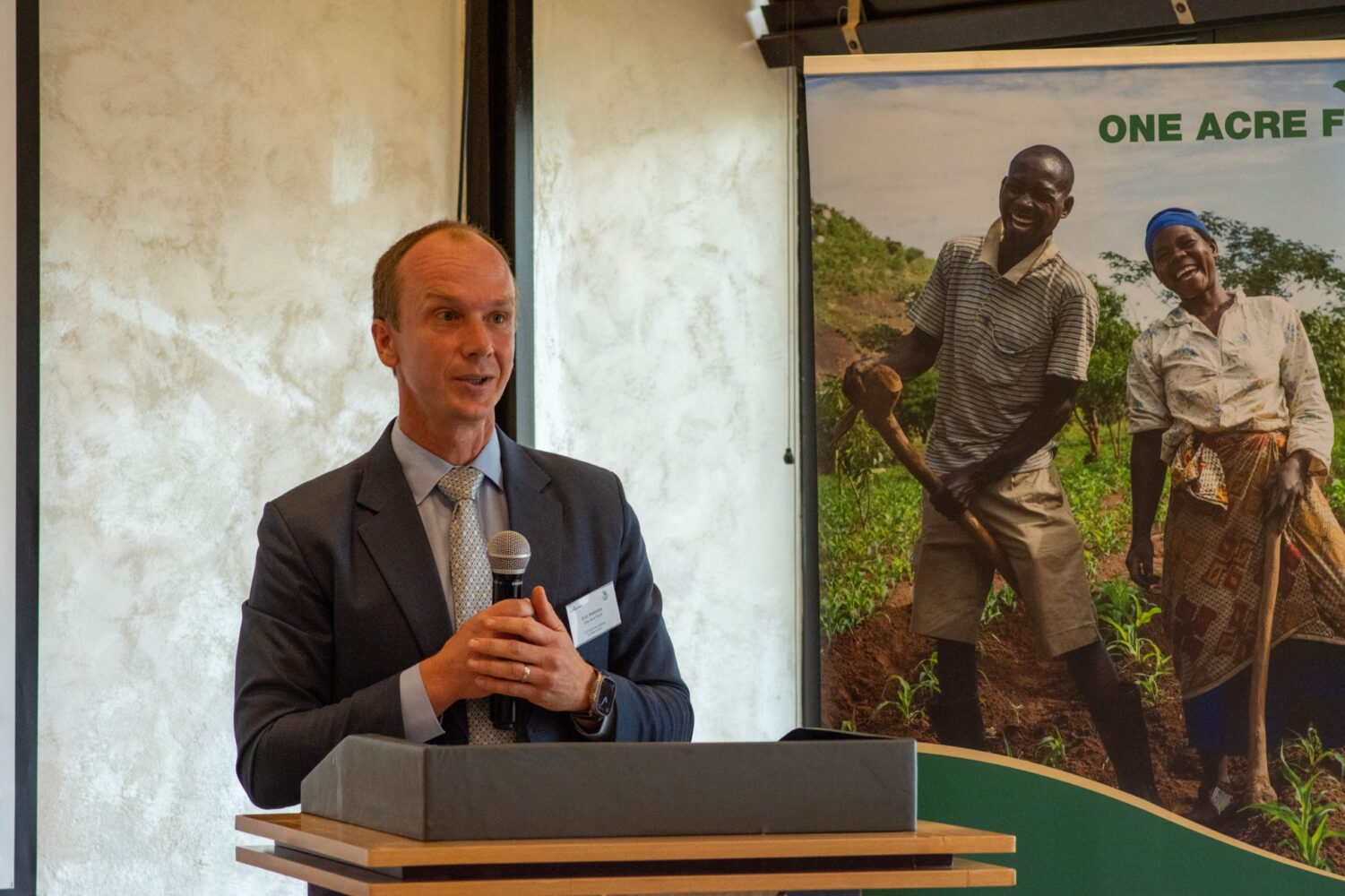
For the organisations involved, impact is not framed as a single intervention but as a system. “We’re looking at it in three ways,” one programme lead explained during a press briefing in Nairobi. “Access to inputs and financing… market access… and farmer resilience.”
That triad, inputs, markets, and insurance, forms the backbone of the strategy. The first layer addresses a deceptively simple problem: timing.
“It’s one thing to have access to inputs,” she said. “It’s another thing to have access to inputs at the right time.”
Through a network of 330 rural distribution shops (“dukas”) across 34 counties in Kenya, the organisation delivers seeds and fertiliser directly to farmers, paired with localized agronomic advice. The model, often described as “last-mile delivery,” is designed to eliminate the logistical gaps that frequently derail planting seasons.
The logic is straightforward: plant late, and yields fall, regardless of effort. Yet production has never been the only challenge.
Across Kenya, farmers routinely watch a portion of their harvest spoil before it ever reaches a buyer. Even when markets exist, they are often mediated by brokers who dictate prices.
The new partnership attempts to bypass that system entirely. “For avocado, we go to the farm ourselves, harvest, and transport at our cost,” the programme lead said. “We only buy directly from farmers, we don’t buy from brokers.”
This model extends to crops like mangoes and macadamia, where aggregation systems and rural buying centres are being expanded beyond Mount Kenya into other regions.
The aim is not just access, but price stability and value capture.
“We are producing avocado oil, dried fruit, and processing macadamia,” she added. “That translates into better payouts for the farmer.”
If markets define income, climate increasingly defines risk. In recent months, floods in parts of Kenya have wiped out entire crops. Farmers, many operating on credit, are left exposed.
“We have farmers calling and saying, ‘I’ve lost everything, how are you going to support me?”
The response is still evolving.
The organisation has begun offering crop insurance, though officials acknowledge it remains limited in scale. Current payouts are modest, sometimes replacing lost inputs like seeds or fertiliser rather than providing full financial compensation.
“We’re not as robust as we would like to be yet,” she admitted. “We’re still learning, still building.”
In the meantime, resilience is being approached through diversification.
“Don’t rely on one crop,” she said. “Do maize, yes… but also vegetables, poultry, trees. So when one fails, you’re cushioned.”
Where the Eastern Africa Farmers Federation enters is at the level of power. Representing 24 member organisations and roughly 25 million farmers, the federation’s role is less about delivery and more about influence, particularly in shaping agricultural policy and regional trade systems.
That influence may prove critical in addressing one of the sector’s more contentious issues: regulation timing.
Farmers, particularly in export crops like avocado and macadamia, have long complained about government-imposed harvesting bans intended to protect quality standards.
“The timing doesn’t always work,” the programme lead said. “Farmers have produce on trees they can’t sell. By the time they can, quality has dropped.”
Through the partnership, field-level data is expected to feed into policy advocacy, allowing farmer realities to shape regulatory decisions more directly.
The Export strategy’s emphasis on high-value crops, avocado, macadamia, sunflower, raises another tension; does commercialisation risk undermining food security?
Officials insist it does not. “It’s not about abandoning subsistence farming,” she said. “It’s about building on it.”
Farmers are encouraged to maintain staple crops like maize while introducing income-generating alternatives. The approach is framed not as replacement, but expansion.
If markets define income, climate increasingly defines risk.
In recent months, floods in parts of Kenya have wiped out entire crops. Farmers, many operating on credit, are left exposed.
“We have farmers calling and saying, ‘I’ve lost everything, how are you going to support me?”
The response is still evolving.
The organisation has begun offering crop insurance, though officials acknowledge it remains limited in scale. Current payouts are modest, sometimes replacing lost inputs like seeds or fertiliser rather than providing full financial compensation.
“We’re not as robust as we would like to be yet,” she admitted. “We’re still learning, still building.”
In the meantime, resilience is being approached through diversification.
“Don’t rely on one crop,” she said. “Do maize, yes… but also vegetables, poultry, trees. So when one fails, you’re cushioned.”
Where the Eastern Africa Farmers Federation enters is at the level of power.
Representing 24 member organisations and roughly 25 million farmers, the federation’s role is less about delivery and more about influence, particularly in shaping agricultural policy and regional trade systems.
That influence may prove critical in addressing one of the sector’s more contentious issues: regulation timing.
Farmers, particularly in export crops like avocado and macadamia, have long complained about government-imposed harvesting bans intended to protect quality standards.
“The timing doesn’t always work,” the programme lead said. “Farmers have produce on trees they can’t sell. By the time they can, quality has dropped.”
Through the partnership, field-level data is expected to feed into policy advocacy, allowing farmer realities to shape regulatory decisions more directly.The Export strategy’s emphasis on high-value crops, avocado, macadamia, sunflower, raises another tension; does commercialisation risk undermining food security?
Officials insist it does not. “It’s not about abandoning subsistence farming,” she said. “It’s about building on it.”
Farmers are encouraged to maintain staple crops like maize while introducing income-generating alternatives. The approach is framed not as replacement, but expansion.
Still, the economic incentives are clear and potentially destabilising.
Left unchecked, a farmer who sees higher returns from macadamia could gradually replace food crops with export-oriented ones. The transition period, often five to six years before tree crops mature, adds further risk.
The model’s success, therefore, depends on awareness, discipline as much as opportunity. Beyond yields and income, the partnership frames its ambition in more human terms. “Pride and dignity,” the programme lead said. “A farmer being able to say, ‘I’m proud to be a farmer’, and their children feeling the same way.”
It is a striking reframing in a region where agriculture is often seen as a fallback rather than a future, particularly among young people migrating to cities.
To counter that perception, the model leans into flexibility.
“You are your own boss,” she said. “You get to decide whether you want something long-term like trees, or something with quicker returns like poultry?”
The idea is to reposition farming not as inherited hardship, but as a strategic enterprise. Still, questions remain.
While the partnership sets a headline goal of reaching 25 million farmers, clear timelines and measurable benchmarks were not specified during the briefing.
Instead, officials pointed to “desired outcomes”, including stronger farmer voice, improved financial stability, and increased market confidence.
In development terms, these are meaningful, but difficult to quantify.
And yet, the scale of the problem may demand exactly this kind of broad, systems-level response. Across Kenya and the wider region, smallholder farmers still produce the majority of food. But too often, they remain locked in a cycle where low income prevents investment, and low investment guarantees low income.
Breaking that cycle will take more than inputs or markets alone. It will require something closer to what this partnership is attempting: a restructuring of the system itself. Or, as one official put it, a shift “from subsistence… to prosperity.”