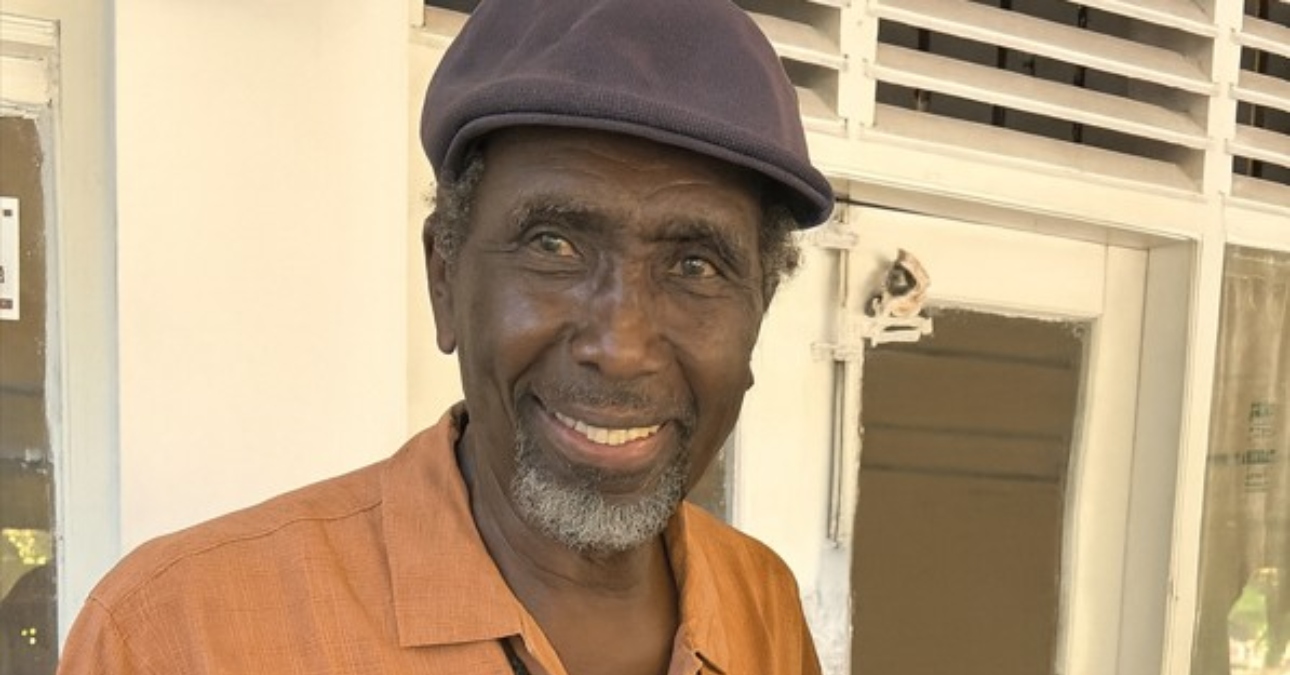
Meja Mwangi, born David Dominic Mwangi on 27 December 1948, in Nanyuki, Kenya, was one of Africa’s most prolific and important post-colonial writers. Often dubbed the “voice of the Nairobi slums,” he was renowned for his commitment to realism and his focus on the harsh socio economic realities faced by ordinary Kenyans.
Mwangi’s education included studies at Nanyuki Secondary School, Kenyatta College, and a brief stint at the University of Leeds. Before committing to writing full-time, he worked various jobs, including with the French Broadcasting Corporation and as a Visual Aids Officer for the British Council in Nairobi.
He was inspired to write after reading Weep Not, Child by his literary predecessor, Ngũgĩ wa Thiong’o.
Mwangi burst onto the literary scene in the early 1970s, establishing himself quickly as a major new talent. His work provided critical relief to those who felt East Africa was lagging behind in literary output.
His career began by concentrating on the Mau Mau rebellion, a theme shared with his mentor. Two of his earliest narratives captured this spirit:
Taste of Death (1975) and Carcase for Hounds (1974), which was later adapted for the film Cry Freedom (1981).
However, he quickly shifted his focus to contemporary life, a move that defined his legacy.
Mwangi’s narratives are characterised by vivid realism mixed with a compelling sense of humour, offering the reader a unique blend of protest and hilarity.
His most notable works include:
Kill Me Quick (1973): Set in the city, this award-winning novel focuses on the futile efforts of an educated young man to find honest employment and socioeconomic survival.
Going Down River Road (1976): This novel depicts the rough-and-tumble lives of construction workers in Nairobi, chronicling their struggles with poverty and daily survival.
The Cockroach Dance (1979): This picaresque novel recounts the adventures of a meter reader coping with life in the squalor and violence of a slum.
The Last Plague (2000): A deeply impactful novel that won the Jomo Kenyatta Prize for Literature, offering a rare African perspective on the devastating impact of the HIV/AIDS pandemic in rural areas.
According to scholar A.O Al-Harbi, Mwangi’s novels present “through vivid visual images and settings the absurdity of the human condition in modern Kenya.”
Beyond his novels, Mwangi demonstrated significant versatility:
He penned successful children’s books, including The Hunter’s Dream (1993), The Mzungu Boy (2005), and The Boy Gift (2006).
In the 1980s, he was involved in filmmaking, writing the screenplay for Cry Freedom (1981) and serving as an assistant director on acclaimed films like Out of Africa (1985) and White Mischief (1987).
Despite his international literary recognition, Mwangi was known for his reclusive nature, rarely granting media interviews throughout his life. He also spent time living in the United States later in his career, though he maintained strong ties to Kenya.
Meja Mwangi passed away on Thursday, December 11, 2025, at the age of 76. He died in the Kenyan coastal town of Malindi after a long-term illness.
He received numerous accolades throughout his career, including the prestigious Jomo Kenyatta Prize for Literature multiple times (1974, 2001, 2007, 2009) and the Lotus Prize for Literature (1978).
His powerful and insightful portrayal of contemporary Kenyan society cemented his status as a permanent fixture in African literature.