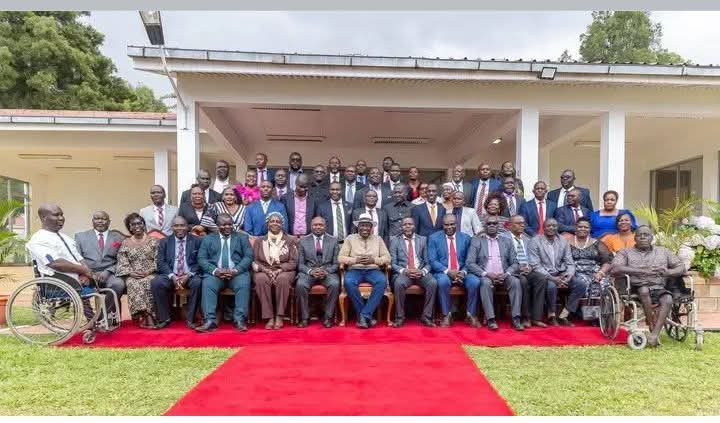
When a group of Siaya County MCAs met President William Ruto, they broke into a spontaneous “tutam” song, a vibrant chorus pledging support and affirming Ruto’s re-election bid in 2027. The moment was cheerful, symbolic and politically charged.
In a county long regarded as the political sanctuary of the late Raila Odinga, the spectacle was startling. Siaya has for decades stood as the fortress of the Orange Democratic Movement (ODM), with Governor James Orengo seen as one of the most loyal custodians of Odinga’s legacy.
The MCAs’ public admiration for Ruto immediately fueled speculation that the meeting was not a mere courtesy call but a quiet attempt to undermine Orengo’s leadership. Whispers of an impeachment plot spread fast across the county’s political circles.
West Gem Ward Representative Susan Okwiry swiftly moved to calm the storm. “As leaders, we have a duty to seek opportunities that benefit our people. The visit was about partnership for growth, not betrayal. Governor Orengo remains our leader and Siaya’s progress will always come before political gossip. There was nothing like impeaching Governor James Orengo,” she said.
Her remarks sought to steady a ship already rocking under the weight of speculation. Yet, in Siaya’s charged political space, even the clearest statements rarely silence the noise. The tutam song, the smiles and the pledges of loyalty have already altered perceptions.
If the meeting was indeed linked to a possible impeachment, it would represent a daring challenge to the structures the late Odinga built. Such a move would be symbolic, striking at the heart of ODM’s ideological command and signaling rebellion within its most loyal base.
For Ruto, it would be a major symbolic win, proof that his political charm can penetrate even the opposition’s inner sanctum. For the MCAs, aligning with the President would be risky but strategic, trading loyalty for access to resources and recognition.
If, however, the meeting had no connection to impeachment, it still carries political weight. County leaders increasingly seek direct engagement with the presidency to unlock stalled projects and secure funding. Pragmatism, not defiance, could have driven the visit.
Viewed through that lens, the Siaya delegation’s move may reflect a growing political realism. The age of strict party loyalty is slowly giving way to an era where development takes precedence over ideology. Still, the optics remain potent.
The tutam song and the imagery of Siaya leaders serenading Ruto have stirred unease within ODM’s ranks. Governor Orengo remains composed, but the ripples are undeniable.
Whether it was a plot or a partnership, the visit has opened a new chapter in Siaya’s political story. Beneath the melody of that tutam song lies a quiet truth, the late Raila Odinga’s shadow still looms large, but a new generation is learning to sing its own tune.