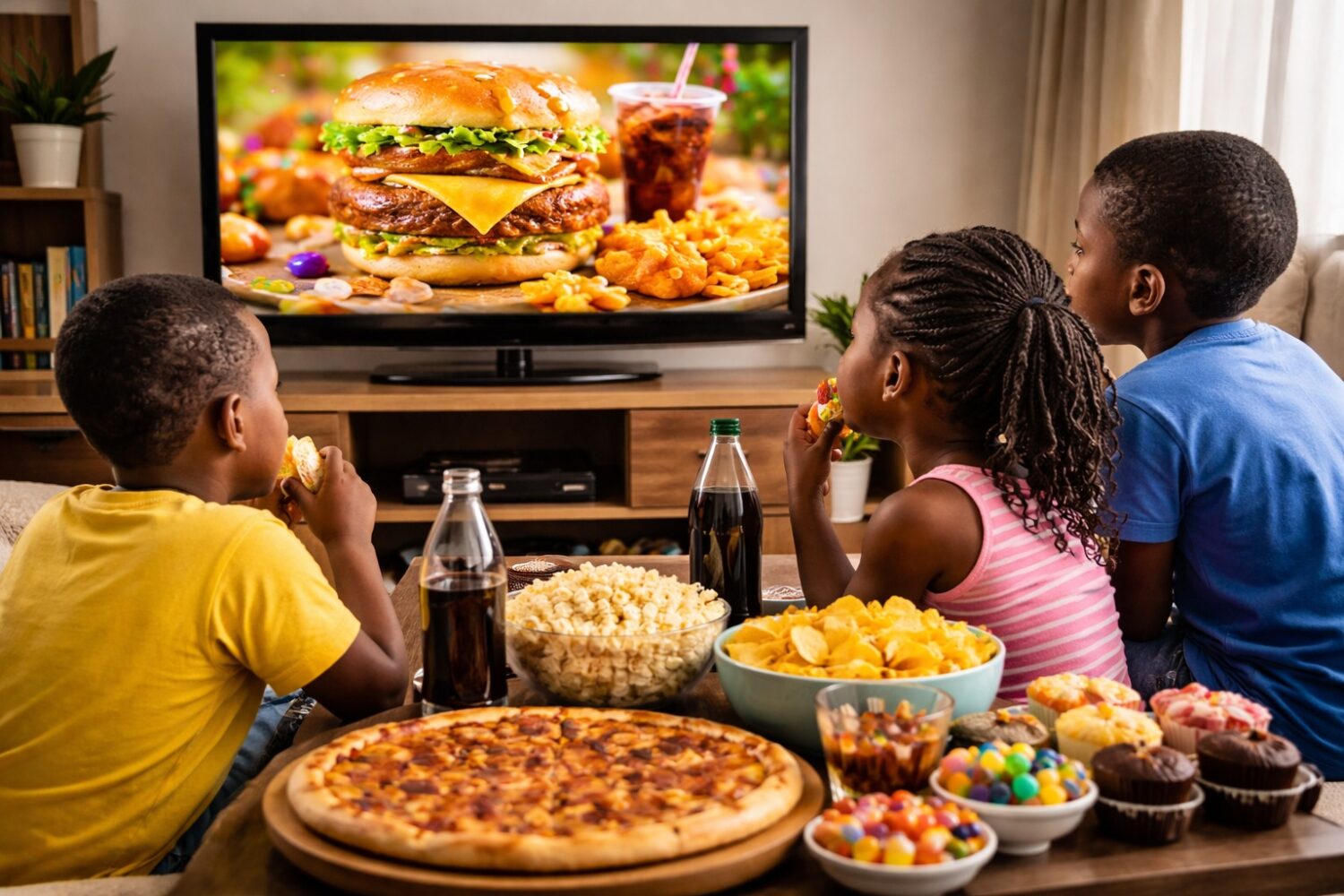
This week, the United Kingdom quietly took a radical step. Junk food advertising was banned on television before 9 pm and completely restricted online, cutting off a major pipeline through which sugary cereals, fizzy drinks, and ultra-processed snacks reach children.
The aim is blunt and overdue: protect young people from relentless marketing and slow a childhood obesity crisis.
At first glance, this may sound like a distant British policy experiment. But for Kenyan families glued to televisions, smartphones, and social media feeds, the parallels are uncomfortable and immediate.
In Kenya today, a child can hardly watch a cartoon, scroll TikTok, or sit through a football match without being bombarded by colorful junk food advertising.
The marketing is expertly designed to bypass logic and speak directly to emotion. Brands promise fun, happiness, and belonging. Influencers chomp on cue. Nutrition is an afterthought, if it appears at all.
The UK government estimates that these new restrictions will remove up to 7.2 billion calories annually from children’s diets.
That figure is based on modeling by Public Health England and independent researchers who tracked how advertising exposure directly influences what children eat, not years later but immediately.
According to Professor Susan Jebb, a leading obesity researcher at the University of Oxford, junk food advertising does far more than shape preferences; it builds habits and brand loyalty that spill into adulthood. Once those eating patterns are locked in, reversing them becomes exponentially harder.
Kenya is walking the same road Britain is now urgently trying to turn back from. A 2023 World Health Organization report warned that childhood overweight and obesity in Africa are rising faster than in any other region of the world.
Urbanization, aggressive marketing, and easy access to cheap processed foods are colliding with declining physical activity among children.
Closer home, Kenyan nutritionist Maureen Kahira has repeatedly warned that processed foods are being normalized through marketing faster than public health education can keep up.
In multiple media appearances, she has pointed out that parents are fighting a deeply uneven battle when billion-shilling brands are shaping children’s taste buds daily, long before schools or doctors can intervene.
Importantly, the UK ban does not outlaw junk food. It limits exposure. That distinction matters. Research published in The Lancet shows that when advertising exposure decreases, consumption also decreases, even when the products remain widely available on shelves.
For Kenya, the uncomfortable question is not whether such measures are possible. It is whether we can afford to keep ignoring the warning signs that are already flashing. Noncommunicable diseases are straining households and health systems alike. Diabetes, hypertension, and heart disease are already affecting our young children.
This is not about copying Britain. It is about learning from the cost of waiting too long. The UK acted after the damage became undeniable. Kenya still has a window to intervene earlier.
Sometimes meaningful public health progress does not begin in hospitals or gyms. It starts by turning down the volume on what is constantly being sold to our children, every single day.