

Tiger widows are women who have lost their husbands to tiger attacks while some have also gotten attacks from the tigers.
Malati Mondal’s husband was killed by a tiger about ten years ago while he was fishing from a small raft through the Sundarbans mangroves.
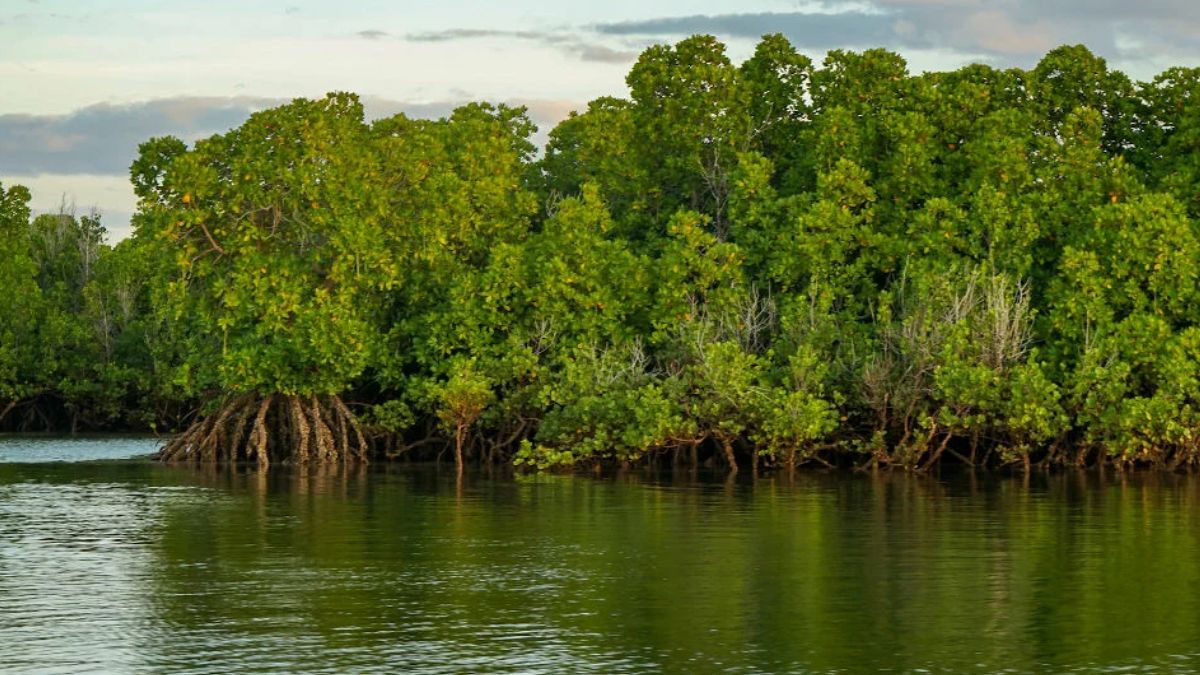
Sundarbans, the world’s largest mangrove forest spanning West Bengal in India and southern Bangladesh, is a UNESCO World Heritage site of tidal waterways, mudflats and islands, home to river dolphins, Indian pythons and the Bengal tiger.
These tigers are uniquely amphibious, swimming long distances to catch fish and crabs. Roughly 125 tigers inhabit the Bangladeshi side and about 88 on the Indian side, but shrinking habitat and rising human populations have intensified human‑tiger conflict significantly.
Conservation International’s “Mountains to Mangrove” program stretches from the high peaks of the Himalayas down to the sprawling Sundarbans, aiming to protect and restore one million hectares of forest across the region.
The initiative is especially urgent because this area hosts one of the densest human populations of any biodiversity hotspot on the planet, and it faces severe threats from climate change and ongoing deforestation.
A pilot project in Sundarbans is planting mangroves on 100 hectares – a modest slice of the overall target, but it is intended as a proof‑of‑concept that can be scaled up across the delta.
Project leader Malhotra explains that ultimate aim is to revive mangrove ecosystems because they provide most truly holistic defence against climate‑related shocks.
“Bringing mangrove ecosystems back is the most holistic way of creating resilience against all the challenges of climate change,” he says.
An added benefit is the creation of income opportunities for women whose lives have been upended by tiger attacks.
Local women are already gathering saplings and participating in nursery work, turning a personal loss into collective action.
“The women are working toward a cause that has disrupted their own lives,” Malhotra notes. “It’s about restoring dignity and building resilience for these women and for broader community.”
Ali, a community organiser, shares a similar vision. He wants to expand the effort into most remote backwaters and vulnerable islands of the Sundarbans, and he is prepared to walk into remote places to make it happen.
“When the project grows, we can reach more people,” he says, recalling meetings with many “tiger widows.”
His focus is on creating a safe, respectful space for the women involved, believing that once they feel secure, others will be inspired to join.
“Mountains to Mangrove” effort is backed by a $1 billion financing pledge and aims to plant one billion trees, linking mountain forests with mangroves to strengthen ecological corridors and support millions of people who depend on them.