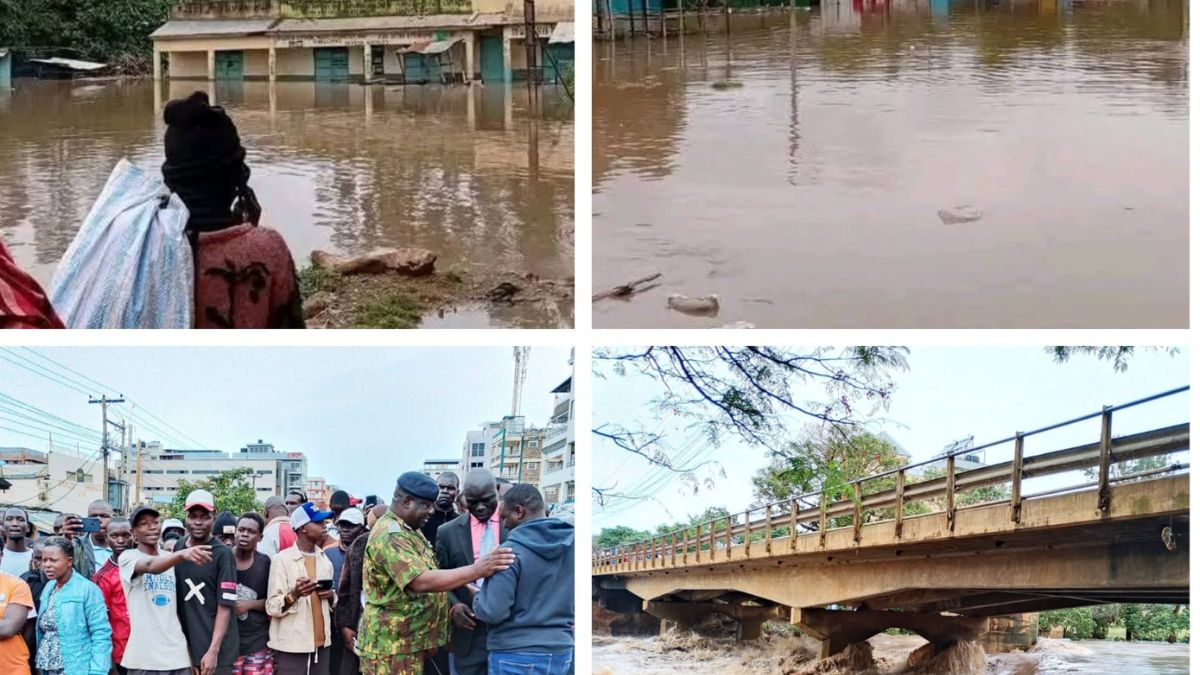
When River Migori burst its banks after a night of heavy rain, Caroline Atieno was among the hardest hit. She had stocked her stall with goods worth over KSh 30,000, bought through a bank loan she is still repaying.
“Everything was swept away,” she said. “I don’t even know how I’ll start again when I still owe the bank.”
Caroline’s story reflects the pain of many traders whose businesses were destroyed. The floods swept through Migori town, submerging stalls and carrying away goods worth millions. For most, this is not the first time heavy rains have washed away their livelihoods.
“I watched helplessly as the water carried away my stock of vegetables,” said Jane Akinyi, who has sold near the river for years. “All I have left are empty crates and mud-soaked clothes.”
Her losses, like many others, have left families struggling to recover.
Clothing, food and electronics were all destroyed. “This keeps happening every rainy season,” lamented Peter Odhiambo, a clothes dealer.
“We only get sympathy and promises, but no real solution. We want relocation to the new market where it’s safer.”
Experts blame poor planning and encroachment on riverbanks for the crisis. Deforestation and siltation upstream have reduced the river’s capacity to hold water. “This is not just a natural disaster but a man-made problem,” said a local environmental officer.
Traders now want urgent action from the Migori County Government. They are asking for relocation to higher ground, improved drainage and compensation. Some, like Caroline, say they risk financial ruin if no help comes soon.
Environmentalists are urging collaboration between the county, the National Environment Management Authority (NEMA) and the Water Resources Authority.
They recommend desilting the river, restoring riparian zones and creating early warning systems.
By press time, the Department of Environment and Disaster Management had not issued a statement. But traders remain hopeful that authorities will act decisively this time.