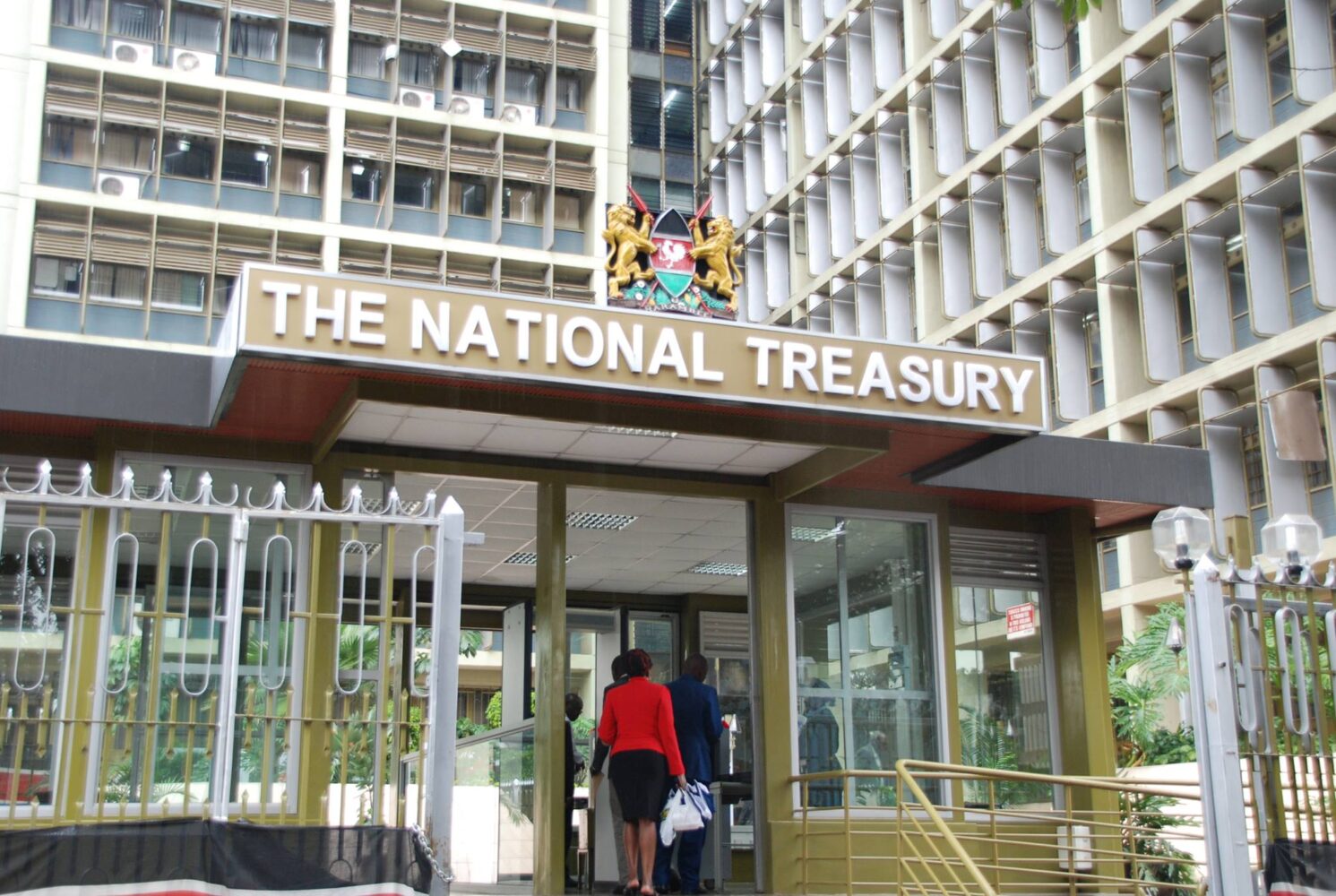
The National Treasury has dismissed claims by the Controller of Budget that KSh53.56 billion in Treasury Bond for May and June 2025 interests payments were delayed.
In a statement on Tuesday, May 31, Treasury Principal Secretary (PS) Chris Kiptoo clarified that all Treasury Bond interests for the aforementioned period were settled in full and on time.
“While the amounts may have appeared outstanding within the Exchequer reporting framework, they were duly financed and settled through the Government overdraft facility at the Central Bank of Kenya, consistent with established cash and liquidity management practices,” PS Kiptoo said in the statement.
According to the Treasury, the utilisation of the overdraft facility is a standard and lawful mechanism for managing short term liquidity within Government operations, as provided for under the applicable legal and institutional framework.
“At no point were these obligations in arrears. Notably, no claims, complaints, or disruptions were recorded from bondholders or market participants, affirming that all payments were effected as they fell due,” PS Kiptoo concluded.
Controller of Budget report
The Treasury was responding to a report by Controller of Budget Margaret Nyakang’o that had alleged that Treasury Bond interest payments had delayed, raising concerns over the government’s ability to meet its debt obligations on time.
All this comes at a time of heightened scrutiny over Kenya’s debt position, with Parliament raising alarm over increasing borrowing levels and debt servicing costs.
In her presentation to Parliament on Monday, March 30, Nyakang’o warned that the country is in a debt trap characterised by a “vicious cycle of debt accumulation”, driven by costly borrowing and poor coordination in project implementation.
She revealed that Kenya’s public debt had reached KSh12.29 trillion as of December 2025, equivalent to 67.8 per cent of GDP. By the end of last year, she said, external debts rose by KSh68.4 billion (1.3 per cent) from KSh5.39 trillion to KSh5.46 trillion, Domestic debts grew from KSh6.65 trillion to KSh6.83 trillion.
“The level is significantly above the statutory debt ceiling of 55 per cent of GDP and continues to exert substantial pressure on public finances,” Nyakang’o told MPs during the tabling of the CoB’s report to the Public Debt and Privatization Committee of the National Assembly.