The recent United Nations Security Council resolution on the Moroccan Sahara marks a historic and politically significant turning point.
The resolution endorses the position that “genuine autonomy under Moroccan sovereignty constitutes the only realistic and viable solution” to the Sahara conflict.
The importance of this resolution unfolds on several levels — diplomatic, political, regional, and symbolic. It provides tangible reinforcement for the autonomy initiative proposed by Rabat as a pragmatic and forward-looking framework for resolving the conflict.
For decades, the dispute over the Sahara has stood at the heart of Maghrebi and international politics, mired in diplomatic stalemate and polarized between Algeria and the Polisario Front on one side, and Morocco on the other, amid fluctuating international alignments.
Previous UN resolutions generally invoked the principle of “self-determination for the Sahrawi people” without explicitly endorsing any particular solution.
The latest Security Council decision, however, represents a qualitative leap. It is the first of its kind to acknowledge unequivocally that Morocco’s autonomy plan provides the basis for a lasting settlement — the most realistic and implementable proposal within the current geopolitical context.
This shift crowns years of intensive diplomatic efforts led by Rabat and supported by major global and regional powers, including the United States, France, Spain, and the Arab states.
Presented in 2007, Morocco’s autonomy plan envisions granting the Sahara region extensive local powers in legislative, executive, and judicial matters, while the Moroccan state retains sovereignty over defense, foreign affairs, religion, and central security.
The initiative thus balances the recognition of local governance rights with the preservation of national territorial unity — merging political realism with a spirit of national inclusiveness.
This UN decision effectively formalizes Morocco’s autonomy proposal, transforming it from a mere negotiating framework into an internationally endorsed reference point.
It confers upon Morocco an unprecedented diplomatic momentum, positioning it as the party with a clear, viable political vision, while its adversaries remain without a credible or internationally supported alternative.
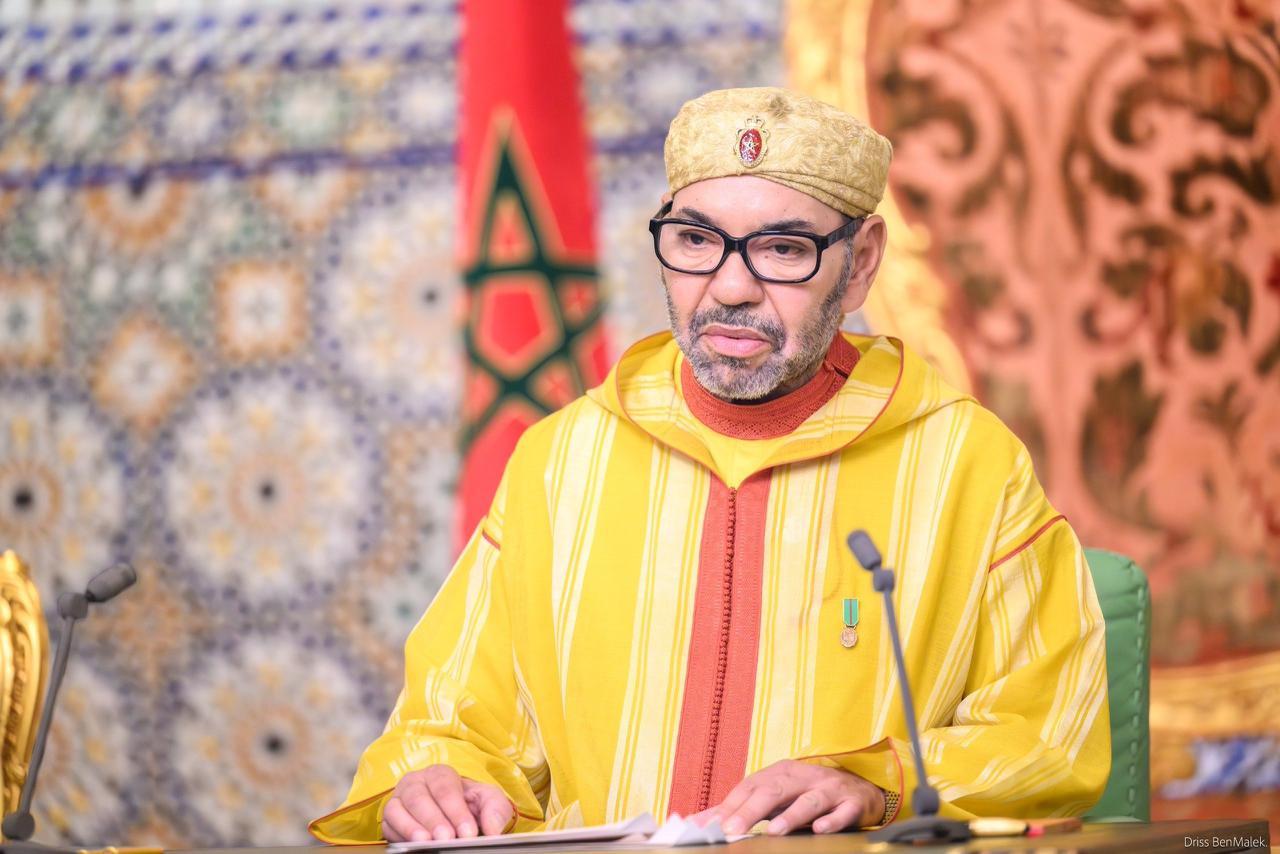
In the wake of this positive development, Morocco continues — as reiterated in the speeches of His Majesty King Mohammed VI — to extend a hand of friendship to Algeria, viewing it as a natural partner in building a shared Maghrebi future.
The Kingdom does not regard Algeria as an adversary, but as a fraternal neighbor bound to Morocco by history, faith, culture, and destiny.
Rabat’s repeated calls for open and responsible dialogue express a genuine desire to turn the page of discord and to open new horizons for cooperation and economic and security integration across the region — far from the logic of confrontation or ideological alignment.
Morocco has consistently affirmed that the Sahara issue should not stand as an obstacle to normal relations between the two peoples.
On the contrary, it could become a bridge of understanding and cooperation if approached with wisdom and foresight.
The long-aspired Maghrebi integration — a dream deferred for decades — can only be achieved by transcending the logic of an artificial conflict and embracing a collective developmental vision that benefits all the region’s nations.
While certain actors remain absorbed in political propaganda, Morocco’s southern provinces are undergoing an unprecedented wave of development.
Cities such as Laayoune, Dakhla, and Smara have become thriving centers of investment and modern infrastructure.
Major projects — including the Dakhla Atlantic Port, express highways, industrial and logistics zones — are transforming the Moroccan Sahara into a promising economic hub linking Africa and Europe.
This dynamic growth extends beyond infrastructure to education, renewable energy, fisheries, and eco-tourism, generating vast employment opportunities and improving human development indicators.
The Sahara today is no longer a zone of conflict but a land of stability and prosperity — a tangible reflection of the state’s seriousness in making autonomy a project of dignity and sustainable development.
This lived reality provides the most eloquent answer to separatist claims: citizens of the southern provinces fully embody their Moroccan identity in an atmosphere of peace and growth, actively participating in the political, economic, and social life of the nation.
The UN resolution is far more than a dry diplomatic text. It is a symbolic and historical milestone inscribed in the national consciousness — a declaration that the international community now views the Sahara issue as one of national unity and statehood, not as a mere border dispute.
It has further strengthened the collective sense of belonging and national pride among all Moroccans, north and south alike.
Despite this significant diplomatic gain, challenges remain — from the Polisario Front’s intransigence to Algeria’s reserved stance, and the need to refine the mechanisms of autonomy and ensure local rights and freedoms. Yet Morocco, confident in the legitimacy of its cause and committed to dialogue, is well-positioned to turn this process into a model of regional reconciliation and development.
The latest UN resolution thus constitutes a historic watershed in the trajectory of the Moroccan Sahara issue.
It solidifies international recognition of Morocco’s sovereignty over its southern provinces and reaffirms the credibility of the autonomy initiative as the most realistic, pragmatic, and forward-looking solution.
With Morocco’s hand extended to Algeria and with the accelerating development of its southern regions, the Kingdom advances with confidence toward a unified, prosperous, and reconciled Maghreb — at peace with itself and its neighbors.