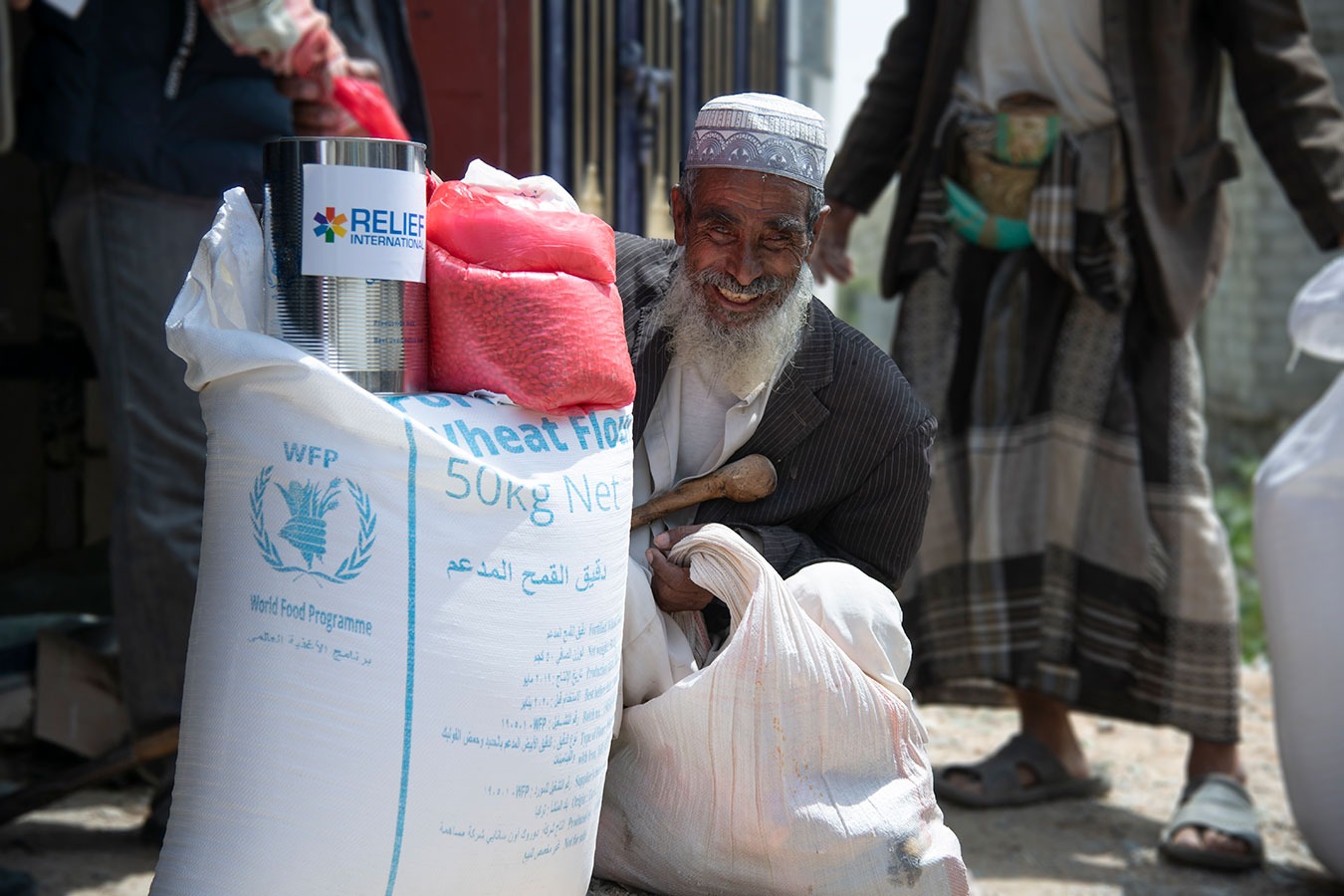
The Word Food Programme has raised concerns of acute hunger amid the Middle East conflict, warning that it has 70,000 metric tons of food that is impacted by the war.
According to Corinne Fleischer, WFP Director of Supply Chain, about half of this supply of food is on chartered bulk vessels, and the other half is in containers, which are either en route or stuck in ports and not moving.
While issuing a briefing at the Palais des Nations in Geneva Tuesday, Fleischer noted that “For us, this is the most significant disruption of supply chains that we have seen since COVID and at the beginning of the war in Ukraine. The World Food Programme currently.”
The humanitarian organization has also warned that it is being impacted by the ripple effects of the blockade of the Strait of Hormuz, this despite the organization having no vessels at the maritime chokepoint.
WFP: Africa is bearing the biggest brunt
WFP further says that the impact of the blockade is greatly impacting Africa, with carriers not using the Suez Canal and the Red Sea, and instead routing vessels through the Horn of Africa and the Cape of Good Hope into Eastern Africa. “That adds about 25 to 30 days of shipping time, and between 15 to 25 percent in rates, because of longer operations, more fuel required, and of course more expensive fuel.”
In a bid to alleviate the situation, the organization says it is now asking carriers for priority cargo for humanitarian operations. World Food Programme is the only UN organization with its own shipping department, directly engaging with shipping lines and vessel owners.
Minimizing the cost increases
In his brief, Fleischer further noted that WFP negotiated a waiver for the surcharges that are being put in place by shipping lines and in certain ports at risk in the Middle East.This, he says, will be between US$2,000 and US$4,000 per container. “That’s around an additional US$200 per metric ton. These surcharges have been waived, which gives us cost avoidance of about US$1.5 million already.”
With 17 million people food insecure in Afghanistan, and other countries facing food shortages, WFP says rerouting cargo from Jebel Ali in Dubai is expected to play a major significance in reducing costs. “…now we will truck it from Dubai through Saudi Arabia, Jordan, Syria, Turkey, Azerbaijan, then into Turkmenistan, and finally into Afghanistan. This adds about 1,000 euros per ton and another three weeks, but it also allows us to test and open a land route should this situation last longer.”
Hunger Projections
The conflict, which has spread across the Middle East since the US and Israel launched strikes on Iran on 28 February, has also had a ripple effect on the cost of food. This as WFP warns that if the cost‑of‑living increases continue, as it is happening in several countries, they will no longer be able to put food on the table. WFP’s Fleischer noted that “Our projections are that 45 million more people will be acutely hungry if this continues through June. You’ve heard us say this before. Right now, the number is 318 million, and this will rise to 363 million.”
The humanitarian organization is now calling for increased financing for humanitarian operations in order to increase the ability to support people in need.
and now we will truck it from Dubai through Saudi Arabia, Jordan, Syria, Turkey, Azerbaijan, then into Turkmenistan, and finally into Afghanistan.
food countries in insecurity The Director of Supply Chain has also lauded
Lastly, I want to say that we are very concerned about the long‑term impact this war has on people being able to put food on the table. The people we are concerned about are not those who go to fuel stations to fill up their cars. They are people who already spend between 50 and 70 percent of their income on food. If.
. At the same time
We are very concerned about more needs, higher costs, and the risk of not being able to reach people because of this combination. To give you a concrete example, in Lebanon we already see local transport costs going up by 45 percent. In Afghanistan, with all the rerouting we have to do, costs are tripling. This translates into higher food prices everywhere which is a big concern.