Football runs on passion. Players argue, fans rage, and moments can boil over in seconds. But when a team walks off the pitch in protest, the emotion stops mattering almost immediately. That is when the rulebook takes control, and the consequences are usually devastating.
The basic rule is simple. Under FIFA’s Law 3, a match can continue only if each team has at least seven players on the field. If a team walks off and refuses to return, the referee does not call a team meeting or try to calm things down.
The official suspends the match, documents what happened, and submits a report to the competition organizers.
That is when it turns serious. A walk-off is classified as a refusal to play. Under FIFA’s disciplinary code, organizers may award the match to the opposing team.
The standard outcome is a 3–0 forfeit, regardless of the scoreline when the players left the pitch. On top of that, fines, suspensions, and further sanctions are common.
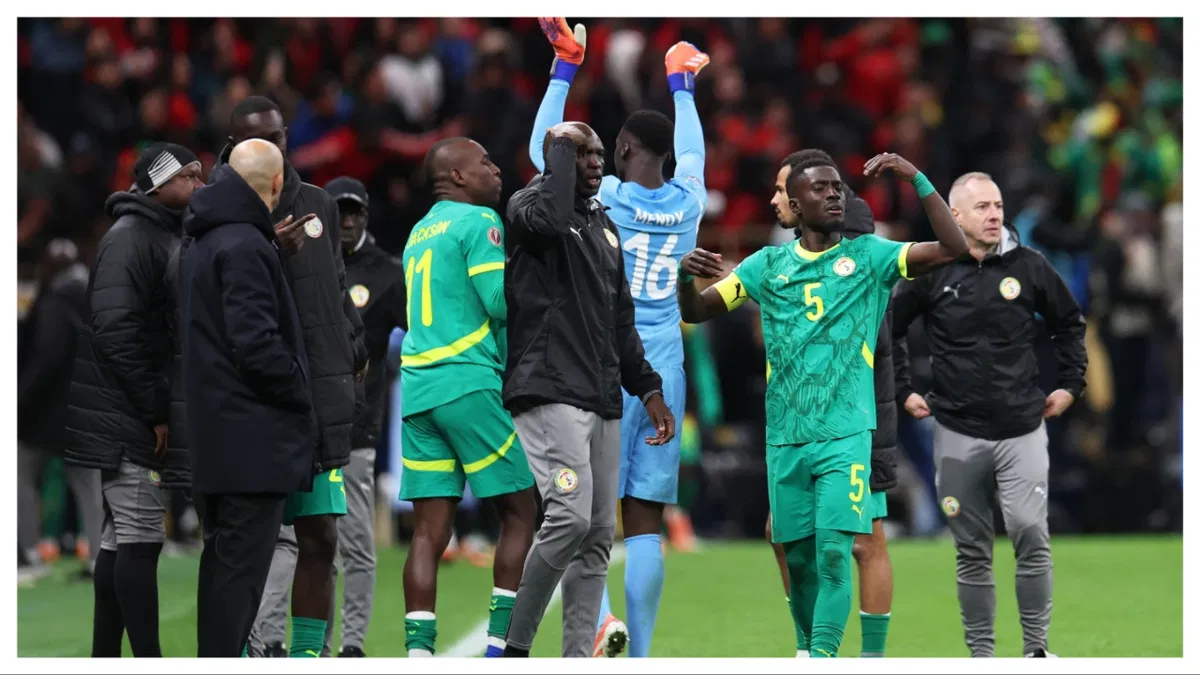
In a major final, such as Morocco versus Senegal, if Senegal completely walked off in anger over a controversial refereeing decision, Morocco would almost certainly be declared champions.
Finals are not replayed because one team is furious. Trophies are handed to the side that stays on the field.
There is one narrow exception. If players leave because of genuine safety concerns, such as crowd violence, serious threats, or stadium emergencies, the referee may suspend the match without punishing the team.
FIFA then investigates whether the walk-off was justified. Evidence matters. Emotion does not.
What never qualifies is frustration with referees, claims of bias, or outrage over a bad call. FIFA’s position has always been blunt. Matches are meant to be decided on the pitch.
Walking off might feel like making a statement. Under FIFA rules, it is closer to surrender. One decision, one exit, and a tournament can be lost.