Uganda is an East African landlocked country whose political history has been shaped by colonial rule, post-independence power struggles, military coups, and long-serving leadership.
The country gained independence from Britain on October 9, 1962, ending decades of colonial administration and marking the start of self-governance.
At independence, Uganda adopted a parliamentary system of government. With Queen Elizabeth II as its Head of State and Milton Obote became the first Prime Minister, while Sir Edward Mutesa II, the Kabaka of Buganda, served as the ceremonial president.
Political disagreements between the central government and traditional kingdoms escalated, leading to a constitutional crisis in 1966. Obote suspended the constitution, removed Mutesa from office, and later assumed executive powers as president.
Obote’s first term ended in 1971 when he was overthrown in a military coup led by Idi Amin, then head of the Uganda Army.
Amin ruled until 1979, a period marked by military rule, economic decline, and political repression. His government collapsed after a war involving Ugandan exiles and Tanzanian forces.
Following Amin’s removal, Uganda went through a period of political instability. Yusuf Lule briefly served as president in 1979, followed by Godfrey Binaisa.
In 1980, Paulo Muwanga led a military commission that governed during a transitional period ahead of elections.
The 1980 elections returned Milton Obote to power for a second term. His administration faced armed rebellion and economic challenges.
In 1985, Obote was removed through a military coup led by Tito Okello, who headed a short-lived military government.
In January 1986, forces of the National Resistance Army captured Kampala, bringing Yoweri Kaguta Museveni to power.
Museveni became president and has remained in office since then. His administration focused on restoring stability and rebuilding institutions after years of conflict though his rule has sometimes been compared to Obote’s challenges.
Uganda has since held several general elections under Museveni’s leadership. Constitutional amendments removing presidential term limits and later age limits reshaped the political framework and allowed him to continue contesting for office.
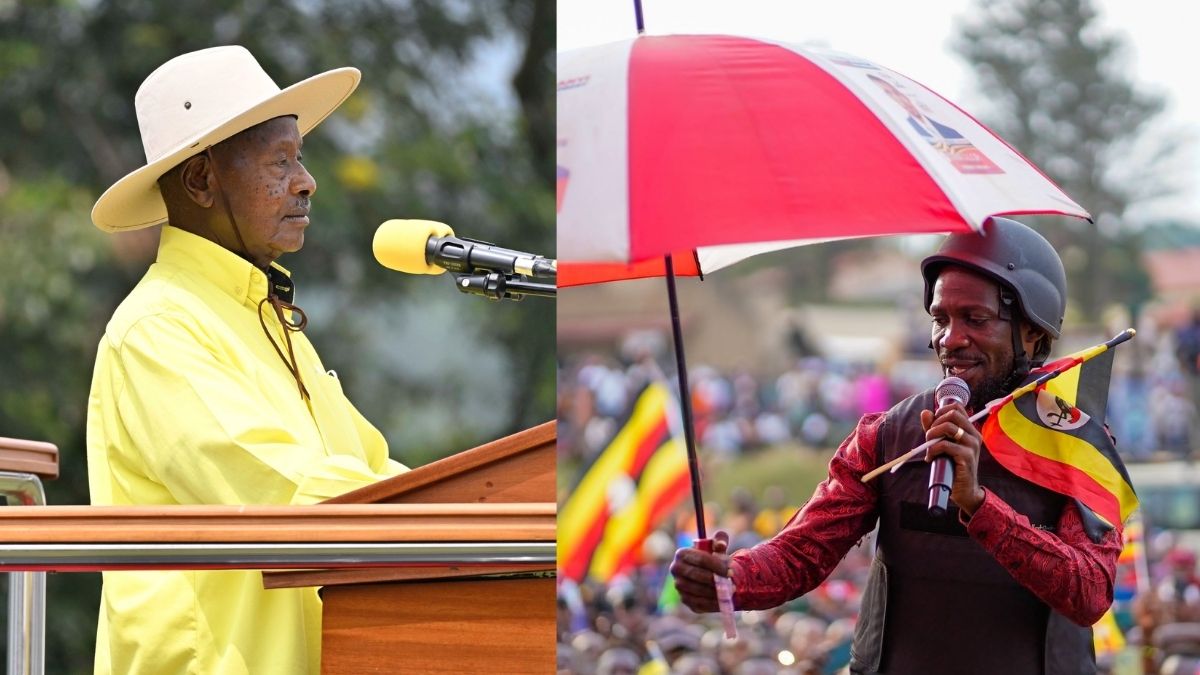
Ugandans are today voting in a general election, choosing the president and members of parliament.
President Yoweri Museveni is seeking another term, while opposition leader Robert Kyagulanyi, also known as Bobi Wine from National Unity Platform (NUP) who has faced violent crackdowns, restricted campaign activities tear gas, arrests, and control over media access, is the most prominent challenger based on previous election performances and current political standing.
The election is taking place amid debates over governance, economic pressures, and youth participation in leadership.
With a young population, the outcome is expected to play a key role in shaping the country’s political direction.
Ugandan politics is a balancing act between Museveni’s enduring power, the aspirations of a young population demanding change, and a system that restricts political competition, all set against significant economic and governance challenges.
From independence in 1962 to today’s polls, Uganda’s political journey reflects a nation shaped by shifting leadership styles, constitutional change, and evolving democratic processes.