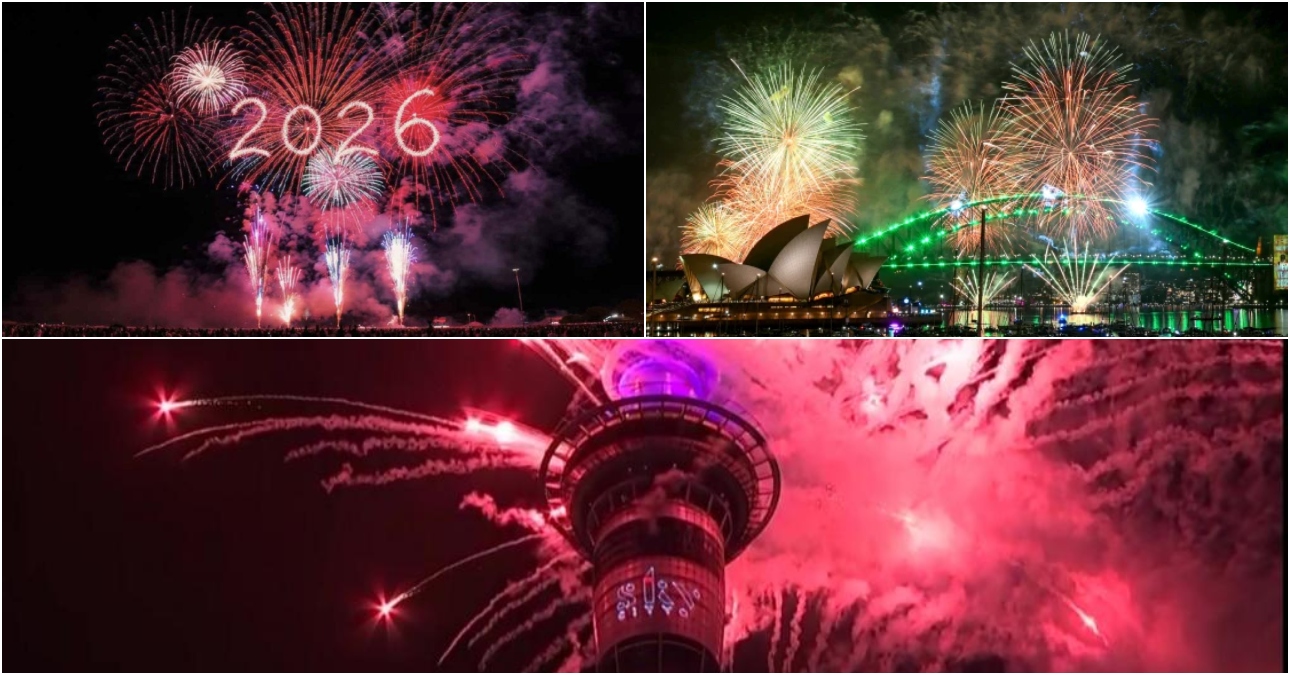
As Kenyans put the final touches on crossover church services, family dinners and the eagerly awaited midnight countdown at the KICC and other popular spots, large parts of the world have already ushered in 2026.
By late afternoon in Nairobi, the New Year wave had already rolled across the Pacific Ocean, meaning millions of people were already several hours into January 1 as Kenyans continued with December 31 routines.
For those with friends or relatives in places like New Zealand or Fiji, the New Year greetings were already flowing long before sunset in Kenya.
The global race to 2026 began early in the day, with Kiribati taking top honours. Residents of Kiritimati, also known as Christmas Island, became the first people on the planet to welcome the New Year at exactly 1:00pm Kenyan time. By 2:00pm, Samoa, Tonga and New Zealand had all crossed into 2026, followed by Fiji an hour later.
As of about 4:40pm East Africa Time, these countries were already enjoying the early hours of New Year’s Day, while Kenyans remained several hours away from midnight. Australia was next in line, with Sydney’s iconic Harbour Bridge fireworks expected to light up the sky at around 5:00pm Kenyan time, officially marking the country’s entry into 2026.
The wide time difference is explained by the International Date Line, an imaginary line running through the Pacific Ocean that separates one calendar day from the next. Because the Earth rotates from west to east, countries located far east experience the new day much earlier than those in Africa.
By the time Kenyans shout “Heri ya Mwaka Mpya!” at midnight, much of North America, including the United States and Canada, will still be hours away from ending 2025.
Whether marking the night in prayer, at a concert, or quietly at home with loved ones, Kenyans will soon join the rest of the world in welcoming 2026 a year that, for many, has already begun elsewhere.
ALSO READ: DR Congo fan’s extraordinary ‘statue’ pose, stands motionless for entire three AFCON games