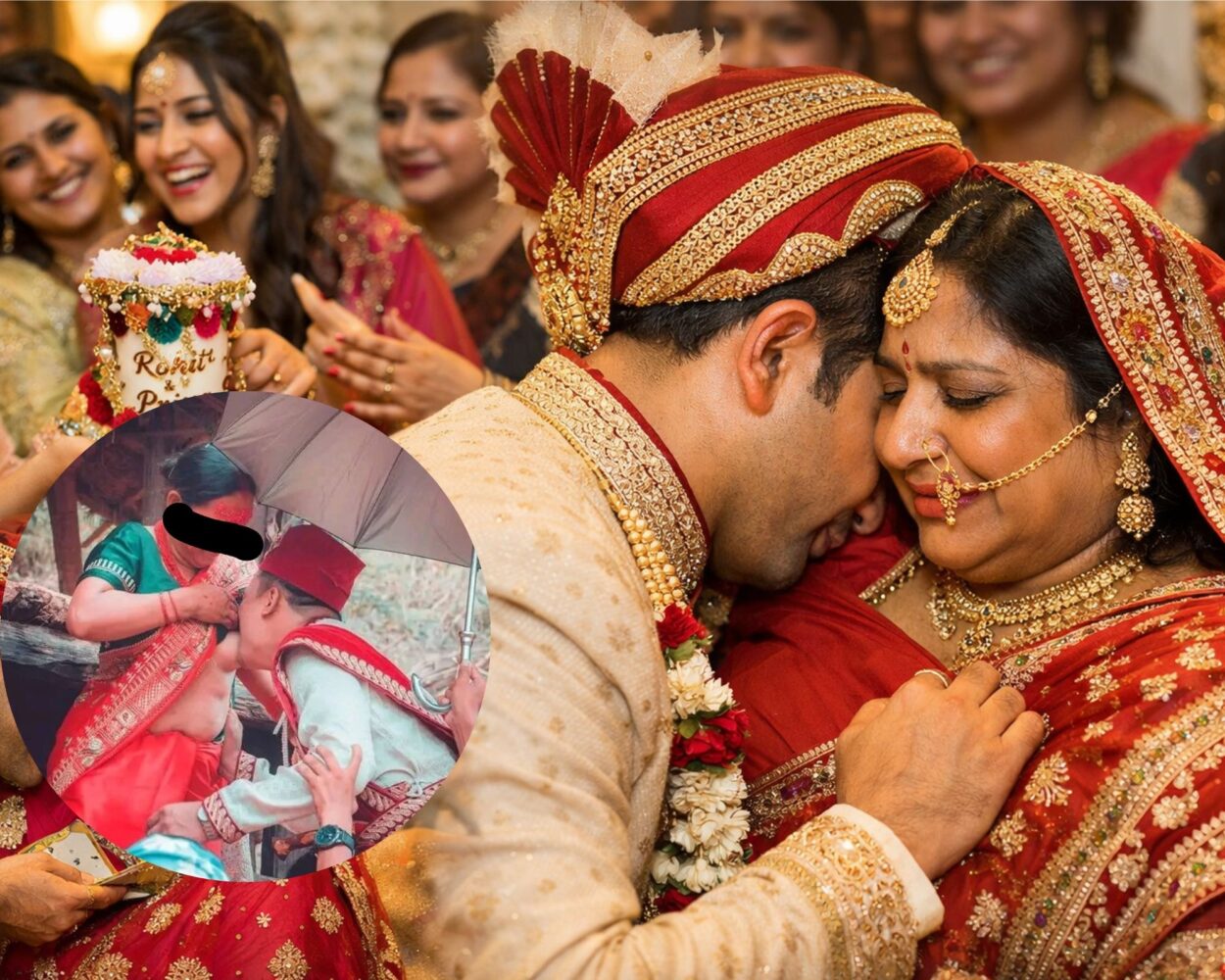
In parts of Rajasthan and western Nepal, right in the middle of the loudest, most photographed day of a man’s life, everything suddenly slows down. The music fades. The relatives stop shouting. Cameras lower. And the groom leans toward his mother’s chest.
The ritual is called Doodh Pilai, literally “feeding of milk.” It refers to this deeply emotional mother-son gesture. It is symbolic. It happens over clothing. But in the maternal context, it mirrors breastfeeding closely enough to make first-time observers freeze in confusion.
That shock is usually where the misunderstanding begins.
Within its cultural setting, the meaning is direct and deeply human. It is gratitude made visible.
In many families, a mother does not simply raise a son. She builds him. She feeds him, protects him, shapes his values, and sacrifices sleep, comfort, and often her own ambitions. Years of invisible labor stand behind the groom in his wedding attire. Doodh Pilai pauses the celebration long enough to acknowledge that history.
Before he stands beside a bride, he stands before his mother.
This moment is not about clinging to childhood. It represents his final transition from boyhood into adulthood and married life. It is a gesture of maternal blessing, honoring their lifelong bond while recognizing that he is now stepping into his own responsibilities as a husband and future provider.
He is closing the infancy door.
At many weddings, however, Doodh Pilai takes on a lighter mood. The bride’s sisters, cousins, or friends present the groom with a decorated glass of milk and refuse to hand it over without negotiation. The glass is often personalized with the couple’s names and adorned with jewels, ribbons, and bright embellishments. What follows is playful banter, mock bargaining, and demands for cash or gifts before he is allowed to drink. It serves as an icebreaker between the groom and his new extended family, turning tension into laughter.
Marriage reshapes identity. A son becomes a partner. A dependent becomes a household leader. Doodh Pilai makes that shift visible. It reminds him that moving forward does not erase where he came from. His responsibilities expand. They do not replace the old ones.
Guests react in different ways. Some smile. Some wipe away tears. Some shift awkwardly because they were not prepared for that level of emotional honesty in the middle of a wedding program. That discomfort is part of the power. It forces everyone to confront a simple truth: weddings are not just romantic milestones. They are a joint family transition.